Portuguese
  Spanish


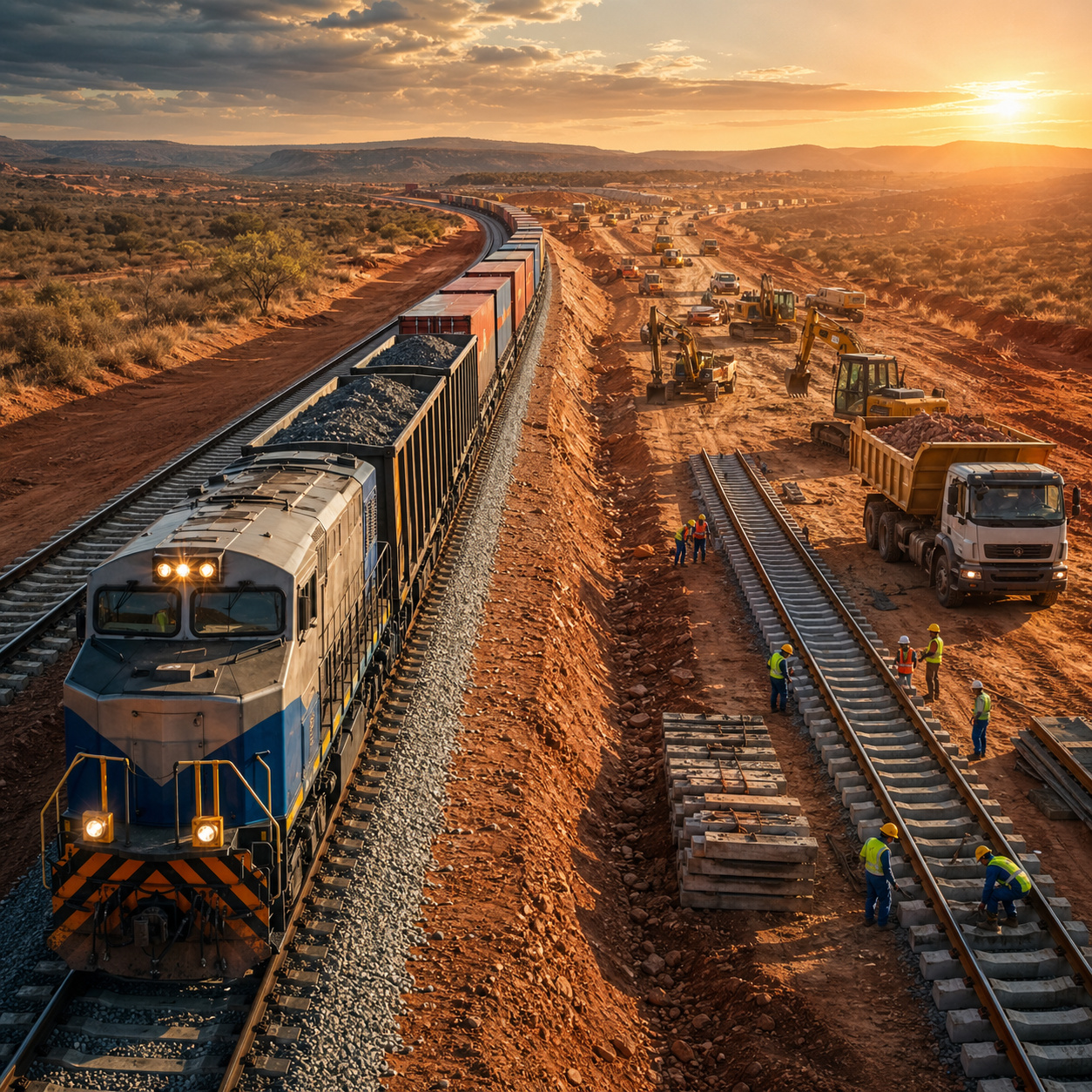

Transnordestina receives R$ 5 billion, resumes works after decades, and is already partially operating with the potential to reduce freight costs in the Northeast by up to 60%.
The Transnordestina, the 1,757-kilometer railway, entered its most concrete operational phase at the end of 2025, when the Ministry of Integration and Regional Development reported, on December 17, that the railway would begin its first tests on the 585-kilometer stretch between Bela Vista do Piauí and Iguatu, in Ceará, after the operating license was issued by Ibama on December 11. On December 18, 2025, the first train with 20 wagons loaded with corn marked the debut of cargo transport in this segment and transformed into real operation a project that had spent decades associated with delays, impasses, and stoppages.
In 2026, the progress gained new institutional weight. On January 30, 2026, the Government of Ceará reported that Phase 1 of Transnordestina had reached 80% completion, with all sections in Ceará territory under construction, while the official projection began to point to the start of operation in 2027. At the end of March 2026, the state government reaffirmed that the railway had exceeded 80% completion, reinforcing the strategic role of the 1,206-kilometer logistics corridor between Eliseu Martins, in Piauí, and the Port of Pecém, in Ceará
Project for the 1,757-kilometer railway – Transnordestina was conceived during the Empire and remained without execution for over 150 years
The proposal to connect the interior of the Northeast to the coast by rail dates back to 1847, during the Second Reign, when Dom Pedro II ordered studies to make this connection feasible.
-
The Port of Itaqui closes the best first semester in history with over 17 million tons and takes off as the locomotive of the Northern Arc.

-
Brazil’s North-South Railway to Auction Two Grain Terminals in Central Tocantins

-
AI-powered traffic cameras in São Paulo now issue fines for cellphone use and seatbelt violations around the clock

-
Free Upgrade to Professional Driver’s License Categories in Over 130 Locations in Brazil, Including Exams and Courses





The logic was economic: to reduce the cost of transporting products from the hinterland to the ports, allowing greater competitiveness in the international market. Despite the clarity of the objective, the project remained on paper for over a century.
Transnordestina works began in 2006 with a completion deadline in 2010 and an initial cost of R$ 4.5 billion
The construction of the railway began in 2006, during the Lula government, with its launch in Missão Velha, Ceará.
The project envisioned a 1,757-kilometer route in an “inverted T” shape, connecting Eliseu Martins, in Piauí, to the Port of Pecém, in Ceará, and to the Port of Suape, in Pernambuco.
The initial deadline was five years, with an estimated cost of R$ 4.5 billion. None of these predictions were met.
The railway was started without a formal construction contract, which compromised the legal security of the project. Only in 2014, eight years after the start of the works, was a concession contract signed with Transnordestina Logística S.A., a subsidiary of CSN.
In 2017, the Federal Court of Accounts suspended public transfers after identifying inconsistencies between the invested amounts and the physical progress of the work.
At the time, more than R$ 6 billion had been spent with just over 50% of the railway completed, without clarity on the sections actually delivered.
Resumption of works on the 1,757-kilometer railway occurred with private funds in 2019 and project restructuring in 2022
In 2019, CSN partially resumed the works with a private investment of R$ 257 million, avoiding the loss of the concession.
In 2022, the company returned the section between Salgueiro and Suape to the federal government, citing economic unfeasibility, reducing its responsibility to 1,206 kilometers.
The Pernambuco section remained paralyzed for years, with exposed structures and progressive deterioration.
Investments of R$ 3.6 billion and R$ 1.4 billion unlock the project and reactivate construction sites in the Northeast
The effective resumption occurred with the inclusion of the project in the New PAC. In 2024, the Northeast Development Fund released R$ 3.6 billion for the first phase of the work. In 2025, the federal government announced another R$ 1.4 billion in investments.
With these contributions, the total committed volume reached approximately R$ 8 billion, with R$ 4.4 billion in direct public funds. Infra S.A. took responsibility for the Salgueiro–Suape section and initiated the bidding process.

In March 2026, the construction company responsible for the lot between Custódia and Arcoverde was contracted, with an investment of R$ 312.8 million. In Ceará and Piauí, TLSA advanced in 19 construction lots, including the section near the Port of Pecém.
Rail transport can reduce logistics costs by up to 60% for grains and ore in the Northeast
Rail transport has a significantly lower cost than road transport over long distances. Industry estimates indicate that freight can be reduced by between 40% and 60%, depending on the cargo and the distance traveled.
This impact is especially relevant for products such as soybeans, corn, gypsum, and iron ore, which depend on large-scale transport.
The Transnordestina crosses 81 municipalities in the states of Ceará, Piauí, and Pernambuco, many of them without access to modern logistics infrastructure.
The railway can directly benefit sectors such as agribusiness, mining, and industry, connecting these regions to export ports. Products such as soybeans from the Piauí cerrado, gypsum from Araripina, and corn for poultry farming will now have access to a more efficient mode of transport.
Railway structure involves millions of tons of materials and hundreds of engineering works
The Transnordestina is the largest linear work under execution in Brazil. The project includes approximately 186 million cubic meters of earthworks, 143 bridges and viaducts, 2.2 million sleepers, more than 200 thousand tons of rails, and millions of cubic meters of crushed stone.

This scale places the railway among the largest infrastructure projects in Latin America.
The current forecast indicates completion of the main section by 2027 and finalization of the Pernambuco branch by 2029. However, the history of successive delays raises doubts about meeting deadlines.
Since 2006, multiple delivery dates have been announced and not met, including 2010, 2013, 2016, 2022, and 2025.
First real operation of the railway marks concrete change after decades of promises
The circulation of the corn train in December 2025 represents the first practical evidence of the railway’s operation.
Unlike previous announcements, the operation demonstrates that part of the infrastructure is already active and integrated into the productive system.
After more than 180 years since its initial conception and almost two decades of construction, the railway is beginning to show concrete results.
In your view, is the project in its definitive execution phase or does it still face structural risks that could compromise its completion?