





 Portuguese
  English
  Spanish
  3 min of reading
  0 comments


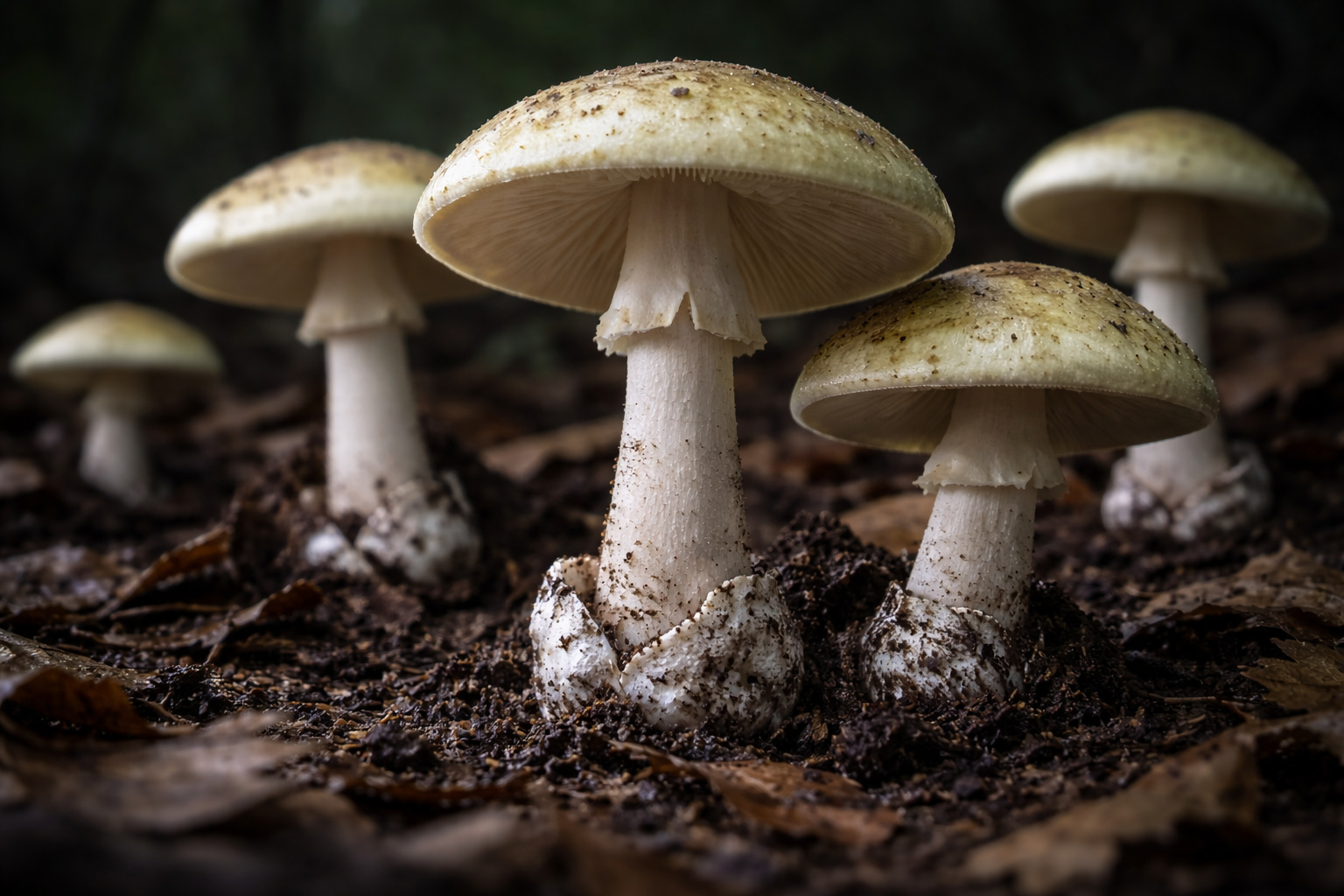
Mushroom Known As Death Cap Caused Deaths and Dozens of Poisonings. Understand Why It Is So Dangerous, How It Affects the Liver, and Why It Should Not Be Consumed.
An apparently common mushroom, resembling edible species and even considered “harmless” by laypeople, was responsible for deaths, dozens of hospitalizations, and an urgent public health alert. Known as death cap, it has returned to the spotlight after an outbreak of serious poisonings, revealing a silent danger that acts hours — or days — after consumption.
What Happened and Why the Alert Was Issued
Health authorities confirmed that three people died after ingesting contaminated wild mushrooms, while more than 20 showed severe poisoning. The cases occurred within a short period, drawing attention due to the abnormal rise compared to previous years.


The culprit is the Amanita phalloides, considered one of the most lethal mushrooms on the planet. The outbreak was linked to specific climatic conditions, such as early rains and mild temperatures, which favored the proliferation of the fungus in forest and park areas.
-
About 150 workers are driving, one by one, 4,585 BYD electric cars off a 220-meter ship at the Port of Itajaí. The 48-hour mega-operation is the largest shipment from the Chinese automaker in Santa Catarina this year.

-
Samara left the city, built a small power plant on her property, and now lives surrounded by waterfalls, her own energy, sustainable recycling, and preserved nature in the Serra da Mantiqueira.
-
The end of Japan? Population is disappearing, country loses more than 3 million inhabitants in just five years and birth rate falls for the tenth consecutive year, raising alarm about demographic collapse and lack of workers.
-
China surprises the world by inaugurating a new era: the country will create a “digital ID” for 28,000 humanoid robots from 100 manufacturers, while machines capable of cooking, doing laundry, and caring for the elderly begin free domestic testing in 2027.


A Poison That Deceives Even Experienced People
The greatest danger of the death cap lies not only in its extreme toxicity but in the ease with which it is confused with edible mushrooms. Visually, it can resemble safe species, both in shape and coloration. The taste is also not bitter or unpleasant, which eliminates any immediate “warning” to the palate.
Experts warn that not even experienced foragers are fully protected against mistakes. Correct identification requires in-depth technical knowledge — something that is not learned through tutorials or visual comparisons on the internet.
The Most Insidious Effect: When Symptoms Disappear
One of the most dangerous aspects of poisoning by the death cap is the false sense of recovery. Initial symptoms usually appear between 6 and 24 hours after ingestion and include:
- Severe nausea
- Persistent vomiting
- Severe diarrhea
- Abdominal pain
After this initial period, many patients show a seeming improvement. This is precisely when the danger increases.
Silent Attack on the Liver
Between 48 and 96 hours later, the toxins from the mushroom begin to act devastatingly, especially on the liver. The substances present in the Amanita phalloides cause acute liver failure, which can lead to death even with medical attention.
In severe cases, the only survival option may be an emergency liver transplant — something that is not always possible in time.
Another alarming point: cooking, freezing, or drying the mushroom does not neutralize the poison. The toxins withstand high temperatures and remain active.
Why These Cases Are Increasing
Authorities link the recent rise in poisonings to a combination of factors:
- Climate favorable to the growth of the fungus
- Increased interest in foraging for wild food
- False sense of security based on appearance
- Disinformation on social media
The result is a troubling scenario, where ordinary people end up exposing themselves to a lethal risk without realizing it.

What to Do — and What Not to Do
Experts are categorical: never consume wild mushrooms without certified professional identification. Even a single ingestion can be fatal.
Other important recommendations:
- Do not rely solely on appearance or smell
- Do not use “home tests” — they do not work
- In case of suspected ingestion, seek medical attention immediately
- Save food remnants for identification, if possible
A Brutal Reminder of Nature’s Force
The death cap is a clear example of how nature can be deceptively dangerous. A food that seems common, grows in accessible places, and does not taste strange can carry one of the most potent poisons known.
Recent deaths serve as a warning: curiosity, improvisation, or excessive confidence can cost lives. When it comes to wild mushrooms, the risk is never small — it is absolute.








-

-

-

-

6 people reacted to this.