






 Portuguese
  Spanish


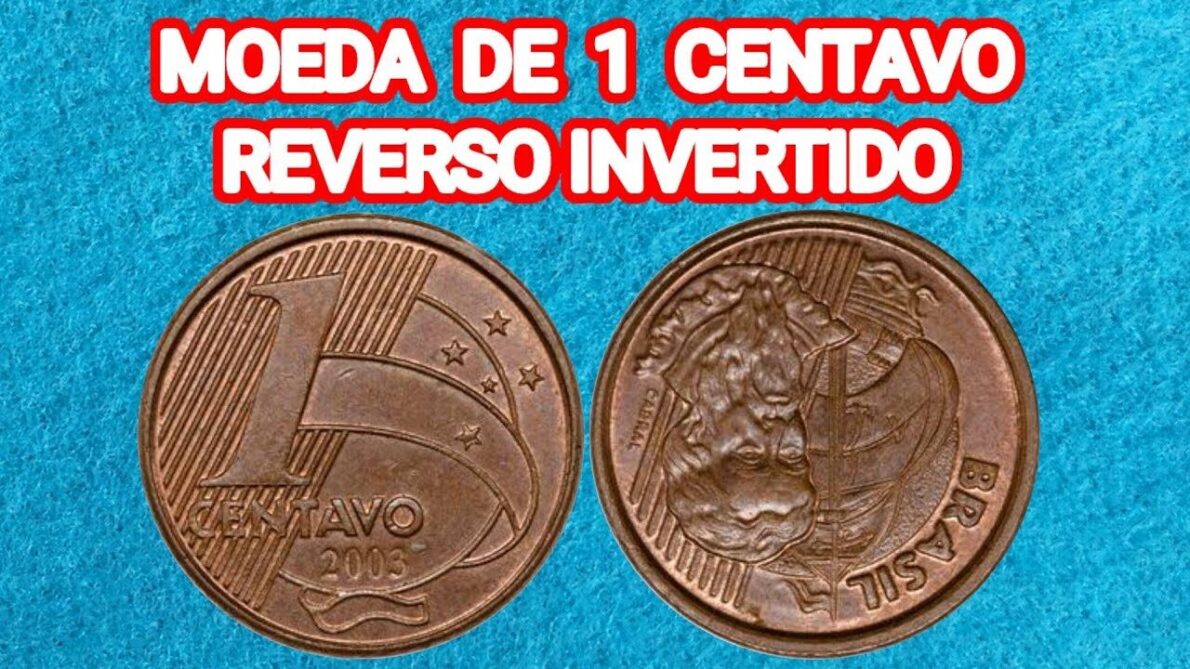


Coins of 1 Cent with the Bust of Pedro Álvares Cabral Are Highly Valued Among Collectors, Becoming True Treasures!
When making everyday purchases, it is common for coins of 1 cent to go unnoticed, often forgotten at the bottom of wallets or even disregarded. However, what few know is that these small coins, seemingly insignificant, may hide great value for collectors. From a numismatic point of view, some of these 1 cent coins, especially those from the second family of the Real Plan, are rarities that can be worth much more than their face value.
Characteristics of the 1 Cent Coins from the Second Family of the Real Plan
The 1 cent coins have been circulating in Brazil since the implementation of the Real Plan, with the second family of these coins introduced in 1998 and still in circulation today.
These pieces, made of copper over steel, measuring 17 mm in diameter and weighing 2.43 g, were designed with the bust of Pedro Álvares Cabral on the obverse, in homage to the Portuguese navigator who discovered Brazil in 1500.
-
Brazilian Job Market Surprises: Unemployment Falls to 5.6%, Hits Record Low for May, Brazilian Incomes Rise, and Underemployment Reaches Lowest Level Ever Recorded by IBGE

-
Chinese E-commerce Giant Predicts Robots Will Replace 700,000 Delivery Workers as Autonomous Vehicles Expand to 200 Cities, Offering Training for Workers to Maintain Their Machines

-
Trump warns Europe with 100% tariff threat on digital tax, potentially impacting wine and trade agreements
-
As Homeownership Becomes Unattainable in Brazil, Japanese Municipalities Offer Abandoned Houses for as Low as $3,000 to Revitalize Aging, Emptying Cities


On the reverse, the face value of the coin is highlighted, accompanied by diagonal lines and the year of minting.
Inverted Reverse: The Rarity That Can Fetch Up to a Minimum Wage
But what makes these 1 cent coins so valuable? The answer lies in a rare and specific characteristic known as “inverted reverse.”
To understand this concept, it is necessary to know that Brazil adopts a coin reverse standard system, or horizontal axis (EH).
In other words, when a coin is turned from bottom to top, the image on the reverse should be properly aligned.
However, in some cases, due to errors during the minting process, the reverse of the coin may end up upside down in relation to the obverse.
These coins, known as “inverted reverse,” are extremely rare and thus highly valued among collectors.
How to Recognize a 1 Cent Coin with Inverted Reverse?
How to identify a 1 cent coin with inverted reverse? Identifying whether a coin has this characteristic is simple.
Just hold it with the obverse (the side featuring the image of Pedro Álvares Cabral) facing you, and then turn the coin from bottom to top.
If the reverse is upside down, you are holding a coin with an inverted reverse, a true rarity.
These coins can reach impressive values in the collector market.
According to experts, such as numismatist Plínio Pierry, determining the market value of these coins is challenging, as there are no exact records of the number of specimens with this defect that were issued.
Together, some of these 1 cent coins with inverted reverse can be sold for values exceeding R$ 1,400, equivalent to a current minimum wage.
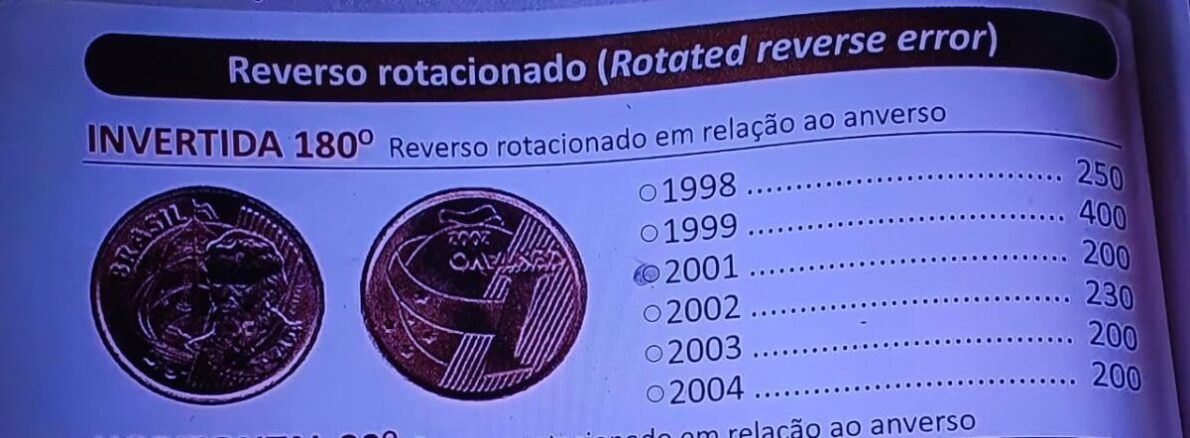
The Importance of These Pieces in the Numismatic Market
Why are these 1 cent coins so valuable? Rarity is the main factor that increases the value of these coins.
The harder it is to find a specimen with inverted reverse, the higher its value in the market.
Additionally, the condition of the coin also directly influences its price. Coins in impeccable condition, without signs of wear or oxidation, can reach even higher values.
Another reason for the high value of these coins is the growing demand for rare numismatic items.
Collectors and investors are increasingly interested in acquiring these pieces, not only for their historical value but also as a form of investment.
The numismatic market has proven to be an attractive option for those looking to diversify their investments, and 1 cent coins with inverted reverse are a perfect example of this.
Do You Have a Specimen with These Characteristics? Find Out How and Where to Sell!
Selling rare 1 cent coins can be a great way to profit from your collections. Here is a brief guide on where and how you can do it:
- Numismatic Shops: Visit specialized stores for coins and collectibles. These professionals can evaluate your coins and offer a purchase or refer an interested buyer.
- Coin Auctions: Participating in auctions, both physical and online, is a good option. Websites like eBay and Heritage Auctions have dedicated sections for rare coins, where you can list your coins for sale.
- Numismatic Fairs and Exhibitions: Local and national numismatic events gather collectors and sellers. They are excellent opportunities to showcase your coins and find buyers.
- Online Groups and Forums: Platforms like Reddit, Facebook, and specialized numismatic forums are great places to connect with collectors and interested investors.
- Online Ads: Classified ad sites like OLX and Mercado Livre allow you to list your coins for sale directly to potential buyers.
Be sure to provide detailed information about the condition and rarity of your coins, and, if possible, get a professional appraisal to ensure a fair price.




Tenho uma moeda de 1 centavo de 1995
Tenho moeda de 1 centavo ano 2003
Me chama no ZAP 22997874537
Tenho uma moeda de um centavo de 2000