






 Portuguese
  Spanish


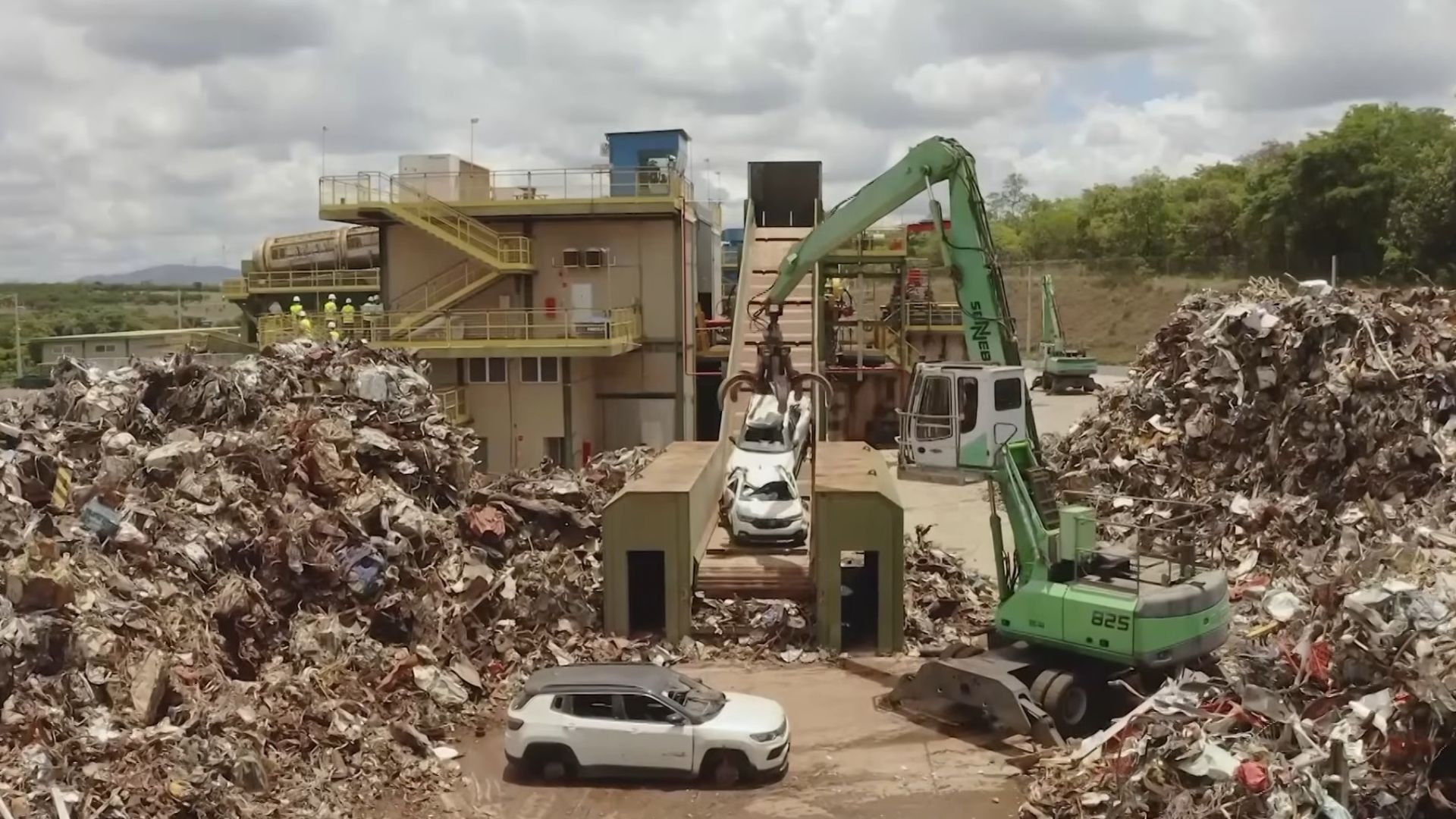
80 Thousand M² Plant in Minas Gerais Launches New Industrial Model for Automotive Recycling in the Country, with Capacity to Crush Up to 300 Thousand Vehicles per Year and Supply Hundreds of Tons of Scrap per Hour to the Steel Industry.
The SADA Group inaugurated on February 25, 2026, in Igarapé, in the Metropolitan Region of Belo Horizonte, the Igarapé Reciclagens (IGAR), an industrial plant of 80 thousand m² designed to recycle end-of-life vehicles with an announced capacity of up to 300 thousand automobiles per year.
With an informed investment of R$ 200 million, the company claims that the unit operates as the first integrated plant in the country for this type of recycling, bringing together in one complex the dismantling, decontamination, disassembly, and crushing of vehicles.
According to data released by the group and by industry publications, the industrial line can generate between 100 and 120 tons of scrap per hour, a volume that will be directed primarily to the steel industry, focusing on reintroducing metal as raw material in the production cycle.
-
Architect Transforms Tiny 4m² Home in São Paulo Favela into 11m² Living Space with Modern Amenities

-
Single mother of four swaps £3,000 London rent for life on a 60-foot solar-powered boat with Starlink and a washing machine, reducing monthly costs by 75%

-
22-Year-Old Transforms Old Farm Trailer into Two-Story Tiny Home Using Recycled Materials

-
Doctor Revives Ancient Crescent-Shaped Dams in Drought-Stricken Indian Region, Restoring Water to Over 1,000 Villages and Reviving Rivers Dormant for 60 Years



End-of-Life Vehicle Recycling Gains Industrial Scale
In practice, the operation begins with the reception of automobiles that have reached the end of their life, either due to wear and tear over time or total loss, and progresses to steps where components and fluids are removed before mechanical processing.
After this initial phase, the industrial structure performs disassembly and material separation, sorting items such as steel, glass, rubber, and automotive waste so that each part follows a path compatible with environmental requirements and market demand.
By concentrating all stages in a single facility, IGAR operates as a reverse logistics hub in the automotive chain, with a daily capacity reported to be in the hundreds to about a thousand vehicles, according to various public communications about the project.
Partnership with ArcelorMittal Ensures Destination for Scrap
A significant portion of the material already has a defined destination: ArcelorMittal has signed a contract to receive scrap processed by IGAR, with shipments to the steelmaker’s industrial units and integration of storage, handling, and logistical management steps for the material.
The agreement also provides for a warehouse in Igarapé dedicated to the flow of scrap, and IGAR itself will be responsible for operations and logistics, according to information released by the company regarding its circularity strategy.
Although the project mentions a multi-million dollar contract, the value of the agreement is not detailed in the public disclosures reviewed, and the companies highlighted primarily the operational design, continuous supply, and integrated management of the material flow.
SADA Group Expands Its Action in the Automotive Chain
The inauguration takes place in the year that the SADA Group turns 50, a move that expands the company’s portfolio in a segment where it already operates with pre-delivery inspection, customization, storage, handling, inventory management, and vehicle distribution.
By entering the final stage of the vehicle’s life cycle, the company also starts to act in the processing of end-of-life vehicles, connecting disposal and recycling to the supply of inputs for steel mills, focusing on the reuse of materials.
Specialized publications have also reported the initial operational expectation of recycling about 50 thousand vehicles in the first year, a level below the maximum projected capacity, while the market adjusts to the disposal routes and the integrated industrial model.
Inauguration Brings Together Representatives of the Automotive Transport Sector
The inauguration ceremony gathered representatives from the automotive transport sector, including leaders from the National Car Haulers Union, an entity linked to vehicle transport and logistics operations that can influence the plant’s supply.
In the assessment of industry sources, the availability of end-of-life vehicles, the organization of collection, and the handling structure are central factors for maintaining the promised industrial pace, especially in projects that depend on scale to achieve efficiency.
With the installation in Igarapé, IGAR now integrates, in Minas Gerais, a flow that goes from receiving the vehicle to supplying scrap to the steel industry, in an operation that the group describes as a step to enhance reverse logistics in the country.


-

-

-

-

-

24 people reacted to this.