






 Portuguese
  Spanish


The technique with ferrofluid uses vegetable oil, rust powder, and magnetism to remove microplastics from water in laboratory tests, targeting the most important point of pollution: preventing invisible particles from advancing through rivers, treatment plants, and reaching the oceans.
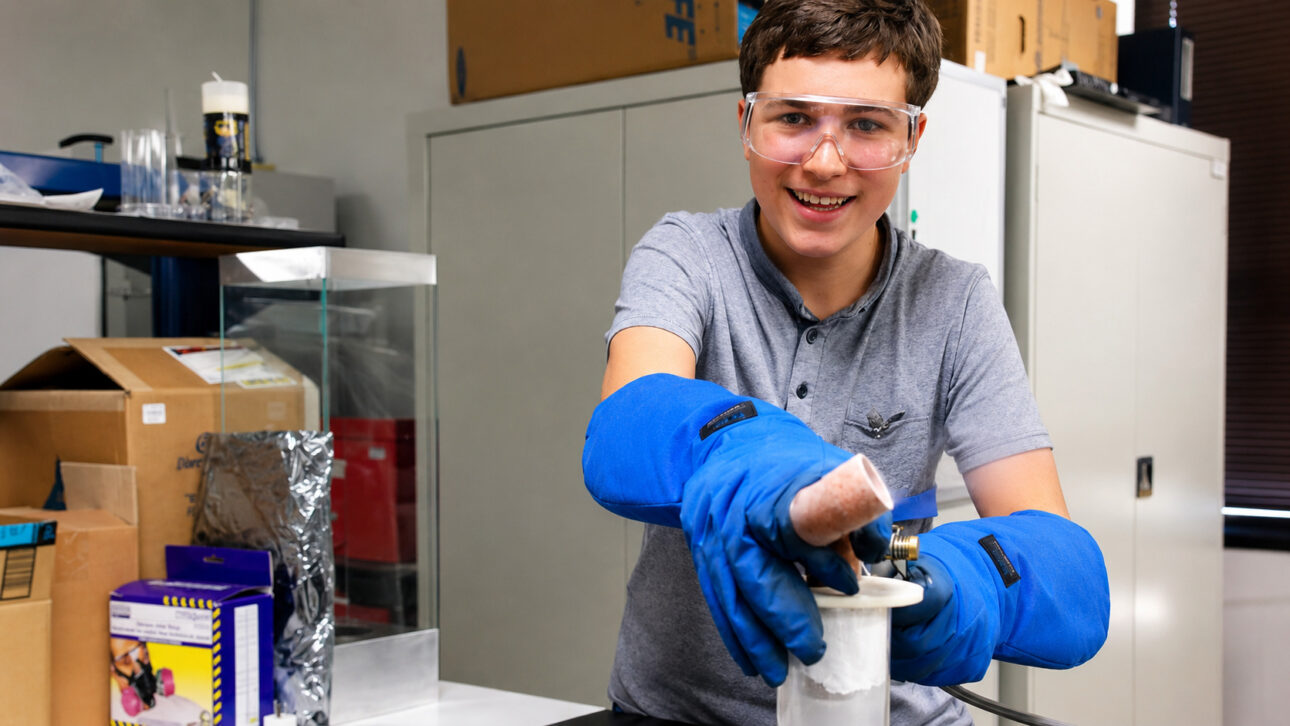
While the world tries to prevent plastic in the oceans, an 18-year-old Irish youth used a seemingly simple combination: oil, rust, and magnet.
The idea was created by Fionn Ferreira, from Ireland, to remove microplastics from water in laboratory tests. The information about the case was published by the World Economic Forum, an international organization for public-private cooperation.
The project won the Google Science Fair 2019 and drew attention because it does not attempt to clean the entire ocean after contamination. The focus is to solve the problem beforehand, when the particles are still in the water and can be captured.
-
She spent 73 years breathing inside an iron lung, survived the aftereffects of polio, and became the last woman in the United States dependent on the equipment before dying at 78 years old.

-
Brazilian students created a $1 filter using pine bark, cotton, and 3D-printed parts to clean cassava wastewater, reduce the toxicity of a hazardous waste, and transform contaminated water into biofertilizer.

-
Astronaut from Artemis II steps down after mission to the Moon and decision surprises after a record of 406,771 km, a historic 10-day journey, and an unprecedented achievement for Canada.

-
A fossil kept for years in a small museum in Montreal concealed 450-million-year-old soft tissue, a discovery that has only happened once before in history.


The danger lies in plastic particles that almost no one can see
Microplastics are very small pieces of plastic. They can be smaller than a grain of sand and, therefore, go unnoticed in the water.
This type of pollution is difficult to combat because it does not appear as a floating bottle or a bag stuck on the shore. Often, the water seems clean but carries particles too small to be noticed with the naked eye.
The risk increases when these particles travel through rivers and reach the sea. Along the way, they can be ingested by aquatic animals and enter the food chain.
The mixture of vegetable oil and rust created a liquid that reacts to the magnet
Fionn Ferreira worked with vegetable oil and rust powder to create a ferrofluid. The name sounds complicated, but the idea is simple.
Ferrofluid is a liquid that reacts to magnetism. In other words, it can be attracted by a magnet because it carries magnetic particles.
In the test, this liquid came into contact with water contaminated by microplastics. The mixture bonded with the plastic particles and could then be pulled with the help of a magnet.
The magnet pulls the rust, and the plastic goes along
The central point of the technique is the union between the ferrofluid and the microplastics. When the mixture captures the plastic particles, the magnet acts as a means of removal.
The magnet does not pull the plastic alone. It attracts the magnetic part of the mixture, formed with rust powder. Since the plastic is attached to the magnetic liquid, it ends up being removed along with it.
This operation helps to understand why the experiment drew attention. The solution does not rely on seeing each particle one by one. It uses the material’s behavior to capture what is dispersed in the water.
The tests involved 10 types of plastic and more than 1,000 measurements
The technique was tested with 10 types of plastic, including PET, PVA, and fibers from a washing machine. This showed that the experiment was not limited to a single material.
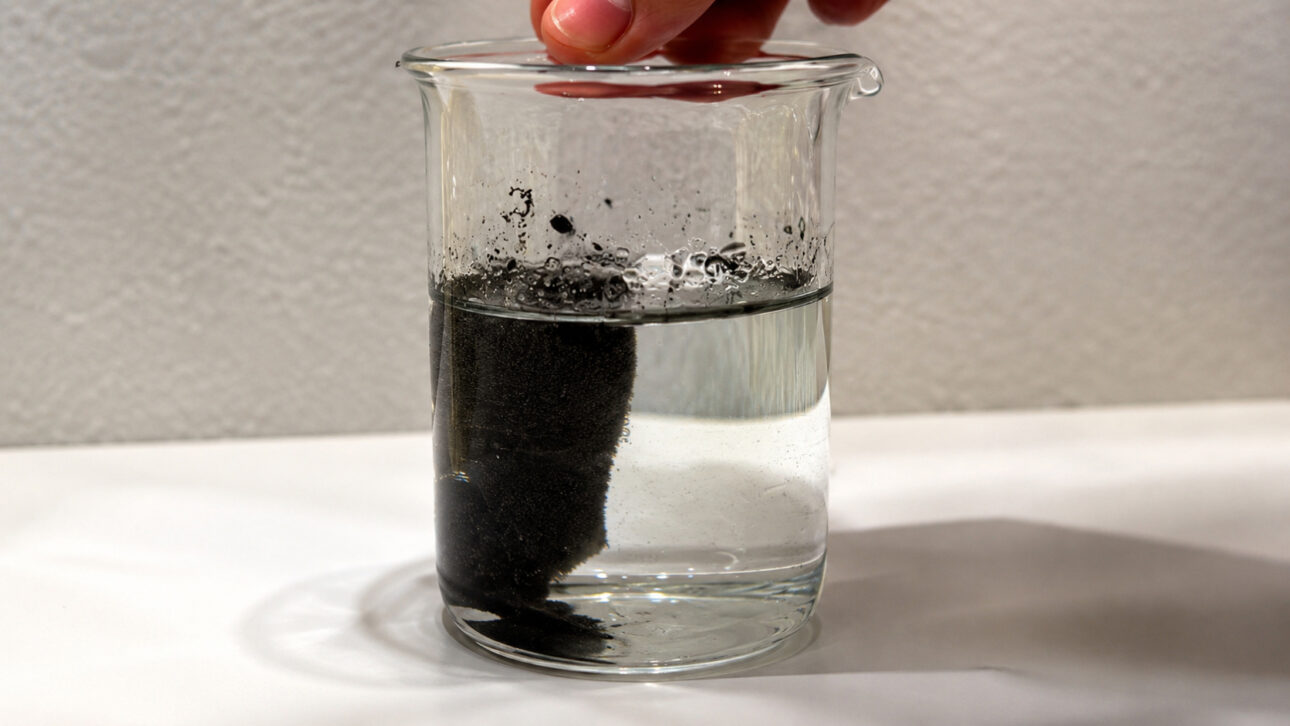
More than 1,000 tests were conducted, and the result achieved 87% success in removing plastic particles less than 2 mm in diameter.
World Economic Forum, an international organization for public-private cooperation, detailed that there were also more than 200 separate extractions. The project aimed to achieve at least 85% reduction in the amount of plastic.
The proposal makes more sense in treatment plants than in open sea
The case should not be understood as a promise to clean entire oceans. The open sea is vast, constantly moving, and has much more challenging conditions than a controlled test.
The most realistic application is before reaching the ocean. This includes water and sewage treatment plants, where particles could be captured before heading to rivers and seas.
This point is important to avoid a misunderstanding of the invention. The technique shows a possible path, but it does not yet represent a ready industrial solution to solve all the planet’s plastic pollution.
The experiment shows how simple materials can open new environmental responses
Fionn Ferreira’s work gained traction because it starts with common materials and low technical understanding for the public: vegetable oil, rust, and magnet.
Even so, the logic behind the process addresses a global problem. Microplastics are difficult to remove because they are small, scattered, and almost invisible.
By transforming this pollution into something that can be pulled by magnetism, the experiment opened a different way of thinking about water treatment.
The technique still needs new stages before any large-scale use. The most important result is showing that combating microplastics can be more efficient before they reach the sea.
The story of the young Irishman also shows how applied science doesn’t need to start with incomprehensible equipment for the reader. Sometimes, a well-asked question about water, plastic, and magnetism already changes the research path.
If it were possible to capture microplastics before they reached rivers and oceans, do you think treatment plants should test solutions like this first? Comment and share with those who follow environmental innovation.







A great discovery… well done young fella. Now it’s all about installation of equipment in treatment plants/ industrial complexes whilst monitoring change. Trouble is water authorities have no money… maybe some private industrial businesses could take the lead.
Why not stop production of these platics altogether, alternatively make laws so that those who benefit (producers and users) pay for mitigation and cleanup.