






 Portuguese
  Spanish


What seemed like just an old trailer bought at auction turned into a small house of 16 by 8 feet, with a raised kitchen, foldable bed, compact bathroom, and custom furniture to make use of every inch
At 22 years old, Jack McKenna found an unusual way to live more independently without immediately entering the traditional real estate market. The young man from Colchester, Essex, England, bought an old farm trailer for £60 and spent three years transforming the structure into a tiny house installed on the family’s land.
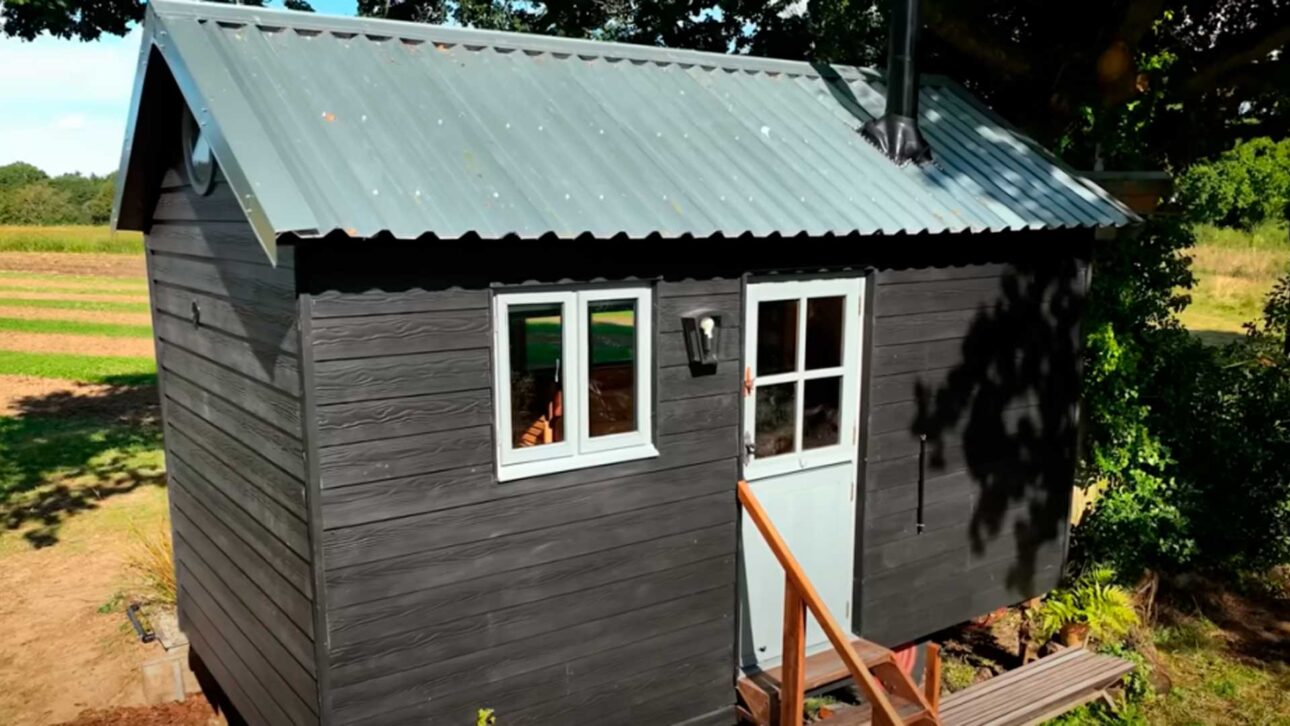
The house was built on a two-axle trailer, about 5 meters long by 2.5 meters wide, equivalent to approximately 16 by 8 feet. The project, named Acorn, was done with the help of his father and made strong use of repurposed materials.
The construction cost about £5,000, a value far below the price of conventional housing in the United Kingdom. The result drew attention not only for the low cost but for how the young man managed to fit a kitchen, bed, table, bathroom, storage, and heating into an extremely small space.
-
Single mother of four swaps £3,000 London rent for life on a 60-foot solar-powered boat with Starlink and a washing machine, reducing monthly costs by 75%

-
Doctor Revives Ancient Crescent-Shaped Dams in Drought-Stricken Indian Region, Restoring Water to Over 1,000 Villages and Reviving Rivers Dormant for 60 Years

-
Facing housing challenges, man buys and renovates a 10m² abandoned cabin in Brazil over six years, creating a new career from his improvised project.
-
Brazilian Student Juliana Estradioto Wins Global Science Prize for Creating Biodegradable Material from Passion Fruit and Macadamia Shells, Has Asteroid Named After Her



Many young Britons face difficulty moving out of their parents’ homes. According to data from the Office for National Statistics, 3.6 million people aged 20 to 34 were living with their parents in the United Kingdom in 2024, a number higher than recorded ten years earlier.
The farm trailer seemed makeshift, but became the base of a compact house
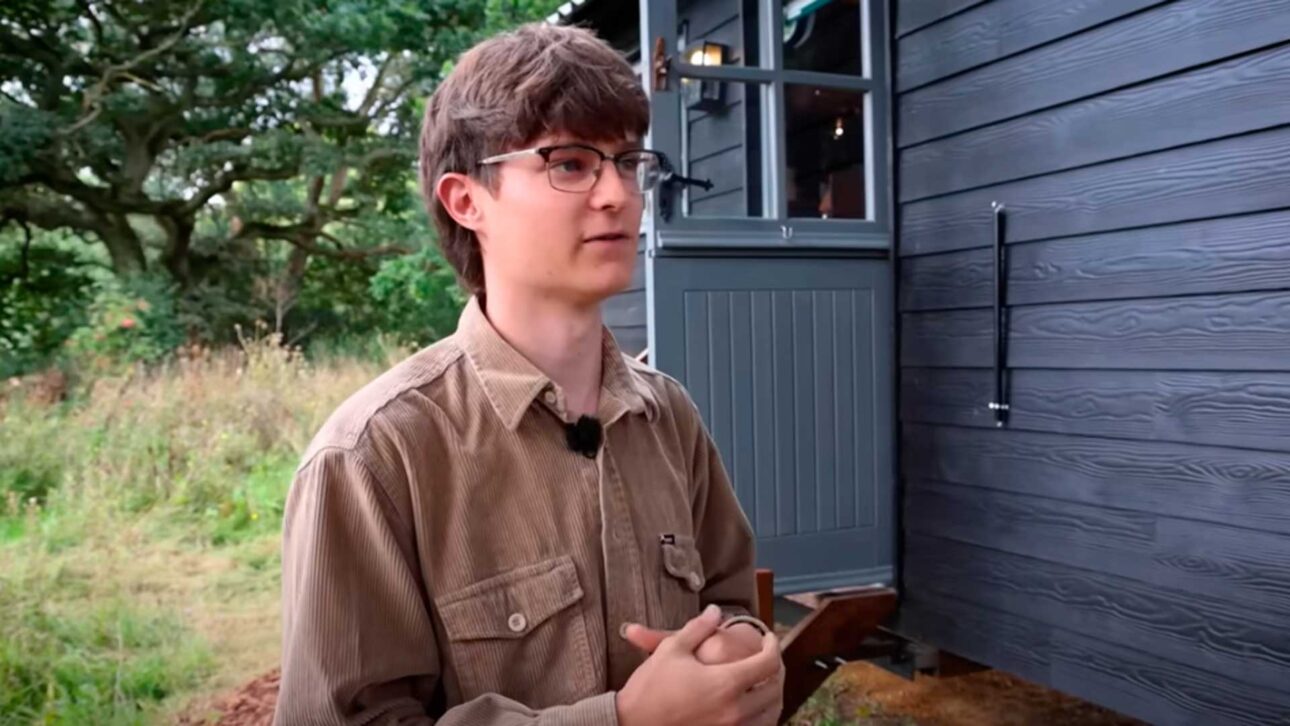
The starting point of the project was simple, an old trailer bought at a rural auction. The structure was far from looking like a house, but Jack saw in it the possibility of creating a small, mobile home made with his own hands.
As reported by The US Sun, the young man began construction during university and worked on the project over three years. Much of the progress happened during vacations, when he returned home and could dedicate time to the work alongside his father.
The trailer needed reinforcements, adjustments, welding, and painting before receiving the housing structure. Instead of buying everything new, Jack prioritized recycled and repurposed materials, many of them coming from construction sites and leftover materials.
This choice reduced the final cost, but also made the process more time-consuming. In projects of this type, saving money usually requires more time, patience, and adaptation, as reused parts do not always arrive ready to fit into the original design.
The small house has two levels and uses solutions that hide functions in the same space
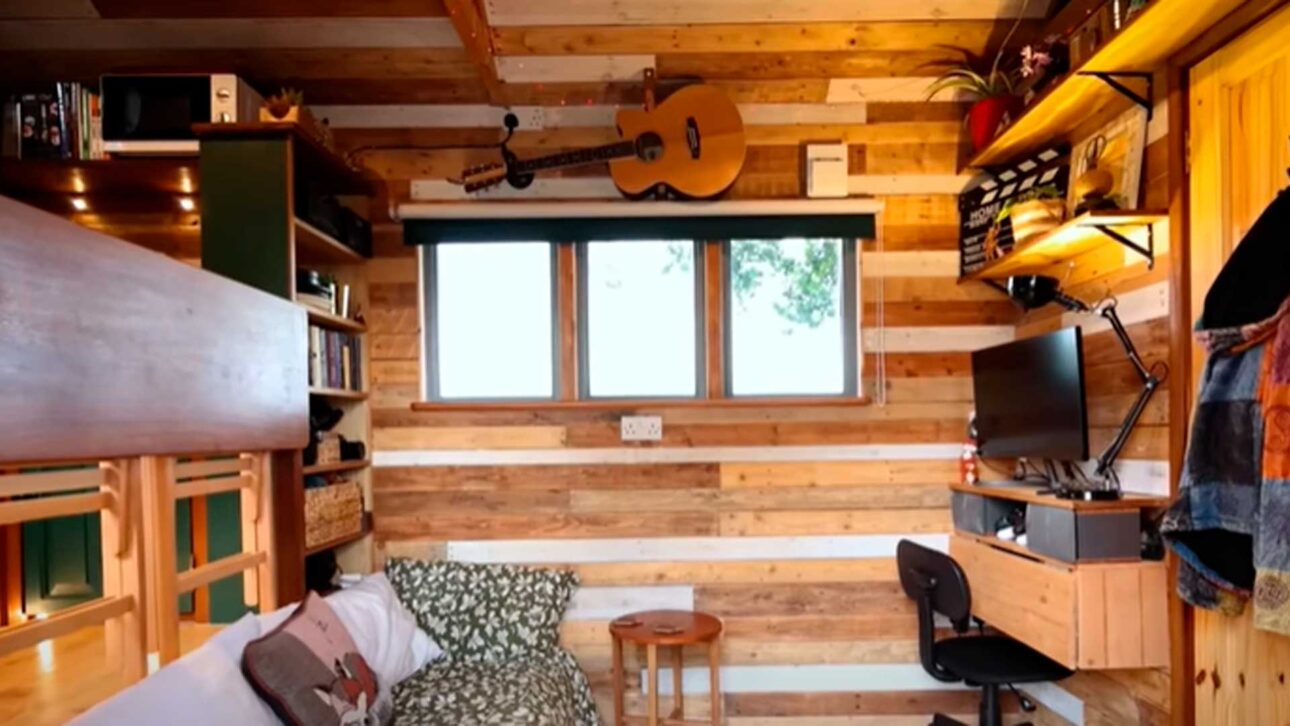
The most striking detail of the tiny house is the vertical utilization. The kitchen was installed on an elevated level, above the bed area, creating a sort of second floor within a space of just a few square meters.
The bed can be folded and transformed into a sofa, allowing the same corner to be used as a bedroom and living room. This solution is common in compact dwellings, but in Jack’s case, it was handcrafted, specifically designed for the trailer’s dimensions.
The house also features a small folding table for meals, collapsible chairs, floor-to-ceiling shelves, and storage spaces built into the staircase. The goal was to avoid “dead” areas and transform each space into some practical function.
In the bathroom, the solution adopted was a composting toilet and a small sink. This type of choice is common in tiny houses because it reduces dependence on conventional networks and helps keep the structure lighter and simpler.
The idea was born not only from economy but from the search for independence
Jack had an interest in small houses since adolescence. According to the Irish Examiner, he began to take an interest in the tiny house movement around the age of 13, after watching content about compact dwellings on YouTube.
This interest matured into a concrete solution. Instead of waiting to save money for a traditional house, he decided to build a feasible alternative within the reality he had available: family land, help from his father, reused materials, and a willingness to learn.
The house also received a small wood heater, used to face the winter cold. The interior also features a table that functions as a workspace and entertainment area, reinforcing the proposal of a small but complete dwelling.
In practice, the tiny house acts as a personal response to the rising cost of living. It does not solve the structural housing problem, but it shows how young people have sought alternatives in the face of expensive rents, high down payments for financing, and difficulty in buying their first property.
Tiny house in the garden may seem simple, but local rules make a difference
Despite the appeal of the idea, living in a tiny house in the United Kingdom does not depend solely on creativity and low cost. The rules vary according to the use, location, size of the construction, and whether it functions as an independent dwelling.
According to the Planning Portal, external constructions like sheds, garages, and garden structures may fall under permitted development rules, but this guidance does not automatically cover autonomous and fully independent dwellings. In other words, when the space starts to have full residential use, the analysis changes.
The Hastings Borough Council also advises that a garden annex may not require permission when it is linked to the use of the main house, for example, to accommodate family members. However, it cannot be transformed into a new independent dwelling for rent or sale without proper authorization.
Therefore, projects like Jack’s often depend on consultation with the local council. The inspiration can be replicated elsewhere, but the legality of a tiny house changes according to urban planning regulations and how the property will be used.
Would you live in a tiny house like this to save on rent and gain more independence? Leave your opinion in the comments and tell us if a small, well-planned, and cheaper house would be a viable alternative for your reality.




Be the first to react!