






 Portuguese
  Spanish


Living on a boat became a residential choice for Becca, featured by the Alternative House channel in London. The wide beam vessel is 60 feet long, almost 13 feet wide, solar power, lithium batteries, Starlink, washing machine, and monthly cost about four times less than previous London family rent.
Living on a boat has become more than just a curious idea for Becca, a mother of four, who swapped renting a three-bedroom house in London for a 60-foot wide beam vessel. The source provided, a transcript from the Alternative House channel, does not specify the video’s publication date but shows a visit to the floating home where she has lived for about a year.
The change is not presented as makeshift, but rather as an alternative housing choice amid London’s high residential costs. The boat has solar power, lithium batteries, Starlink, washing machine, fitted kitchen, multifuel stove, diesel radiators, and a residential mooring on the river, near the Hampton Court Palace area.
60-foot boat turned into a home on the river
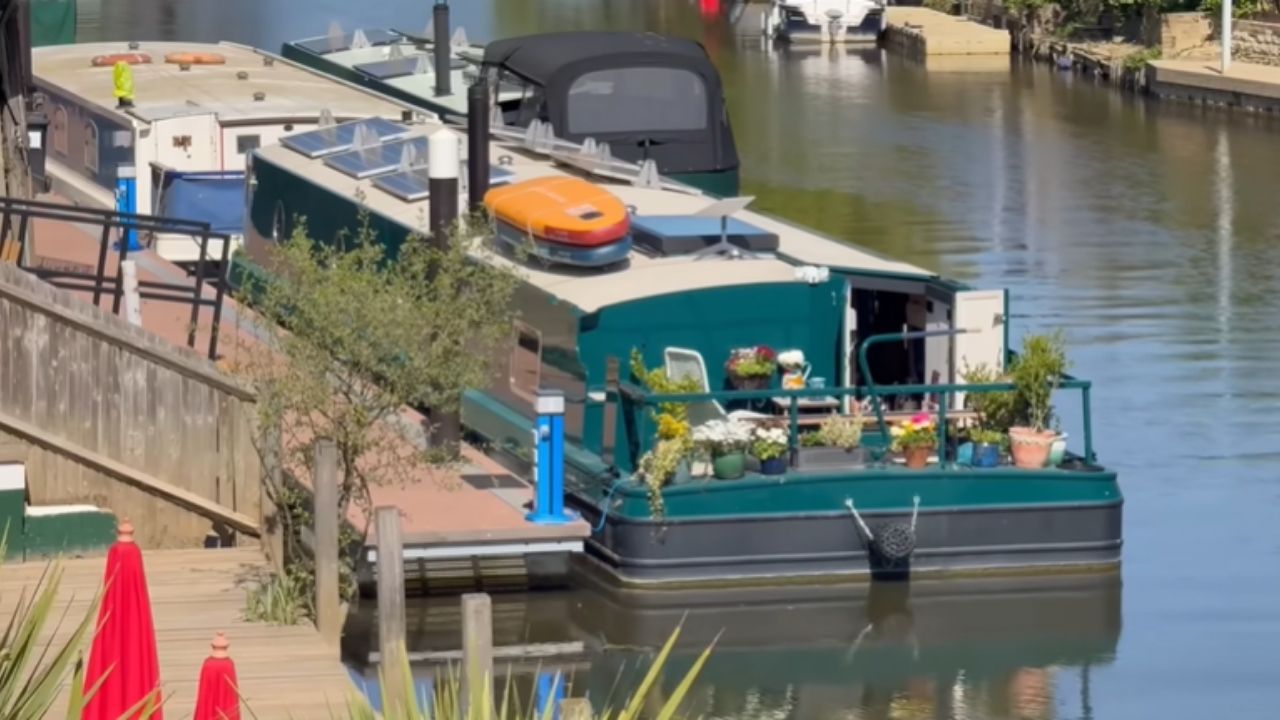
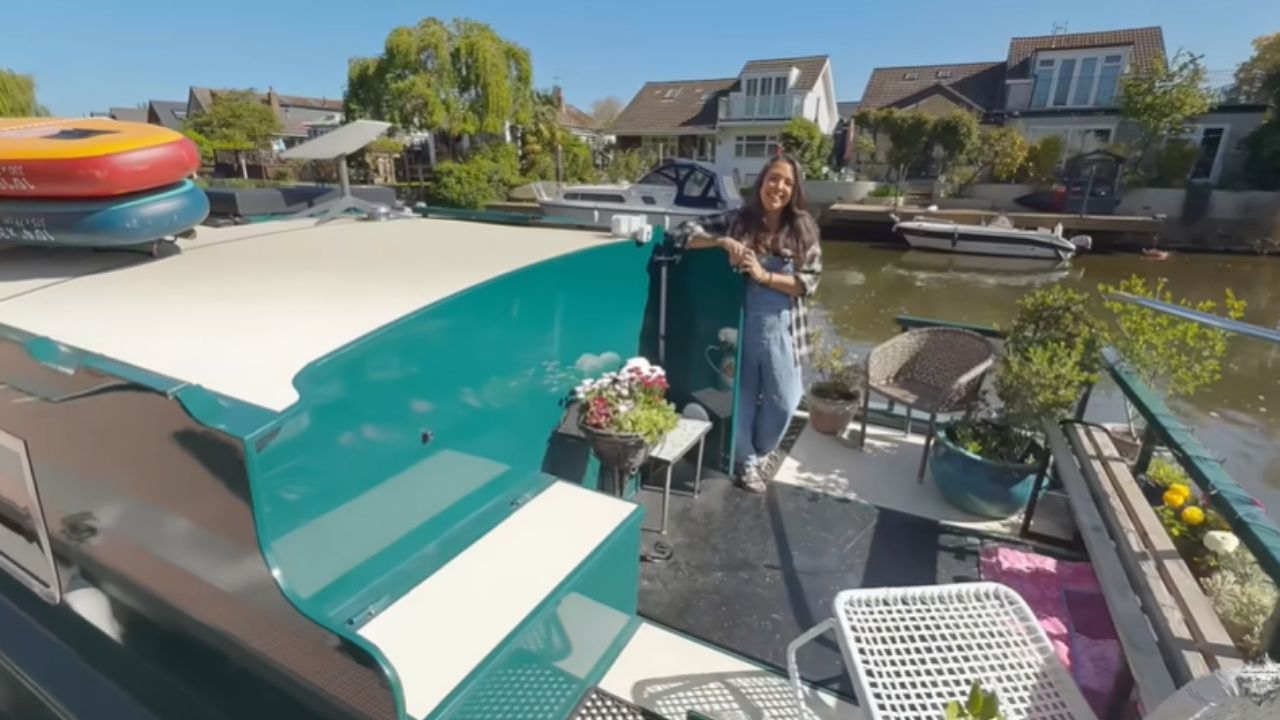
Becca’s vessel is 60 feet long and almost 13 feet wide. According to her, this size still allows navigation through the canal network, passing through London to the Surrey area, south of the capital.
-
22-Year-Old Transforms Old Farm Trailer into Two-Story Tiny Home Using Recycled Materials

-
Doctor Revives Ancient Crescent-Shaped Dams in Drought-Stricken Indian Region, Restoring Water to Over 1,000 Villages and Reviving Rivers Dormant for 60 Years
-
Facing housing challenges, man buys and renovates a 10m² abandoned cabin in Brazil over six years, creating a new career from his improvised project.
-
Brazilian Student Juliana Estradioto Wins Global Science Prize for Creating Biodegradable Material from Passion Fruit and Macadamia Shells, Has Asteroid Named After Her




The wide beam format offers more internal space than traditional narrowboats. The decision to live on a boat appears as an attempt to combine space, location, and lower monthly cost without sacrificing domestic comfort.
Solar power helps in the floating home routine
Outside, the boat draws attention with the number of solar panels. Becca explains that the panels can be tilted to better capture the light, and that the area where she is receives a good amount of sun.
The captured energy powers a system with lithium batteries. The boat also has an electrical connection from the residential berth, used mainly in winter or when solar generation is low. According to the resident, the system alternates when necessary.
Starlink solved the lack of signal in the region
Becca also shows a small security camera and a Starlink antenna. She states that, in that village and area, the common signal does not work well, so satellite internet has become important.
This detail reinforces the technological side of the dwelling. Living on a boat, in this case, does not mean giving up connection: the routine depends on solar energy, batteries, satellite internet, and planning to keep the house running.
Interior was built from an empty structure
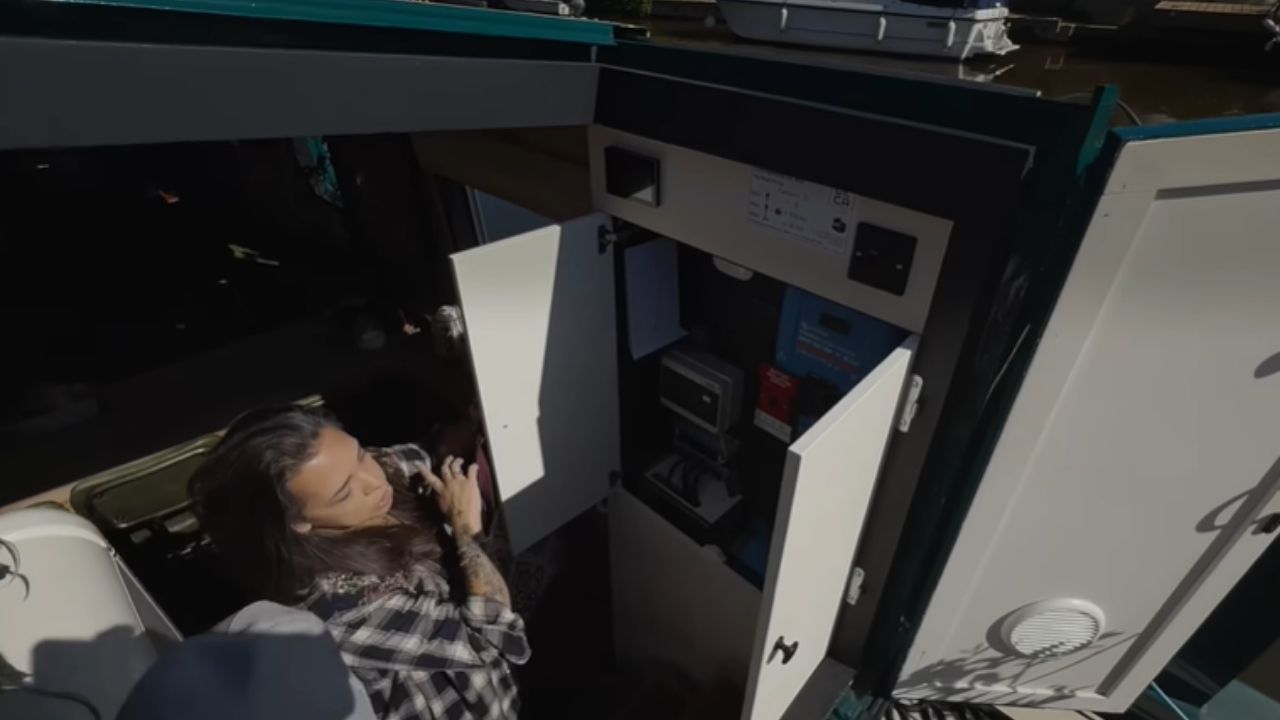
When Becca bought the boat, it was practically an empty structure. According to her, there was only the base with spray foam insulation, and the interior was built later with the help of a company mentioned in the video as Boat Fit Co.
The resident participated in designing the space. She wanted a bright, colorful, and functional kitchen, with large fridge and freezer because of the four children. After years of living in rented properties, she wanted to put her own identity into the environment.
Colorful kitchen accommodates the family
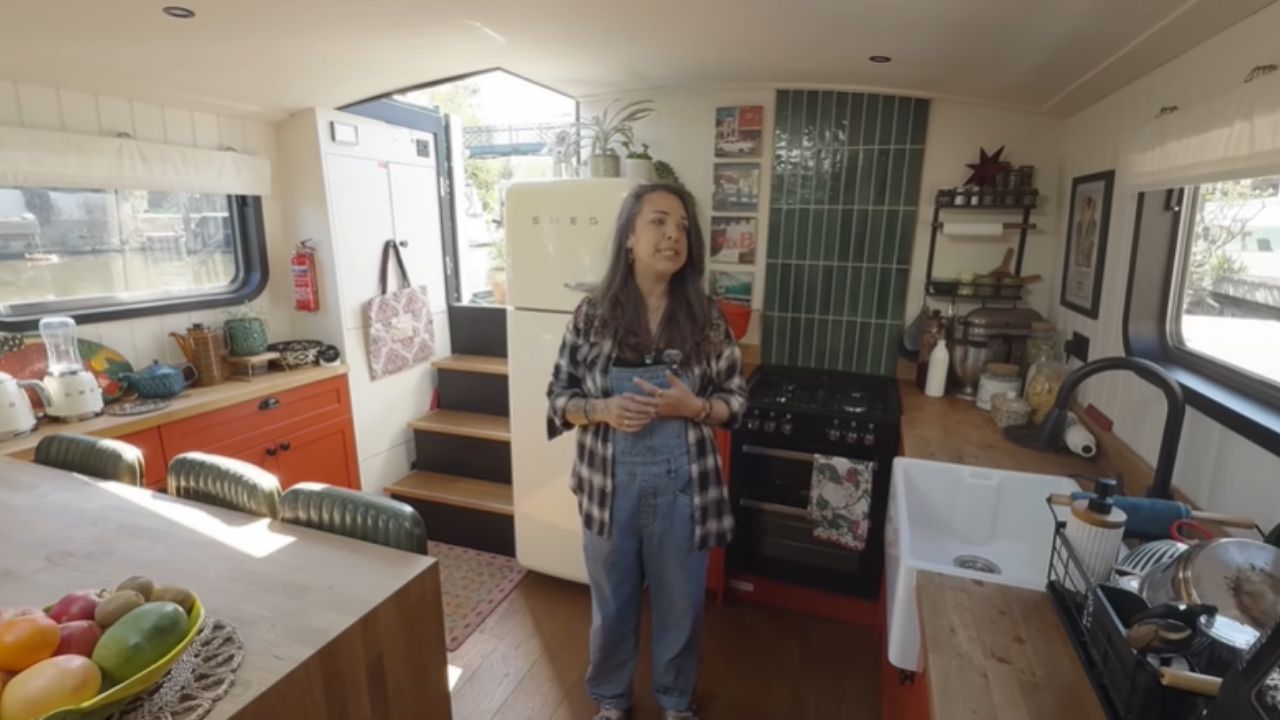
The kitchen has a Belfast sink, prep area, stove, and space for six people to sit comfortably for dinner. Becca says she likes color, pattern, wallpaper, and plants, elements that appear inside the boat.
She also comments that when renting properties in London, she couldn’t paint or decorate as she wanted. On the boat, this limit disappeared. The floating home became a space for personalization, not just a cost alternative.
Living room has sofa bed and strong heating
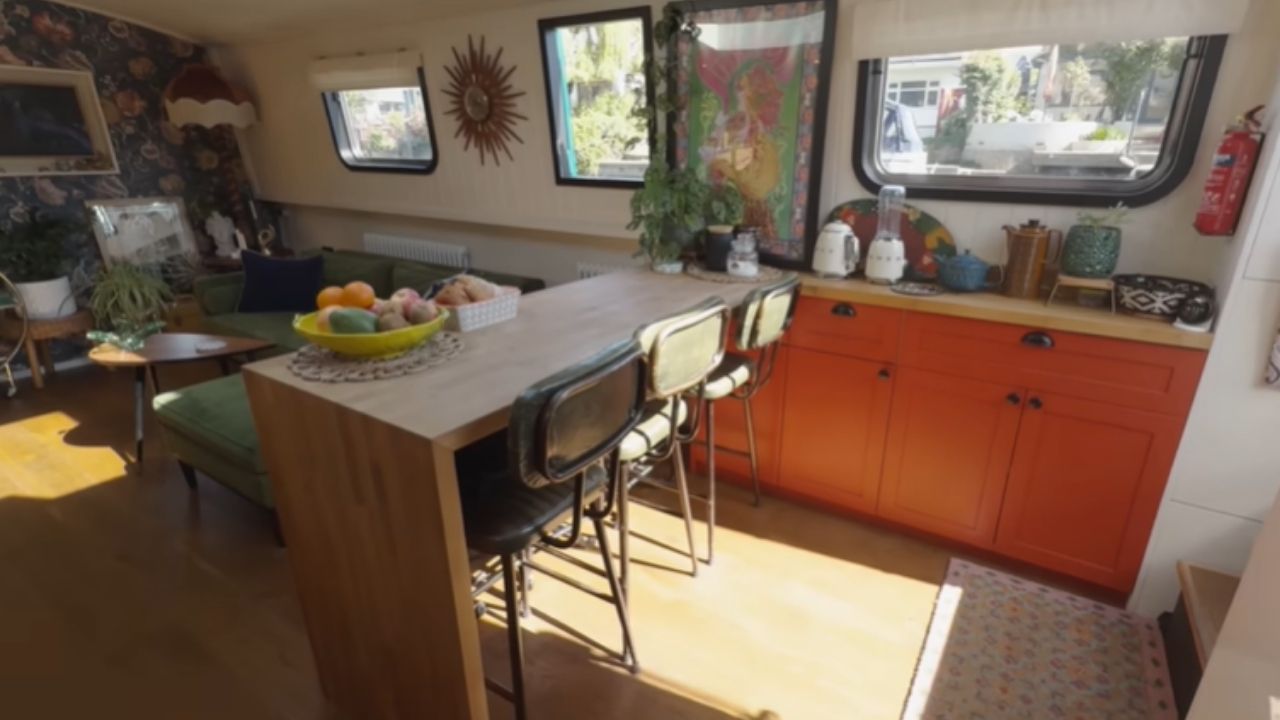
In the living room, there is a sofa bed used when the older children, already in late adolescence or early adulthood, spend time on the boat. Becca states that the sofa opens up and accommodates at least three of them.
The main heating comes from a multifuel stove, used with coal and wood during the winter. The boat also has diesel radiators, which can heat the water, but she says she hardly needs to use them because the boat is well insulated.
Bathroom has shower and simple system
In the bathroom, Becca prioritized a good-sized shower, as the family prefers shower baths over a bathtub. The boat also has a compostable toilet, described by her as easy to maintain.
She explains that, being in a residential berth, there is support infrastructure on site. When the whole family is together, the children can also use the bathroom in the mooring area. On trips, the boat’s system needs to be emptied manually.
Water tank has 600 liters
The boat has a 600-liter water tank, located at the front of the vessel. Becca states that refilling usually occurs about once a week, depending on how many children are on the boat and how many showers are taken.
This point highlights an important difference between a fixed house and a floating home. Living on a boat requires more direct management of water, energy, bathroom, heating, and maintenance than in a conventional residence.
Washing machine was integrated into the corridor
The vessel also has a washing machine, installed in a cabinet in the corridor. Becca explains that the solution was designed to avoid excess furniture inside the rooms.
The laundry space is integrated into the corridor, along with storage areas. For a floating house, this type of decision is essential, as each cabinet, niche, and wall needs to serve a practical function without compromising circulation.
Choice came from the cost of living in London
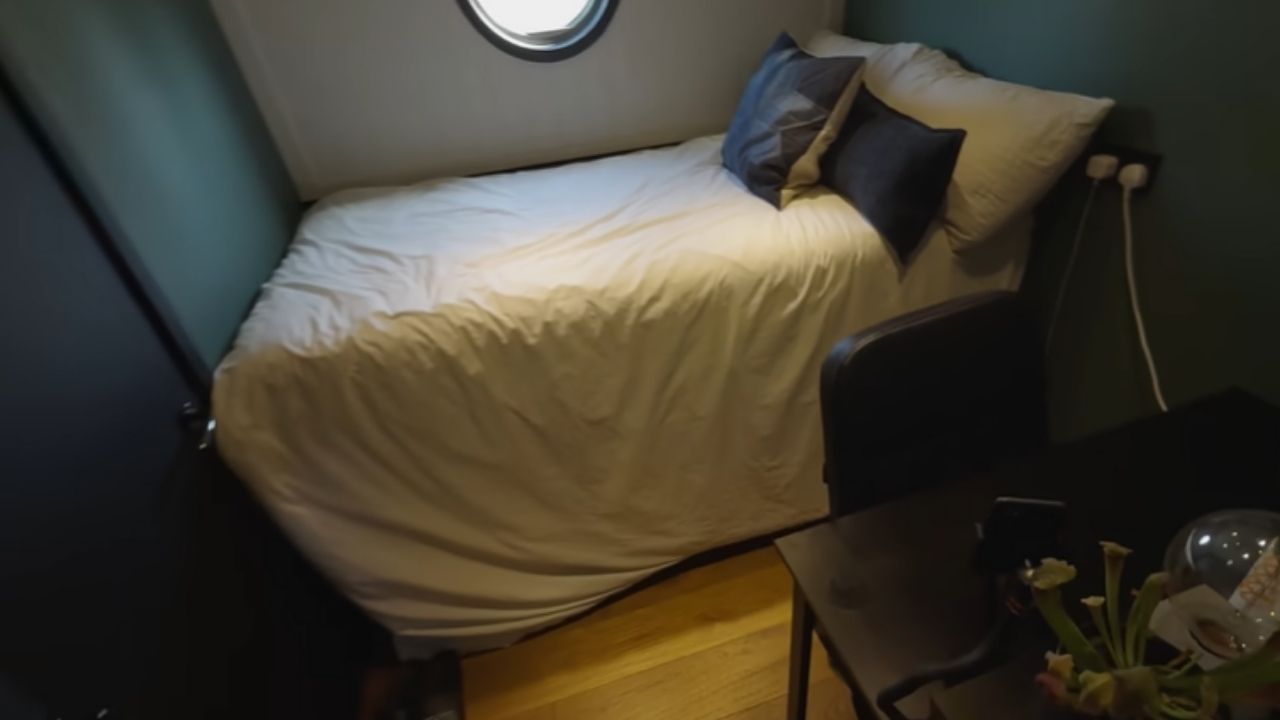
When asked why she decided to build a boat, Becca cites the cost of living crisis. She mentions that she had been a single mother for almost a decade and had four children, but the video treats this change as a residential choice and life project, not as a poverty narrative.
She says she had considered motorhomes but feared mechanical problems, especially due to experiences with used cars. The water, the tranquility of the river, and the possibility of creating a new routine for her and her children ultimately weighed in on the decision.
Previous rent was close to £3,000
Becca states that her previous rent was almost £3,000 per month for a three-bedroom house, without bills included. On the boat, according to her, the cost became about a quarter of that, already including bills.
Savings is one of the central points, but not the only one. She also highlights the location, the view, the tranquility, and the feeling of living in a place where surrounding houses can cost millions of pounds.
Residential spot was a decisive part
Finding a residential spot on the river was not simple. Becca states that, in that part of the Thames, this type of space is very rare, and she even compared the search to finding something almost impossible.
She spent about a year on a waiting list for another spot while the boat was being built. Four or five weeks before the move, the current spot became available. For the transition from land life to water life, she considers this point fundamental.
Routine on the river mixes home and adventure


The boat also offers outdoor areas. There are plants, seating space, paddle boards on the roof, and use of the river in the summer. Becca mentions that the children jump off the roof of the boat and swim in a part of the Thames used for wild swimming.
This aspect reinforces the difference between just reducing expenses and changing a lifestyle. The boat, called Anamara, was designed as a place of beauty, light, warmth, and tranquility for the family.
Alternative living does not eliminate daily work
Despite the comfort, Becca makes it clear that life on board requires constant tasks. It’s necessary to clean solar panels, manage water, empty systems, light the fire, monitor energy, and handle maintenance.
She describes herself as a practical person who likes to get hands-on. Living on a boat can reduce costs and increase freedom, but it also requires an active routine of managing your own home.
When living on a boat becomes a lifestyle choice
Becca’s story shows how living on a boat can be a residential alternative in expensive cities like London, especially when the vessel includes solar energy, lithium batteries, satellite internet, laundry, a full kitchen, and residential space.
The question that remains is straightforward: would you trade an expensive rented house for a floating home with lower costs, more autonomy, and daily maintenance tasks, or would you still prefer the security of a traditional residence on solid ground? Leave your opinion in the comments.





Be the first to react!