






 Portuguese
  Spanish


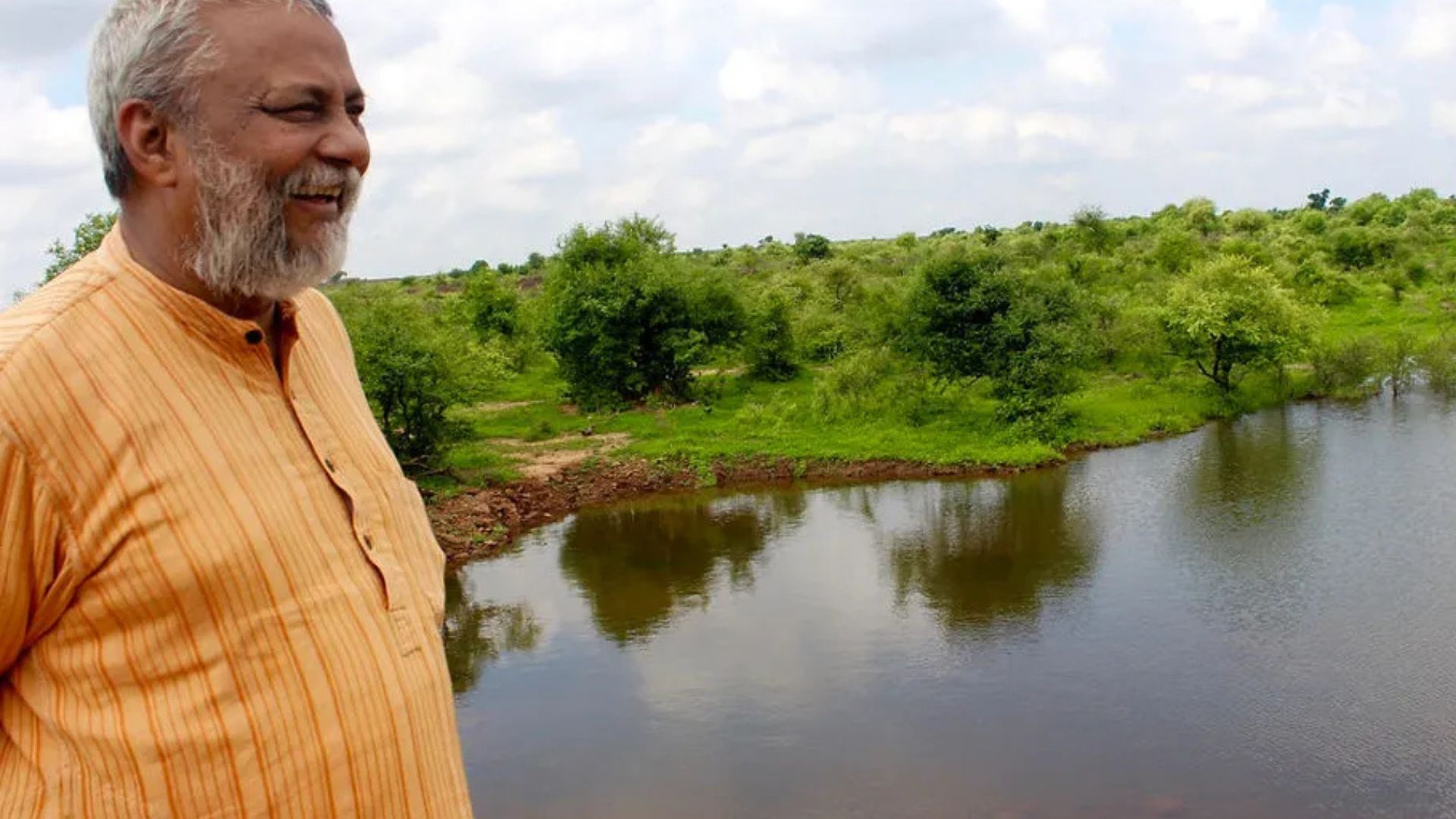
Rajendra Singh traded medicine for johads in Rajasthan and helped restore water, wells, and perennial rivers to over a thousand villages.
In the 1980s, the village of Gopalpura, in the Indian state of Rajasthan, faced extreme water scarcity, poverty, and malnutrition. It was in this setting that Rajendra Singh arrived in 1985 to work with Ayurvedic medicine and education, but he ended up being pushed into a much larger mission.
The turning point came when an elderly farmer named Mangu Meena told him that the community didn’t need medicine or school first, but water. From this conversation, Singh abandoned the original path and began to restore the johads, traditional rainwater harvesting structures that had been neglected in the region.
Rajendra Singh arrived as a doctor and left as a reference in water conservation
When he landed in Gopalpura, Rajendra Singh spent months offering treatment for cases of rathondi, night blindness associated with malnutrition, and also tried to pave the way through education. But the water shortage was so severe that it made any partial solution insufficient for the village.
-
Single mother of four swaps £3,000 London rent for life on a 60-foot solar-powered boat with Starlink and a washing machine, reducing monthly costs by 75%

-
22-Year-Old Transforms Old Farm Trailer into Two-Story Tiny Home Using Recycled Materials

-
Facing housing challenges, man buys and renovates a 10m² abandoned cabin in Brazil over six years, creating a new career from his improvised project.
-
Brazilian Student Juliana Estradioto Wins Global Science Prize for Creating Biodegradable Material from Passion Fruit and Macadamia Shells, Has Asteroid Named After Her


In talking with Mangu Meena, Singh heard that the central problem was not in medicine, but in the absence of the basic resource that sustained local life. He himself acknowledged that he knew nothing about water conservation, and it was the farmer who began to show him, in practice, how water could return if the community recovered traditional knowledge.
The change of course was not just symbolic. The profile of the Ramon Magsaysay Award records that Singh had left his job in Jaipur and, with companions from the Tarun Bharat Sangh, headed to a remote village at the end of the bus line, where he began to mobilize residents to repair and deepen old johads.
How johads help retain rain, recharge aquifers, and save wells
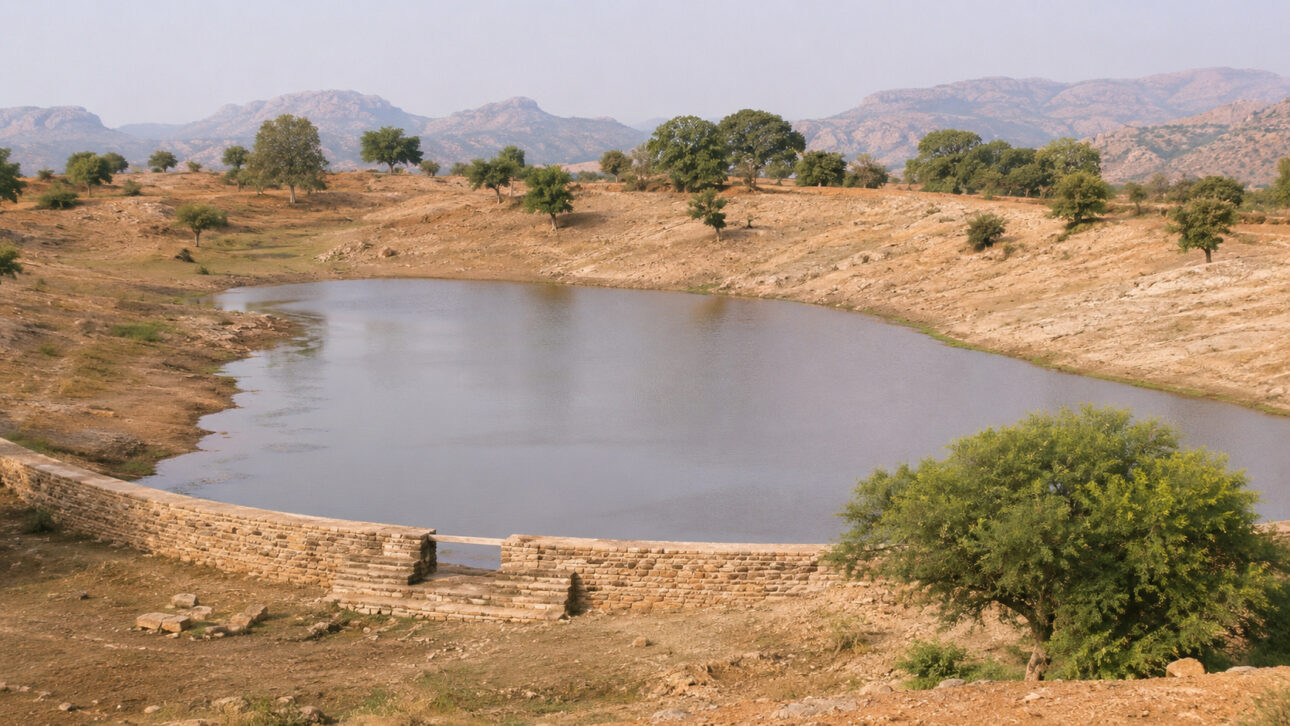
The johads are traditional earth reservoirs used to capture monsoon water and slow its runoff. Instead of letting the rain escape quickly, these structures hold the precipitated volume, favor soil infiltration, and help replenish underground moisture.
This principle changes the logic of semi-arid regions. When water penetrates the ground instead of evaporating or running off uncontrollably, wells, springs, and watercourses have a better chance of recovering over time.
It was precisely this combination of simple technique, local knowledge, and collective work that gave strength to the project. What seemed like a small rural intervention revealed a path to water restoration with relatively low cost and the ability to multiply among villages.
The first monsoon showed that water could return to Rajasthan
After recovering ancient johads, Rajendra Singh and the residents saw the result appear after the first monsoon. In his account to IDR, he states that after a single rainy season, wells and underground aquifers began to recharge, and small dry springs started to show signs of life again.
The official recognition of the Ramon Magsaysay Award reinforces this turnaround by stating that when the restored reservoirs began to fill up again, the residents realized that those abandoned structures were the key to recovering the degraded habitat of Alwar. They not only stored rainwater but also recharged local wells and watercourses.

From there, the initiative ceased to be an isolated experiment. Singh began to take the message to other villages through community mobilization and local campaigns, spreading the idea that water security did not depend solely on large works but also on the ability of each community to rebuild its own water base.
River Arvari, perennial rivers, and the recovery that emerged from the villages
One of the most well-known milestones of this journey was the return of the Arvari River. In his Magsaysay award acceptance speech, Rajendra Singh stated that in 1996, he was surprised to see the river flowing even at the peak of summer, after years of building catchment structures in its basin.
At that time, the award foundation already recorded an impact far beyond a single village: 4,500 johads in operation, work in 750 villages, and five rivers that were previously dormant flowing year-round. Years later, in an interview with IDR, Singh said that this type of work had helped revitalize 12 rivers, which became perennial.
The SIWI, the organization responsible for the Stockholm Water Prize, also summarized this reach by stating that Singh and his organization, in cooperation with local residents, helped revive several rivers and bring water and life back to more than a thousand villages.
The return of water brought farming, work, and new community organization
The impact was not limited to the watercourses. In the official profile of the Magsaysay award, the recovery of the johads is associated with the increase in cultivated area, the rise in agricultural income, and the reduction of the need for male migration for work outside the villages.
In his testimony to the IDR, Rajendra Singh describes this process as a form of reverse migration. When the water returned, families who had left in search of employment were called back, the land was cultivated again, and the news of the rebirth of the farms spread to other districts of Rajasthan.
The transformation also took on an institutional form. The official recognition of the Magsaysay highlights that community management structures emerged, including local assemblies and even a “River Parliament” in the Arvari, aimed at discussing water use among villages.
In the same process, a legal action supported by Singh contributed to the closure of more than 450 mines that were degrading the region’s ecology.
The Waterman of India became a global symbol of water restoration
Rajendra Singh’s work gained international prominence with the Ramon Magsaysay Award in 2001 and the Stockholm Water Prize in 2015. The IDR itself notes that the latter is often called the “Nobel of water,” which helps measure the level of recognition achieved by a journey that began in a forgotten village of Rajasthan.

The strength of this story lies in the contrast between the simplicity of the technique and the scale of the result. Instead of deepening dependence on expensive and centralized solutions, Singh helped reactivate a traditional technology based on rain, infiltration, soil, and community participation.
Therefore, the legacy of the so-called Waterman of India goes beyond the biography of a single activist. It shows that restoring water does not just mean filling reservoirs, but rebuilding agriculture, income, local autonomy, and the very capacity of a community to stand firm in regions marked by drought.




Be the first to react!