





 Portuguese
  English
  Spanish
  4 min of reading
  0 comments


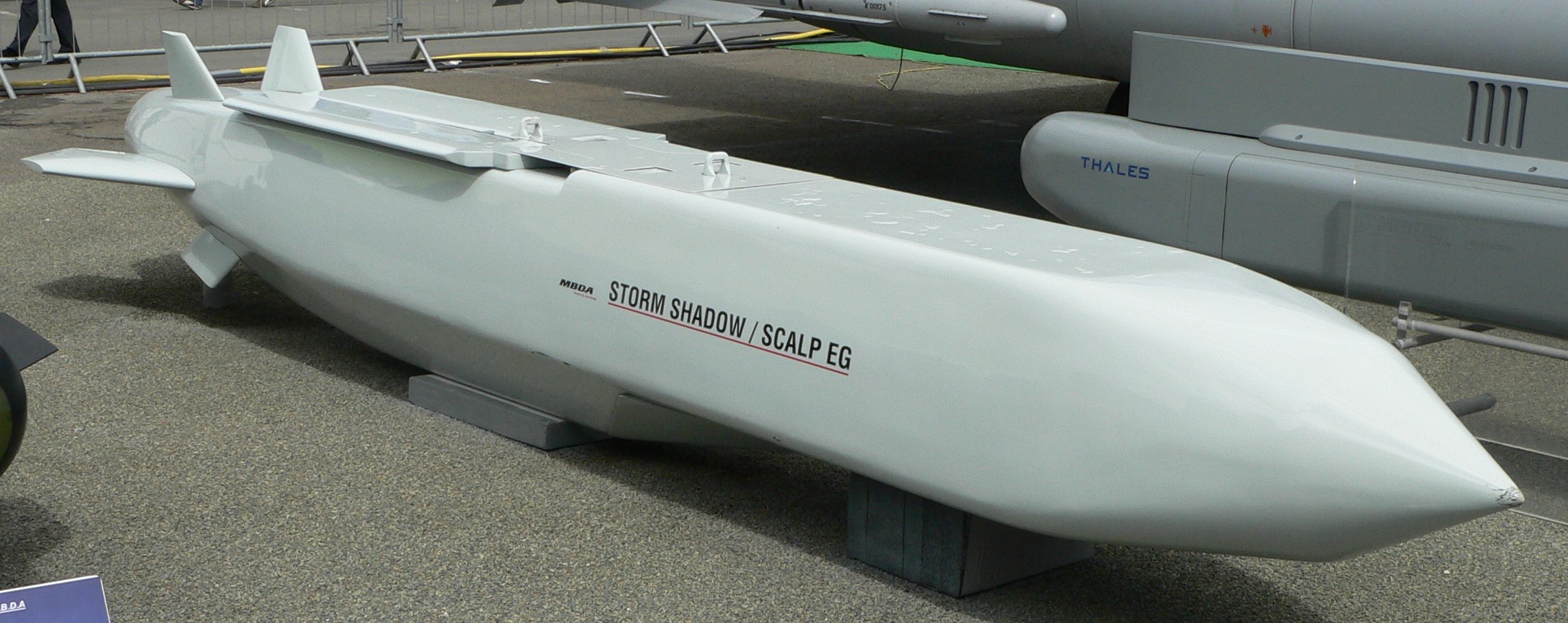
Storm Shadow, Cruise Missile With 500 Km Range, Low-Flying, Hybrid Navigation, and Penetrating Warhead Reveals the Evolution of Precision Strike in Modern Aviation.
The defense sector has undergone a quiet evolution, driven by more sophisticated sensors, digital integration among platforms, and new geopolitical challenges. Within this context, the cruise missile Storm Shadow/SCALP-EG, developed by the Franco-British MBDA, frequently comes up in discussions about “smart weapons,” not due to Hollywood factors, but because of the engineering, guidance, and industrial planning that allowed for the combination of range of up to 500 km with a low-flying profile to reduce exposure to detection systems.
The technology itself is not new, but the way it has been consolidated and industrialized explains the ongoing interest in devices of this category. According to public documents from the UK Ministry of Defence (UK MoD) and analyses from specialized outlets like Janes, the Storm Shadow has become a reference in precision strikes since its operational debut in the 2000s.
The Storm Shadow/SCALP-EG in Modern Military Aviation
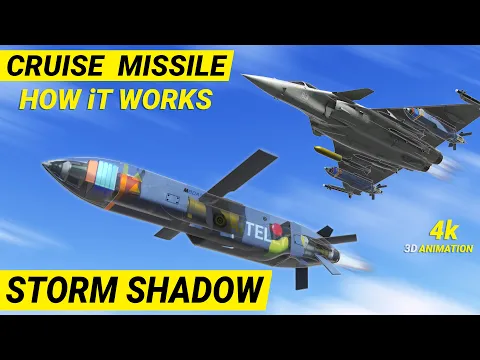
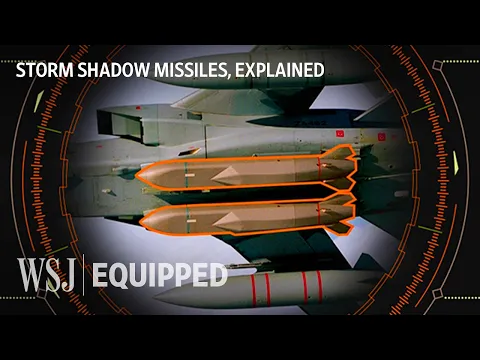
The Storm Shadow belongs to the family of air-launched cruise missiles. Coldly analyzed, it functions as a miniature unmanned aircraft: it has a fuselage body, foldable wings, turbofan, multiple navigation systems, and a mission computer.
-
The Brazilian Army observes armored vehicles of up to 45 tons, 120 mm cannons, and network warfare technologies presented at military fairs in Europe, while Romania prepares a billion-euro investment of €8.33 billion in new combat vehicles.

-
Germany breaks decades of military caution, releases billions in spending outside the debt limit, accelerates production of tanks, frigates, and munitions, and could transform Europe’s largest economy into a military power comparable to the largest NATO forces.

-
U.S. Navy ends production of the LCS class Freedom variant, and the last ship of the class, the USS Cleveland, enters service.

-
Why does the USA sink military tanks in the ocean and turn these war machines into artificial reefs?



Among the elements openly addressed by manufacturers and defense ministries are:
• Declared Range: ~500 km
• Approximate Length: ~5.1 meters
• Total Weight: ~1,300 kg
• Propulsion: turbofan
• Navigation: INS/GPS/TERCOM + terminal image sensor
• Warhead: penetrating, designed for reinforced structures
The technical differentiator lies in the combination of range + low flight + precise guidance. The term “low flight” refers to the use of a reduced altitude cruise profile, which decreases the likelihood of being located solely by radar, though it does not make the missile “invisible.” This is more related to the physics of electromagnetic signals and terrain factors than to any secret component.
Hybrid Navigation: INS, GPS, TERCOM, and Terminal Correction
Another interesting aspect of the Storm Shadow is the integrated use of multiple navigation systems, a common practice in modern missiles to reduce external dependencies.
- INS (Inertial Navigation System): relies on internal gyroscopes and accelerometers.
- GPS: allows for geographical corrections during cruise (when available).
- TERCOM (Terrain Contour Matching): compares the terrain with digital maps to adjust trajectory.
- Terminal Sensor: final phase with infrared imaging to enhance precision.
None of this is new in isolation, but what impresses is the digital and industrial integration in a missile with over 20 years of use and several upgrades over time.
Why Does a Cruise Missile Fly “Low”?
Unlike ballistic rockets, which ascend to great altitudes, cruise missiles like the Storm Shadow adopt a low-altitude aerodynamic profile.
This is not an aesthetic issue: it is an engineering solution to reduce exposure to ground radar, which is limited by the curvature of the planet and the presence of natural obstacles.
In other words, flying “low” is less a stealth trick and more a geophysical + aerodynamic approach that exploits environmental characteristics.
Multinational Employment and Aircraft Compatibility
One reason the Storm Shadow remains relevant is its compatibility with various air platforms. It has been integrated, in specific versions, with fighter jets such as:
✔ Tornado IDS
✔ Eurofighter Typhoon
✔ Dassault Rafale
✔ Mirage 2000 (specific versions)
This logistical aspect increases the missile’s value within NATO and allied countries, as it reduces industrial barriers and facilitates stock standardization.
Strategic Impact and Limitations
From a strategic standpoint, the Storm Shadow represents the transition to precision strikes without relying on heavy bombers, something that gained traction in the early 2000s. At the same time, it is important to highlight that a missile of this caliber does not replace aircraft, satellites, or other vectors — it complements.
Like all technology, it also has natural limitations, such as:
• high cost
• reliance on prior intelligence
• need for compatibility with specific aircraft
The technical debate about the efficiency of cruise missiles tends to be more sober than one might think: it involves cost per effect, logistics, signature, electronic countermeasures, integration time, and production batches.
More than a military artifact, the Storm Shadow/SCALP-EG has consolidated a school of engineering that combines autonomy, low flight, multiple navigation, and specialized warhead.
The expression “new paradigm” is often exaggerated, but here it appears more accurately: not through reinvention, but through the efficient integration of elements that already existed.
The result is a missile that remains relevant two decades after its introduction and helps explain why altitude control, precision, and modularity have become pillars of attack aviation in the 21st century.








-

-

-

-

-

-

248 people reacted to this.