Portuguese
  Spanish


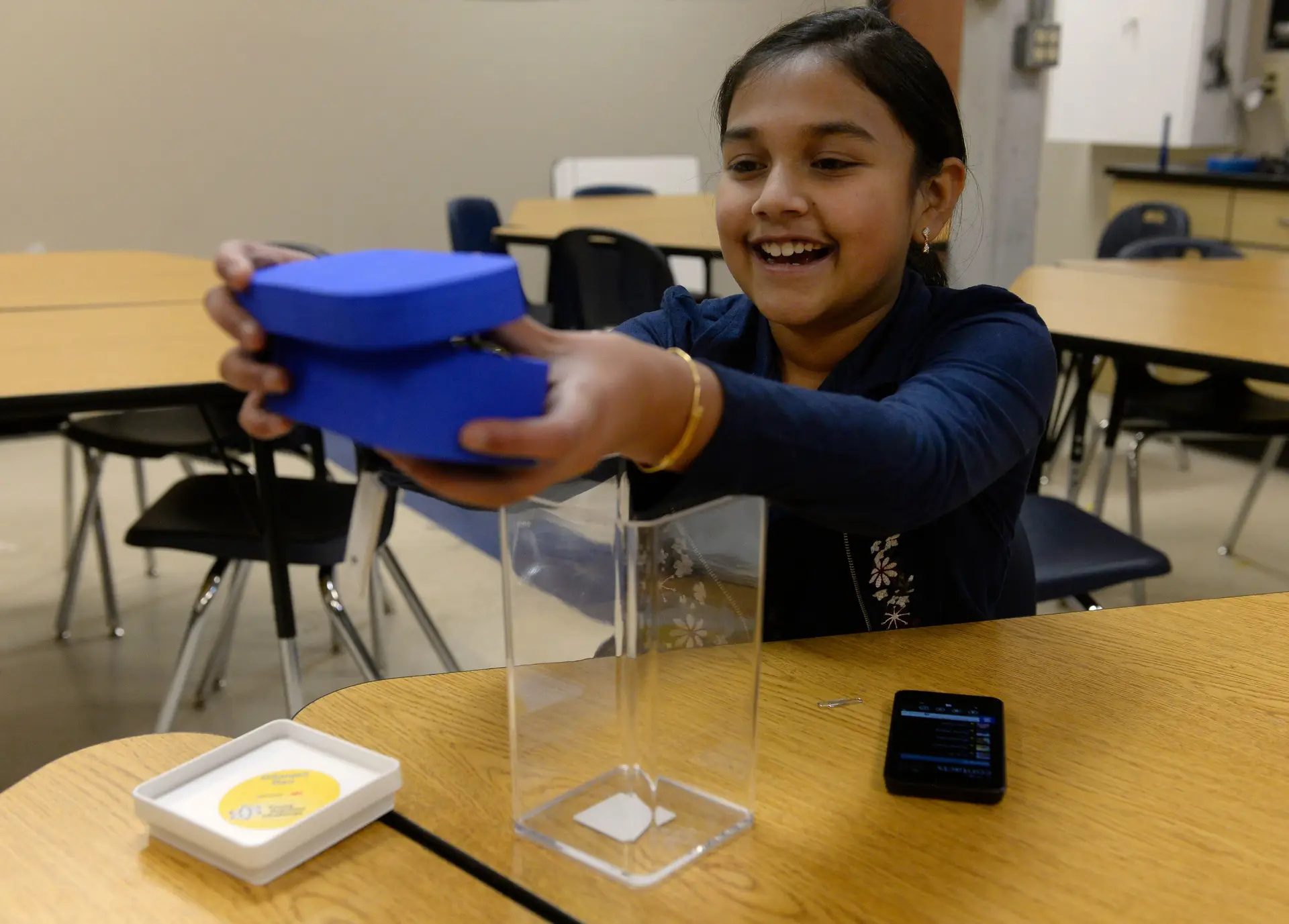


The 15-Year-Old Who Detects Lead in Water in Seconds Created a Device 10x Faster Than Official Methods and Became a Global Science Hope.
In 2020, TIME magazine surprised the world by announcing, for the first time in history, the selection of a “Kid of the Year”. The honor was not given to a celebrity, athlete, or influencer, but to a 15-year-old high school student who had created a portable device capable of detecting lead in water in just a few seconds, something that public and private laboratories still do with slow, expensive, and difficult-to-access processes. Her name is Gitanjali Rao, a resident of Colorado, United States. And the impact of her invention echoed in universities, research centers, and public health agencies because the problem she chose to tackle is one of the most serious today: the contamination of water supply systems by heavy metals, especially in poor communities and regions neglected by the government.
The idea that a teenager managed to develop a portable, inexpensive, and much faster solution than laboratory methods is not only inspiring but also a direct message to the future about the urgency of innovation to protect human life.
A Global Problem That Became a Health Crisis in Several Countries and the Arrival of the Portable Device Capable of Detecting Lead in Water
Gitanjali’s concern did not arise by chance. In 2014, the city of Flint, Michigan, faced one of the biggest water crises in the U.S. when thousands of children were exposed to dangerous levels of lead in the water.
-
The Trap of Modern Technology: How Screen Overload and Digital Connections Can Impact Your Mental Health and Well-being

-
Wyoming Couple Grows Tropical Fruits Year-Round in -40°C Using Geothermal Greenhouse, Demonstrating Earth’s Heat Can Produce Oranges and Lemons in Snow Without Traditional Heating

-
Ship Returns from Brazilian Coast with Thirty Newly Discovered Life Forms
-
Nigerian Professor Invents Electricity-Free Refrigerator Using Clay Pots and Wet Sand, Extending Shelf Life of Vegetables to 27 Days; 7,000 Units Distributed in Energy-Deprived Villages



Reports showed that small management failures and lack of maintenance of old pipes left residents vulnerable to a metal that can cause irreversible neurological damage, cognitive delay, anemia, kidney problems, and even reduced IQ in children.

Upon hearing about Flint in school, the young girl decided that she did not want to just study the problem: she wanted to create a real solution to prevent it. And this marked the beginning of an unlikely scientific journey for someone her age.
The Portable Device Capable of Detecting Lead in Water in Seconds
The device developed by Gitanjali, called Tethys, works based on a combination of nanotechnology and chemical sensors. The central mechanism uses functionalized carbon nanotubes, which react instantaneously upon contact with dissolved lead molecules in water.
Instead of traditional processes that depend on sample collection, laboratory analysis, expensive reagents, and days of waiting, the young girl’s device works like this:
- The water touches the sensor.
- The nanotubes change electrically upon encountering lead.
- The change is read by an internal chip.
- The result appears on the connected app via Bluetooth.
The average time for the complete process: about 10 seconds. Comparison with official methods: up to 10 times faster, cheaper, and with no need for technical staff.
Researchers who analyzed the invention claim that it could be adapted, in the future, for the detection of mercury, arsenic, and other contaminants, which would expand the global impact of the technology.
International Recognition and Scientific Awards
Gitanjali’s invention won the 3M Young Scientist Challenge, the most prestigious youth competition for scientific innovation in the United States. She competed against hundreds of students and received support from engineers and researchers from the company to turn her prototype into a functional piece of equipment.
Then came the global recognition: In December 2020, TIME published a historic edition naming the young girl as Kid of the Year, highlighting her commitment to applied science, education, and social responsibility.
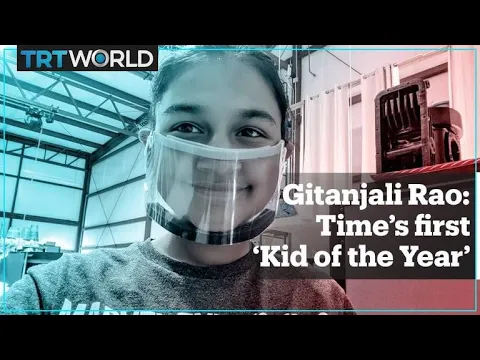
The title, practically unprecedented in international press, placed Gitanjali alongside figures such as Greta Thunberg, Malala, and other young people who influence public policies and mobilize real changes.
Social Impact and the Fight for Safe Water
Gitanjali’s invention is seen not only as a technological advancement but also as a tool for democratizing access to clean water.
The World Health Organization estimates that 1 in every 3 people in the world do not have safe access to treated water, and millions are exposed to contamination from heavy metals without even knowing it.
The device created by the young girl may allow poor communities, rural schools, shelters, and low-income families to conduct frequent tests without relying on laboratories or local authorities.
It is science surpassing bureaucratic boundaries and reaching directly into the hands of those who need it most.
A Journey That Is Just Beginning
Even with early fame, Gitanjali maintains her routine as a student. She continues researching new sensors, works on educational apps, and participates in debates about science and youth.
American universities have already shown interest in supporting her future projects, especially since she intends to develop open technologies that can be distributed for free to vulnerable regions.
Experts say that if she continues at this pace, the young girl could become one of the most influential figures in areas such as environmental engineering, applied nanotechnology, and global water security in the coming decades.
The Prodigy Who Became a Symbol of a Different Future
The story of Gitanjali Rao reminds the world that great solutions do not rely solely on multimillion-dollar research centers. Sometimes, they emerge from a study desk, from a real restlessness, and the desire to change what seems impossible.
At just 15 years old, she not only created a revolutionary device — she redefined what is expected from science done by young people and raised a global alert:
talent, when nurtured, can transform lives.