Portuguese
  Spanish


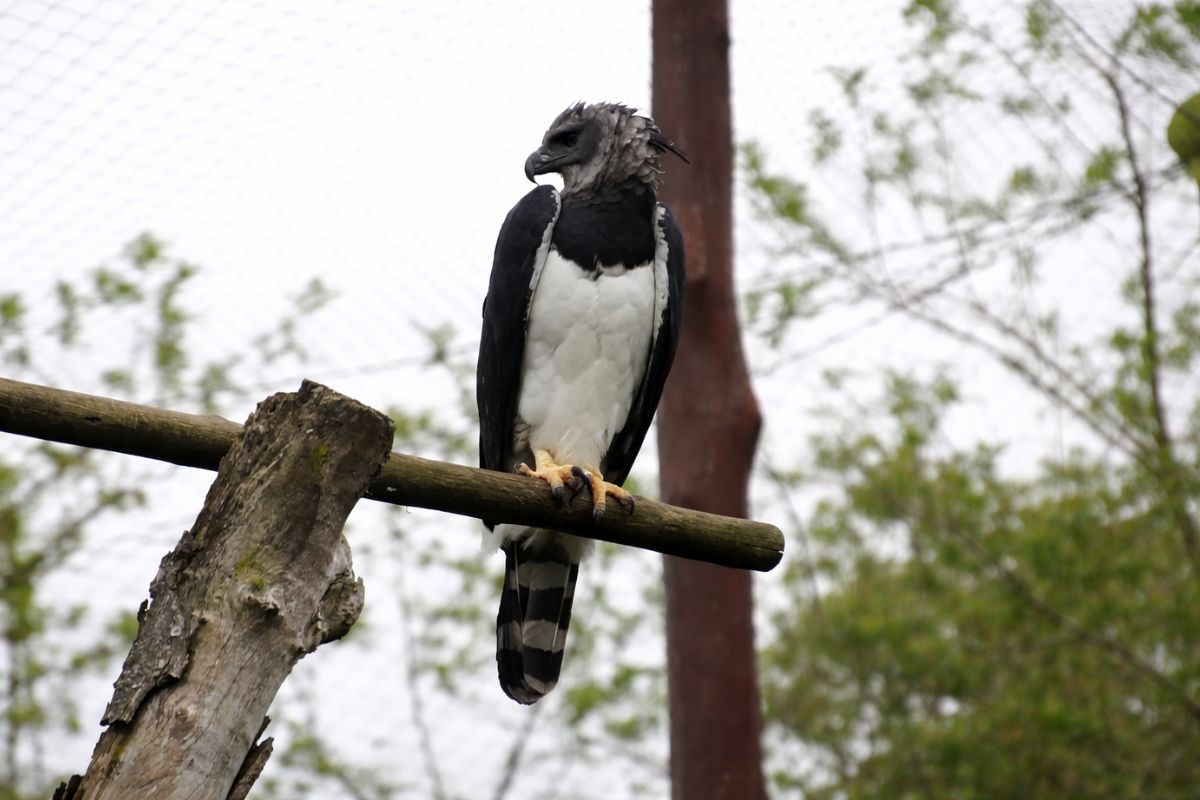


With 9 Kg and Claws from 8 to 12 Cm, the Harpy Eagle, the Harrier Hawk, Is a Forest Eagle That Hunts Monkeys and Sloths and Establishes Itself as a Top Predator in the Forests of Central and South America.
With 9 Kg and Claws from 8 to 12 Cm, the Harpy Eagle Impresses Even Those Accustomed to Big Animals. The Female, Which Is Larger Than the Male, Can Weigh Around 9 Kg and Reach Reports of About 12 Kg, Carrying Prey in Its Hunt That Is Close to Its Own Weight. It Is Like the Strength of a Jaguar with Wings, Concentrated in a Single Claw Strike.
These Weapons Make a Difference in the Environment in Which the Species Lives. Instead of Open Plains, the Harrier Hawk Dominates the Forest Interior, Using Its Wingspan of About 2.20 Meters to Maneuver Among the Trees, Ascend, Descend, and Attack Unexpectedly. Up There, in the Middle of the Dense Forest, the Leader of the Food Chain Is This Great Raptor, Not a Terrestrial Mammal.
The Forest Eagle That Weighs Up to 9 Kg
The Harpy Eagle Is a Forest Eagle Found in Regions of Dense Forest in Central and South America, Including the Amazon and Atlantic Forest Areas.
-
The Trap of Modern Technology: How Screen Overload and Digital Connections Can Impact Your Mental Health and Well-being

-
Wyoming Couple Grows Tropical Fruits Year-Round in -40°C Using Geothermal Greenhouse, Demonstrating Earth’s Heat Can Produce Oranges and Lemons in Snow Without Traditional Heating

-
Ship Returns from Brazilian Coast with Thirty Newly Discovered Life Forms
-
Nigerian Professor Invents Electricity-Free Refrigerator Using Clay Pots and Wet Sand, Extending Shelf Life of Vegetables to 27 Days; 7,000 Units Distributed in Energy-Deprived Villages



Unlike Many Eagles Associated with Open Cliffs, It Lives in Scenarios Full of Tall Trees and Closed Canopies, Where It Requires Precision in Flight to Hunt Without Hitting Branches.
In Birds of Prey, It Is Common for Females to Be Larger Than Males, and Here, This Is Even More Evident. While a Female Can Weigh Up to 9 Kg and Have Claws Ranging from 8 to 12 Cm, the Male Usually Has About Half the Size, Which Reinforces Her Role as the Main Offensive Force of the Pair When Raising the Nest.
Claws from 8 to 12 Cm: Jaguar Strike with Wings

When Speaking of 9 Kg and Claws from 8 to 12 Cm, the Harpy Eagle Clearly Defines the Type of Predator It Is. The Hind Claws, Especially the Opposable Claw, Function Almost Like a Curved “Knife” Capable of Slicing Through Flesh and Bones in a Single Motion.
In Practice, the Attack Happens in Fractions of a Second. The Bird Approaches Silently, Opens Its Claws at the Last Moment, and Grabs the Prey with Such Force That It Often Brings It Down, Rendering It Immobile. Those Who See Up Close the Thickness of Its Toes and the Size of Its Claws Understand Why the Comparison with a Jaguar Appears So Frequently.
How the Harpy Eagle Hunts Monkeys and Sloths


The Harpy Eagle’s Preferred Menu Includes Animals That Live High in the Trees, Especially Monkeys and Sloths. In Many Observations, The Remains Found Under Nests Show a Much Higher Quantity of Sloths, Which Remain Stationary and Exposed for Longer, Compared to Monkeys, Which Jump and Move Quickly.
The Harpy Eagle’s Strategy Is to Use the Forest to Its Advantage. It Flies through the Underbrush, at Canopy Height, Dodging Trunks and Branches, Observing Movement in the Canopy. When It Identifies an Opportunity, It Dives with Surgical Precision, Grabs the Prey with Those Claws Ranging from 8 to 12 Cm, and Disappears Again Among the Trees, Almost Always Without Giving the Prey a Chance to React.
Giant Nests and Few Chicks

High Up in the Strongest Trees, the Harpy Eagle Builds Impressive Nests. These Are Giant Structures, About 1.5 Meters in Diameter and Similar Depth, Made with Large Branches and Constantly Reinforced Over the Years. It Is Like a “Multi-Story Apartment” for a Single Chick at a Time.
The Female Usually Lays Two Eggs, but Generally Only One Chick Proceeds. The Second Egg Functions as a Kind of “Reserve” in Case the First One Fails. If the First Chick Develops Well, the Parents Focus All Their Attention on It, Bringing Food and Protecting the Nest. The Consequence Is a Slow Reproductive Rate, Typical of Top Predators.
Top Predator That Dominates the Forest
In Ecological Terms, the Harpy Eagle Is a Top Predator. With 9 Kg and Claws from 8 to 12 Cm, the Harpy Eagle Has Virtually No Natural Predators in Adulthood. The Greatest Risk Occurs for Eggs and Chicks, But with Parents Nearby, Defense Is Intense and Drives Away Most Threats.
This Role as a Top Predator Helps Control Populations of Arborous Animals and Maintain the Balance of the Forest. When an Animal of This Size Hunts Monkeys and Sloths High in the Canopy, It Is Influencing Everything from Vegetation Regeneration to Prey Behavior, Causing Them to Be More Cautious and Change Their Movement Routes.
Conservation, Breeding Centers, and the Harpy Eagle as the Forest’s Ambassador
Precisely Because It Is Large, Striking, and Rare, the Species Becomes the Focus of Conservation Programs in Conservation Breeding Centers and Zoos. Some Projects Work with Pairs in Spacious Enclosures, Monitoring Behavior, Reproduction, and, in Some Cases, Preparing Individuals for Release in Areas of Forest Where the Species Once Existed.
These Spaces Also Serve to Show the Public That a Predator of 9 Kg and Claws from 8 to 12 Cm, the Harpy Eagle, Is Not Just a “Movie Bird,” but a Concrete Piece of Brazilian and Latin American Fauna. Seeing Up Close the Thickness of Its Legs, the Fixed Gaze, and the Size of Its Claws Often Changes How People Perceive the Forest and the Need to Keep It Standing.
With All This in Mind, After Learning That a Predator of 9 Kg and Claws from 8 to 12 Cm, the Harpy Eagle, Still Crosses the Sky of Brazilian and Latin American Forests, Do You Think It Should Be Even More Widely Used as a Conservation Symbol to Protect the Forests Where It Lives?