Portuguese
  Spanish


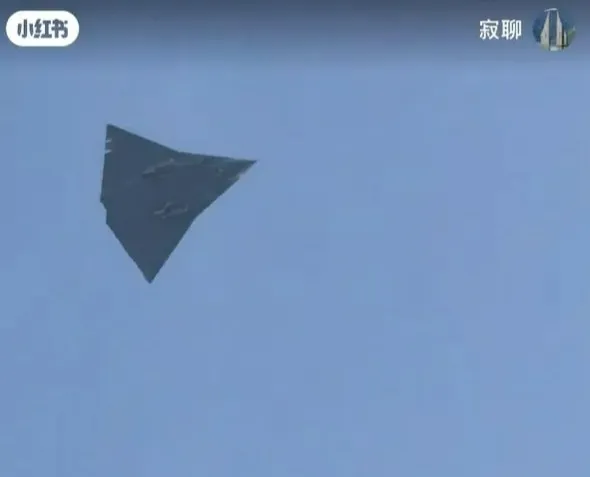

China Adapts Millennia-Old Silk Weaving to Create Advanced Stealth Coating, Increasing Durability and Stealth of Fighters Against Radars
Chinese researchers claim to have found an innovative way to increase the durability of stealth coatings on fighter jets. Using an ancient silk weaving technique called “jacquard weaving”, they aim to solve problems related to material degradation in extreme environmental conditions.
According to the study released by the team, stealth aircraft like the F-22 fighter face a persistent problem: the delamination of radar-absorbing coatings over time.
These coatings are made up of special layers of paints and materials designed to reduce the radar signature of the aircraft.
-
Antarctic Sea Creature Yields Promising Compound Against Melanoma, Captivating U.S. Researchers

-
Underwater Guardian: The Autonomous Robot Monitoring Submarine Cables, Self-Returning, Wirelessly Charging, and Transmitting Data Without Onboard Crew

-
Robots Clean Solar Panels in Desert Power Plants Without Water, Preventing Energy Losses
-
AI Radar Built with Old Camera and $20 Gains Attention After Alleged $317,000 Sale to Chinese Government, But Lack of Documentation and Official Confirmation Raises Questions




However, these materials can suffer significant wear when exposed to adverse environmental factors. In desert regions, for example, sandstorms can cause abrasion, compromising the effectiveness of the coating. In tropical or coastal areas, high humidity can affect the adhesion of the material to the airframe.
The Need for Constant Maintenance
To maintain the stealth effectiveness of these aircraft, maintenance teams need to constantly reapply the radar-absorbing material, known as RAM. This process takes place, on average, every three weeks, representing a high operational cost.
It is estimated that each flight of a stealth fighter can generate a cost of approximately US$ 60,000 just for maintenance and material replacement.
Faced with this challenge, Chinese scientists decided to explore an alternative approach. The method used is based on “jacquard weaving”, a technique that has roots in the Han Dynasty, dating back at least to the 2nd century BC.
According to the researchers, this solution may provide structural benefits to the stealth coating, reducing the need for frequent maintenance.
Technology Inspired by History
The study, published in the Chinese scientific journal Knitting Industries, explains that the inspiration came from jacquard looms used in ancient China.
This technology allowed for the creation of complex patterns in fabrics through a physical coding system, which some historians consider a precursor to the first binary computing systems.
A scientific historian interviewed by the South China Morning Post emphasized that the looms of the Han Dynasty were not only used for producing luxurious fabrics. He noted that the technique of storing patterns on punched cards may have inspired the approach adopted by Chinese military engineers.
The concept behind the new stealth coating involves using a fabric made of a double layer. This material incorporates conductive threads arranged to maximize radar wave absorption.
The research team claims that this configuration allows the coating to absorb up to 90.6% of electromagnetic waves in the 8-26 GHz spectrum, surpassing conventional coatings.
Engineering and Enhanced Durability
Professor Jiang Qian, who leads the research, describes the new material as a “marriage of ancient patterns and modern electromagnetism.”
The technique used consists of intertwining quartz fibers, which form the dielectric base of the material, with stainless steel wires, which create resonant circuits capable of dissipating radar energy as heat.
The researchers explain that the organization of the conductive threads follows a principle similar to that of ancient weavers, who aligned silk threads to form detailed designs. The difference is that, in this case, the geometric patterns are designed to manipulate electromagnetic waves.
Laboratory tests have shown that the new material exhibits superior mechanical strength compared to traditional stealth coatings.
According to the study, the tensile strength recorded in the longitudinal direction was 93.5 megapascals, a value more than ten times that of conventional materials.
The scientists attribute this strength to the anisotropic structure of the material, meaning the way the threads are arranged to withstand the aircraft’s stress vectors. This approach is similar to that used in brocade fabrics from the Han era, known for their strength and durability.
Enhanced Coating Performance
In addition to mechanical strength, tests indicated that the new coating features optimized impedance matching. The analysis of the Smith Chart, used to measure the electromagnetic properties of materials, showed that the fabric’s configuration allows radar waves to penetrate the material instead of being reflected.
This behavior, according to the researchers, significantly improves the stealth capability of the aircraft, making it less detectable by enemy radar systems.
The study suggests that this approach could represent a significant advancement for stealth technology, reducing maintenance costs and increasing the operational efficiency of military aircraft.
The researchers have not yet released details on tests in real flight conditions or potential large-scale military applications.
However, the study highlights that the combination of ancient techniques and modern engineering may pave the way for new solutions in the aerospace industry.
With information from Interesting Engineering.