Portuguese
  Spanish




Ancient Mixture of Quicklime, Pozzolana, and Recurring Reactions: Roman Concrete Amazes by Lasting Nearly Two Thousand Years and Pointing the Way to More Sustainable Works
The Roman concrete continues to attract attention for a simple reason: ancient structures remain intact after nearly two thousand years, even when exposed to wear, water, and environmental changes.
This performance contrasts with modern concrete, which can show cracks and loss of strength within just a few decades, increasing maintenance and repair costs.
The curiosity has turned into applied research. Understanding what allowed Roman material to last so long has paved the way for new ideas in civil construction, focusing on durability and sustainability.
-
Newly Completed Brazilian Highway in the Serra da Rocinha Becomes a 16.5 km Cycling Challenge and Boost for Local Tourism

-
Innovative Mortar Technique Enhances Porcelain Tile Stability, Reduces Buckling and Detachment Risks, and Provides Durable Finish Under Heavy Use

-
Giant Robots Build Entire Neighborhood of 100 3D-Printed Homes in the U.S., Showcasing Technology’s Impact on Construction Industry
-
Helsinki Residents Receive Water That Travels 120 Kilometers Through a Hidden Rock Tunnel from a Lake Before Treatment


What Happened and Why It Attracted Attention
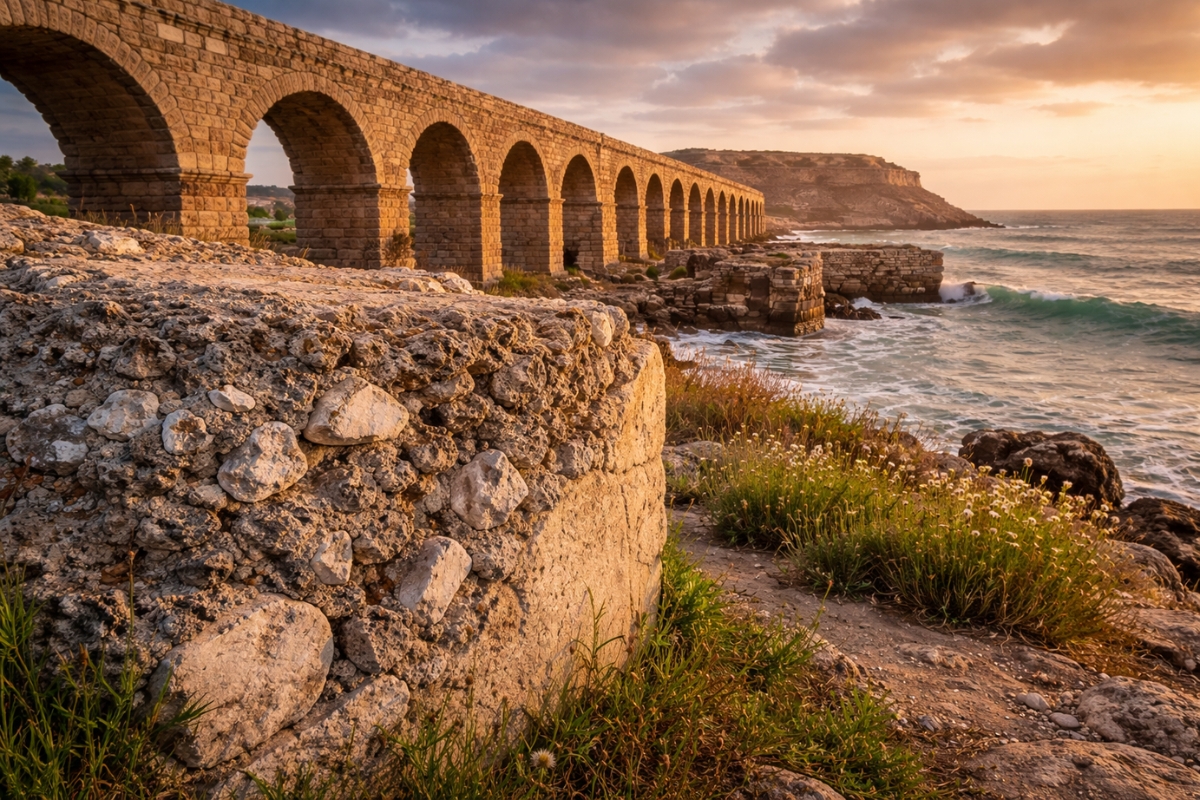
Structures such as the Pantheon, aqueducts, and port structures show that Roman concrete was not just initially resilient; it remained stable for a long time.
The difference lies not only in the era but in the combination of materials and the method of preparation, which created important internal effects within the concrete.
This theme has gained traction because it points to a current goal: to build for longer-lasting structures with fewer repairs and less environmental impact.

What Was in the Mixture and Why It Was Different
The base included quicklime, volcanic ash known as pozzolana, and rock fragments.
For a long time, the idea was that the lime had to be fully hydrated before use. In many cases, this did not happen completely.
This detail changed the internal structure of the material and created points capable of reacting again over time, which was crucial for durability.
How Roman Concrete Managed to Self-Repair
Small light spots within the material, known as lime clasts, began to be seen as a central part of the resistance process.
When cracks appeared and water entered, the lime could react again, dissolve, and then recrystallize.
The result was direct: the cracks tended to be filled, helping to seal fissures and keep the concrete more intact over the years.
Why Seawater Could Strengthen Coastal Structures
In works near the sea, the interaction between saltwater and pozzolana stimulated reactions that formed new minerals within the concrete.
Instead of accelerating degradation, this process could increase strength and reinforce the structure over time.
This contrasts with a common problem of modern reinforced concrete, where the presence of water and salts promotes corrosion of the metal reinforcements.
What Could Happen From Now On
These ancient clues are already influencing current research in search of more durable materials with less environmental impact.
The cement industry is a major emitter of CO₂, so increasing the lifespan of structures can reduce the need for frequent reconstructions and repairs.
The principles behind Roman concrete inspire tests with self-regenerating mixtures, new ways to activate lime, and mineral additives inspired by pozzolana, in laboratory studies and experimental works.
The Roman concrete shows that durability is not just about initial strength; it is the capacity to keep functioning over time, even under stress and humidity.
By transforming this knowledge into innovation, engineering gains paths for more economical, resilient, and sustainability-aligned works.