Portuguese
  Spanish


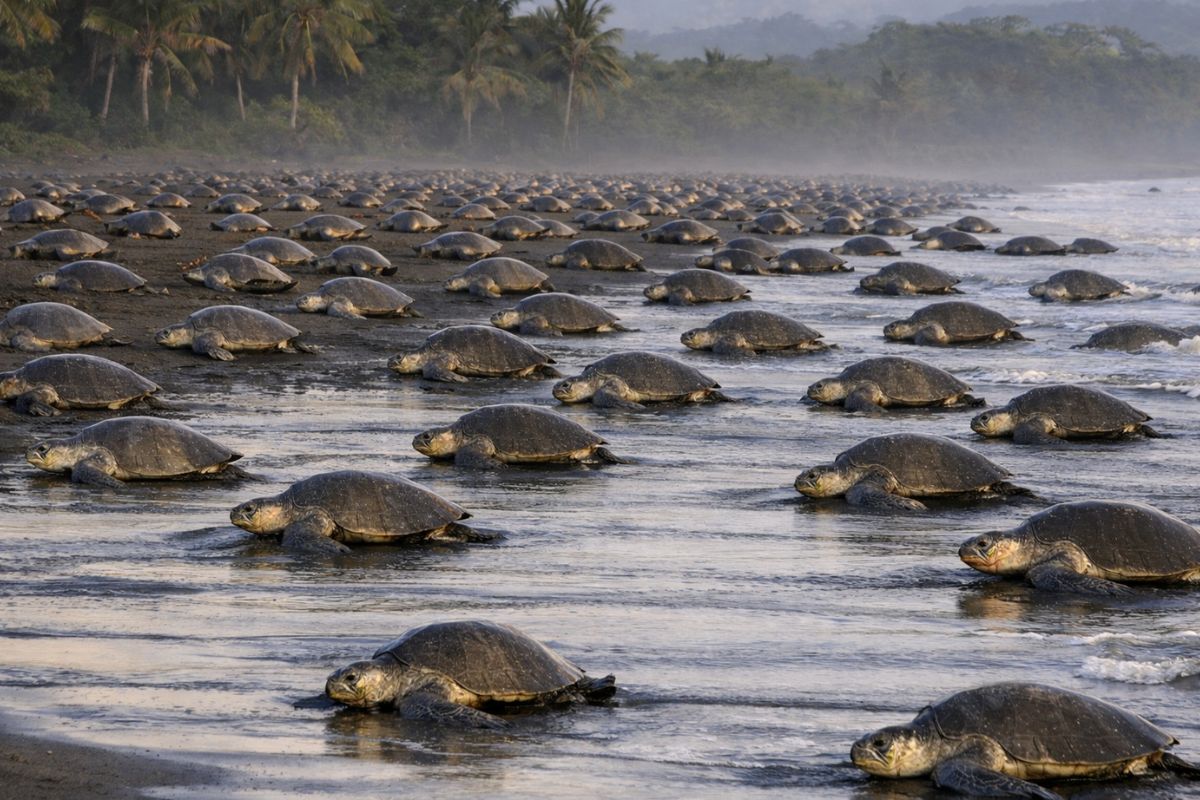


Fake Turtle Eggs Equipped With GPS Were Hidden in Nests in Costa Rica and Helped Scientists Expose the Whole Chain of Illegal Trade, from the Hunter on the Beach to Markets and End Consumers Up to 137 Km Away.
The fake turtle eggs were discreetly placed in real sea turtle nests and, as soon as they were stolen, began to send real-time location signals. Within a few days, these “spy eggs” revealed where traffickers take the goods, what routes they use to leave the coastline, and what type of commerce these products end up in, opening a new front in the fight against wildlife trafficking.
Researcher Helen Pheasey, a PhD student at the Durrell Institute of Conservation and Ecology, tracked the trajectory of one of these eggs on an online map. The location point simply wouldn’t stop moving: it left the beach, crossed roads inland in Costa Rica, and arrived at a supermarket loading dock, about 137 kilometers from the original nest. That single fake turtle egg already showed a complete trafficking route, with strong suspicion of resale on site.
In a two-year project started in 2017, Pheasey deployed 101 fake eggs in nests of olive ridley and green turtles on four beaches in Costa Rica. The trajectories varied: some eggs traveled a few meters to a beach house, others traveled kilometers, but all confirmed a concerning and recurring scenario of systematic removal of nests to supply the illegal trade.
-
China Develops Custom 140-Ton Electric Mining Truck with 770 kWh Swappable Battery, Deploys 290 Units in Xinjiang’s Largest Zinc Mine

-
Meta to Launch Arena, a New Prediction App Targeting 3.56 Billion Users, Competing with Polymarket and Kalshi

-
Scientist Challenges Famous Human Evolution Theory, Argues Homo Sapiens Evolved Gradually Over Thousands of Years
-
15-Year-Old American Builds Ocean Generator with PVC Pipe and 3D-Printed Propeller for $12, Wins National Prize, Presents at White House, and Makes Forbes 30 Under 30 List




How Fake Turtle Eggs Work

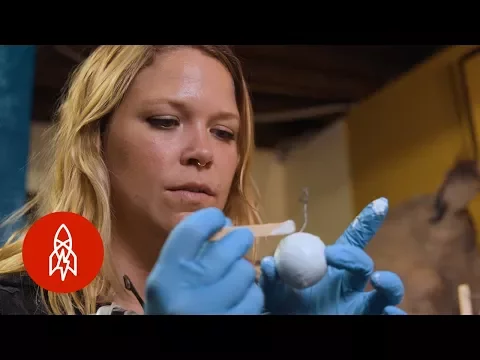
The fake turtle eggs were developed by the American NGO Paso Pacifico, dedicated to the protection of coastal ecosystems in Central America. They are approximately the size of a ping pong ball and are made of a rubberized material called NinjaFlex, which mimics the real texture of the shell.
To make them even more convincing, researchers collaborated with a Hollywood special effects artist, Lauren Wilde, who created a special textured paint, yellowish in tone, very similar to the appearance of real eggs.
The idea is that the trafficker does not notice any difference when removing the contents from the nest.
Inside these fake eggs, there is a SIM card with a GPS transmitter, which uses mobile networks to send location data.
As soon as the egg is removed from the nest and begins its journey, the system tracks the path taken, recording points in almost real-time.
The technology is simple, relatively accessible, and uses existing telephone infrastructure available in many countries.
The Experiment That Revealed Trafficking Routes in Costa Rica
In the experiment conducted in Costa Rica, scientists wanted to test the extent to which the fake turtle eggs would be able to reveal the criminal chain.
In some cases, the devices moved a few meters, indicating local consumption in beachfront houses. In others, they covered greater distances, showing paths to villages, shopping centers, and urban areas.
One of the most revealing trackings was of the egg that traveled 137 kilometers to a supermarket loading dock.
This route provided evidence that the eggs are not only informally consumed in coastal communities but can enter larger distribution networks, reaching bars, restaurants, and markets in more distant cities.
In several cases, the movement of the eggs allowed mapping of the entire sequence of illegal trade: from the poacher who removes the eggs from the sand, through the intermediary who transports and resells them, to the end consumer who buys them as delicacies or supposed aphrodisiacs.
This detailed view helps to better understand how crime operates and where to act more effectively.
From Hunter to Criminal Networks

Paso Pacifico estimates that in many unprotected beaches in Central America, more than 90% of sea turtle nests are raided for egg sales.
Behind these numbers lies a complex reality: the main villain is not always the local resident who removes the eggs.
According to Helen Pheasey, the initial collector is often a marginalized individual trying to secure quick income.
The data from the fake turtle eggs show that this first link in the chain is not the only one responsible for the problem, as the eggs continue their journey to cross larger and more organized trade structures.
This intelligence obtained through technology allows authorities and conservation organizations to focus on traffickers and criminal networks, not just isolated hunters.
Instead of a purely punitive approach at the most vulnerable point, tracking helps identify strategic intervention points at higher levels of the chain.
Turtle Eggs: Tradition, Luxury, and Threat to Species

The consumption of turtle eggs by coastal communities has existed for centuries, but the scenario has changed. The combination of growing demand in villages and cities, overfishing, entanglement in nets, and other threats to turtles has turned this practice into something unsustainable.
Today, these eggs are seen as delicacy and aphrodisiac in many places. Bars and restaurants serve soup made with turtle eggs or even drinks with raw eggs, reinforcing the exploitation of a symbol of status and pleasure. Meanwhile, sea turtle populations continue to decline in various regions of the world.
In this context, protecting nests and reducing the plundering of eggs has ceased to be just a local issue.
It is about ensuring the survival of vulnerable species and confronting a global illegal market that generates up to 23 billion dollars per year in wildlife trade.
The fake turtle eggs serve as an intelligence tool in this high-pressure scenario.
Accessible Technology and Potential for Other Species
One of the strengths of this solution is the relatively low cost. Each fake turtle egg costs about 60 dollars and can be sold to conservation projects and regulatory agencies.
There is already a South American government (not disclosed) interested in using the technology.
Paso Pacifico is working to increase the battery life of the devices, which currently only lasts for a few days when location alerts are sent hourly.
Additionally, the low signal reception in some coastal areas is a challenge. Nevertheless, the expectation is that the fake eggs will connect to cell towers as they approach urban centers and markets.
The organization is also studying adapting the technology of fake turtle eggs for other species, such as birds whose eggs are targets of trafficking (for example, parrots) and reptiles like crocodiles.
There are also projects in development to track legally sold shark parts, inserting tracking devices in the fins to identify international trade routes.
Intelligence to Stay a Step Ahead of Crime
For scientists and conservationists involved in the project, the main lesson is clear: without detailed information, it is impossible to strategically combat the illegal wildlife trade.
The fake turtle eggs demonstrate that simple and accessible technologies can generate valuable intelligence, especially in regions where monitoring is difficult and resources are limited.
The idea is to change the logic of action, leaving behind a purely reactive stance. Instead of merely responding to seizures and reports, it is possible to anticipate traffickers’ movements, identify routes and supply points, and concentrate efforts where the impact is likely to be greater.
As Helen Pheasey summarizes, intelligence is key to prevention. Staying a step ahead of hunters and trafficking networks is essential to give the sea turtles a real chance of recovery.
In your opinion, what should be the priority for governments: invest more in tracking technologies like fake turtle eggs, strengthen monitoring on beaches, or focus on awareness campaigns with consumers?