






 Portuguese
  Spanish
  5 min of reading
  1 comment


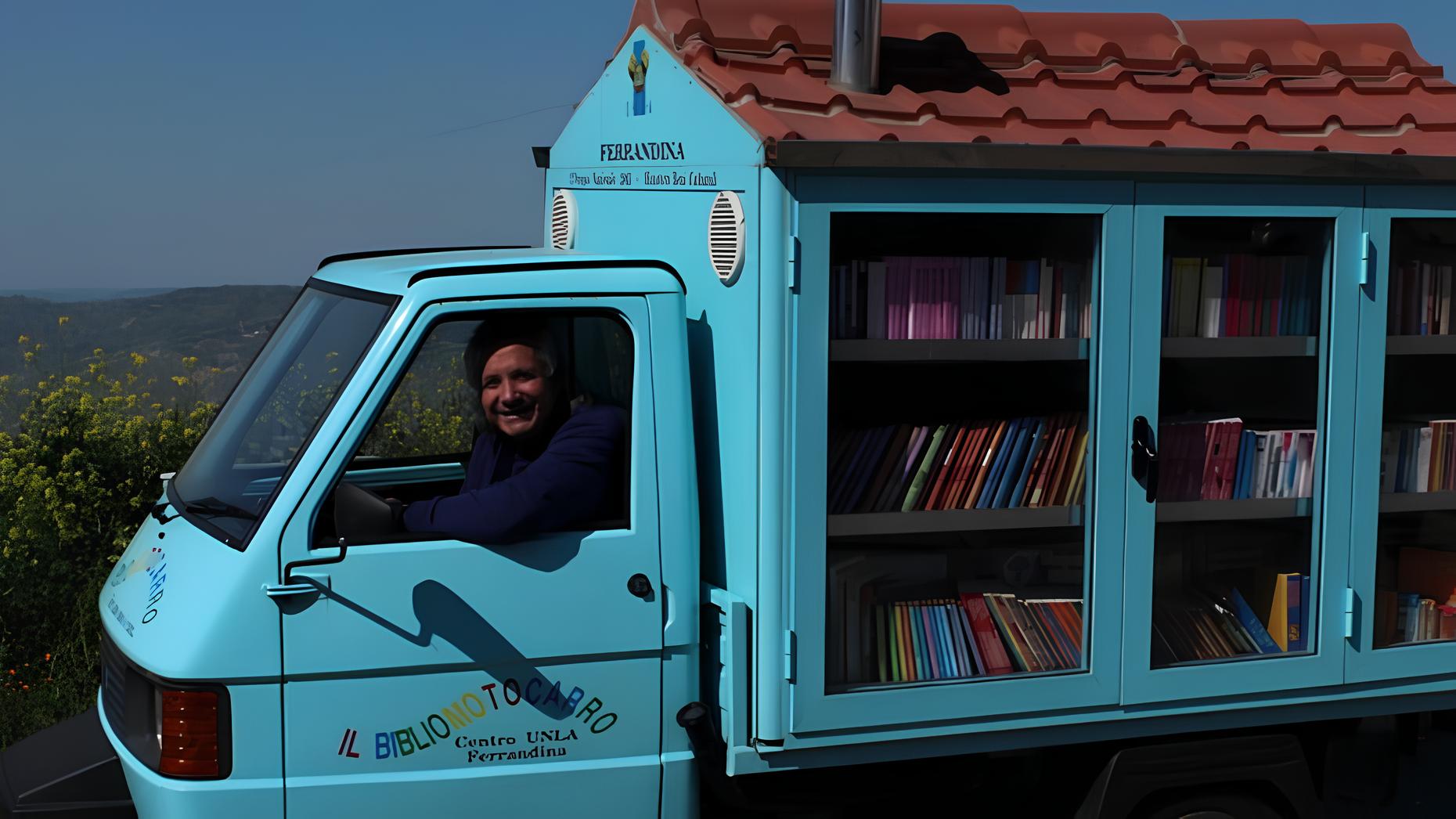


Italian Teacher Travels Over 300,000 Km With a Library Van Delivering Books to Children in Remote Villages and Preserving Reading Culture.
Few people would have the willingness to transform their own retirement into a traveling cultural mission. Even fewer would do this by driving a small van through the narrow and winding roads of rural Italian regions. But the protagonist of this story did exactly that. Antonio La Cava, an Italian primary school teacher, now nearing 80 years, decided that he would not simply disconnect from education when he left the classroom. Instead, he turned a simple vehicle into a mobile library to bring books to isolated communities in Basilicata, in southern Italy.
The initiative began in the late 1990s, gained momentum from 2003 onwards, and has already accounted for over 300,000 kilometers traveled on roads, alleys, and villages that rarely see librarians, booksellers, or in-person cultural programs.
The Origin of the “Bibliomotocarro” and the Discomfort With the Decline of Reading
The project was born from a very specific concern. La Cava noticed, in the last years of his teaching, that children were losing the habit of reading. For him, this was not just a change in school behavior, but a cultural risk.
-
Brazilian military personnel spend weeks in extreme training in the Amazon and receive a badge reserved for Jungle Warriors during the celebration of the 60th anniversary of one of the most demanding and respected courses in the world.

-
After the divorce, a woman spent four years building a studio apartment with skylights, mirrors, a bathtub hidden under the sofa, and family mementos for a fresh start.

-
The “Rei do Bolão” of Fortaleza made 100 people millionaires at once in the Mega-Sena: the lottery office in Aldeota divided R$ 168 million in a pool and delivers a bet from São Paulo to Dubai.
-
After swapping sewing for cement, a woman from Paraná became a mason, spent 12 years on construction sites, started building her own house, and even gained fame for restoring old Opalas.



Italy, despite having a respectable literary tradition, faces inequalities between urban centers and rural areas in access to libraries and bookstores.
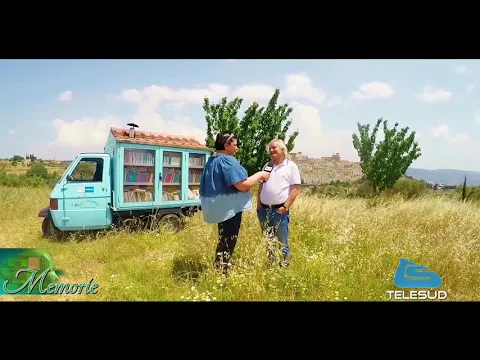

La Cava recounts in various interviews that he began to fear the future: “I didn’t want to grow old in a country of non-readers.” This phrase became a sort of motto for the initiative.
In 1999, still active, he started small community actions related to reading. But it was in 2003 that the project took the form that would make him internationally known: the transformation of a three-wheeled Piaggio Ape – a light and economical vehicle, a classic of rural Italy – into a micro library truck decorated like a little blue house on wheels. Thus emerged the Bibliomotocarro.
Route, Paths, and Children as the Absolute Priority
La Cava made it clear from the beginning that the primary audience was school-age children, especially those living in small villages with little cultural infrastructure.
The Basilicata, the region where he operates, is composed of small towns, many hillside villages, and long distances between communities. This creates a scenario in which access to books depends on travel and money – factors that are not always available to local families.
The Bibliomotocarro regularly visits villages, small squares, schools, and communities. The arrival of the vehicle is announced by a little organ music that echoes through the streets, attracting the attention of children, parents, and curious onlookers.
There is no bureaucracy. Children can borrow, read on the spot, or even receive books as gifts, with no fees or requirements.

Over time, the route expanded. La Cava began to cover hundreds of municipalities in Basilicata and occasionally extended trips to neighboring regions like Puglia and Campania.
Adding years of travel, the Bibliomotocarro has surpassed the mark of 300,000 kilometers, an impressive number for a small vehicle and an individual initiative.
The Importance of Bringing Books Where They Do Not Arrive
To understand the strength of this initiative, it is necessary to remember that literacy promotion policies vary greatly between countries and within them. Large cities usually concentrate:
• public libraries,
• bookstores,
• literary fairs,
• cultural projects,
• invited authors.
But rural villages – both in Italy and Brazil – rarely have structures of this kind.
La Cava noticed this gap and adopted a simple approach: if the reader cannot go to the books, the books will go to them.
This model is similar to itinerant programs adopted in other countries, such as mobile libraries in the United States, bookmobiles in the United Kingdom, and book bicycles in Latin America. The difference of the Bibliomotocarro lies in the fact that it is an individual and not a state initiative, financed by the teacher himself and by spontaneous donations.
The Human and Emotional Dimension of the Project
The impact of the Bibliomotocarro cannot be explained solely by kilometers or books distributed. There is an emotional and human component that sustains the initiative: the bond between La Cava and the children.
He reports that many young people await the vehicle as if it were a signal that someone cares about them, that they are not culturally isolated.
This is a sensitive point because a lack of access to culture is not merely a matter of intellectual consumption, but of self-esteem and belonging.
Seeing a child choose their first book, read aloud, or ask for recommendations is, for La Cava, the confirmation that the effort is worth it.
The teacher does not use the book as an assessment tool but as a trigger for curiosity, which contrasts with excessively technical school models.
International Recognition and Cultural Legacy
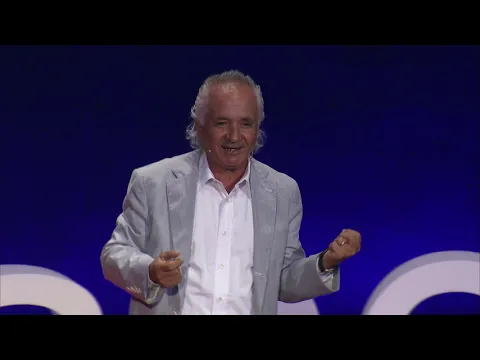
The Bibliomotocarro has attracted the attention of the international press. BBC, Reuters, Italian newspapers, specialized magazines, and educational websites have already reported on the project, turning La Cava into a cultural reference. He has participated in events such as TEDxMilano and received regional awards for his contribution to the culture of reading.
But perhaps the greatest recognition lies in the memories of the children. There are records of young people who grew up following the Bibliomotocarro and now bring their own children to receive books.
This generational cycle reveals something important: the project not only distributes books but also sows readers.
A Reflection on Reading, Access, and Cultural Commitment
The case of Antonio La Cava raises an uncomfortable question for any country: who brings books to those far from cities?
In an era marked by screens, algorithms, and the accelerated consumption of information, the idea of a small van filled with books traveling slowly on rural roads seems almost anachronistic. And perhaps that is precisely why it is so powerful.
While digital platforms compete for attention, the Bibliomotocarro offers something that the digital cannot deliver alone: human presence, free choice, and physical contact with a cultural object.
At nearly 80 years old, La Cava continues to drive, converse, distribute books, and reject the idea that reading is an urban privilege. His legacy lies not only in the journey taken but in the concrete defense of culture as a right – even in places forgotten by maps and public policies.
In the end, the Bibliomotocarro is not just a vehicle, but a message: a country that reads is a country that recognizes and projects itself. And this applies to Italy, Brazil, and anywhere there are children, villages, and a teacher determined not to retire from education.


Que alegria saber disso! Muito inspirador!