






 Portuguese
  Spanish
  4 min of reading
  0 comments


A studio apartment off the grid shows how solar energy, rainwater, and biodigester bathroom can sustain a small dwelling, but also require care, learning, and constant maintenance to function daily
The search for less dependency on a conventional house led Marie to build a studio apartment off the grid, even without prior construction experience. The small dwelling was designed to bring the routine closer to a life with more autonomy.
The information was published by Living Big in a Tiny House, a site about small houses and compact living. The publication, made on April 9, 2022, presented Marie’s house with solar energy, rainwater collection, and a biodigester bathroom.
The story draws attention because the studio apartment does not rely solely on reduced size or charming appearance. It needs to function as a real house, with energy, water, bathroom, kitchen, storage, and maintenance.
-
The European city hall that transformed an old urban avenue back into a canal, recovered a section that was filled in the 1970s, and delivered a new public space with water, vegetation, and pedestrian paths.

-
Buenos Aires and Montevideo are about 200 kilometers apart in a straight line, but the road trip can exceed 570 kilometers and take up to 8 hours and 30 minutes; see how long the journey takes by plane, ferry, car, and bus.
-
Couple sold house in São Paulo, resigned from their jobs, and paid R$ 15,780 to start over in Portugal, but the promised trip turned into a fraud complaint: suitcases remain packed, tickets were not delivered, and the European dream ended up stuck in a cramped rented room.

-
The world’s largest natural bridge cave is in China, impressing in Guizhou with almost 180 meters in height, a gigantic opening, and internal space used even for cars, becoming a cool tourist refuge within a monumental karst formation.



What it means to live in a studio apartment off the grid
A studio apartment off the grid is a small dwelling that tries to rely less on the common city infrastructure. Instead of using only energy provided by a traditional grid, it seeks to produce part of what it consumes.
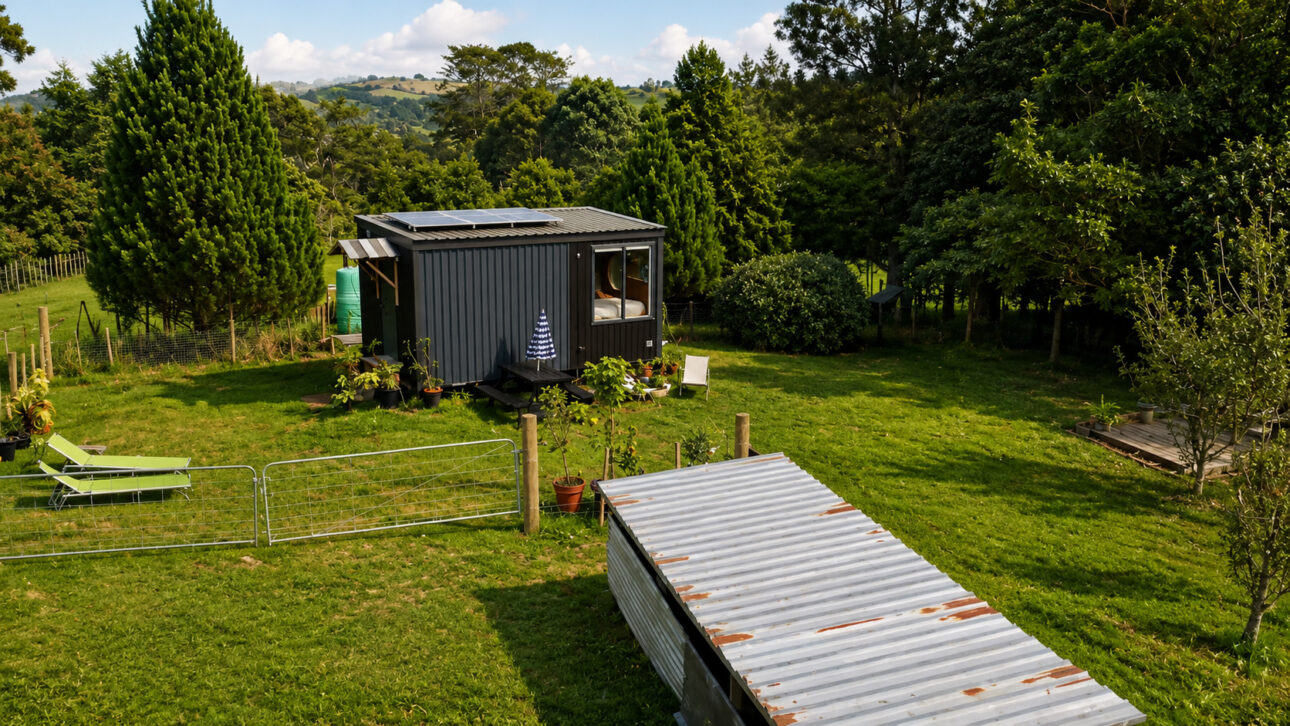
In Marie’s case, the energy comes from the sun. The solar energy helps keep the house running, but it also requires attention to daily use. When the dwelling is small, every choice weighs more.
This type of house also changes the resident’s relationship with water and the bathroom. The routine stops being automatic because the person needs to understand where the resources come from and how they will be used.
Without prior experience, Marie learned by building her own small dwelling
Marie appears as a young woman who decided to get hands-on without having prior construction experience. The studio apartment, therefore, also shows a journey of practical learning.
Building a small house doesn’t just mean raising walls. It’s necessary to think about the interior space, circulation, light entry, protection against rain, and the use of every corner.
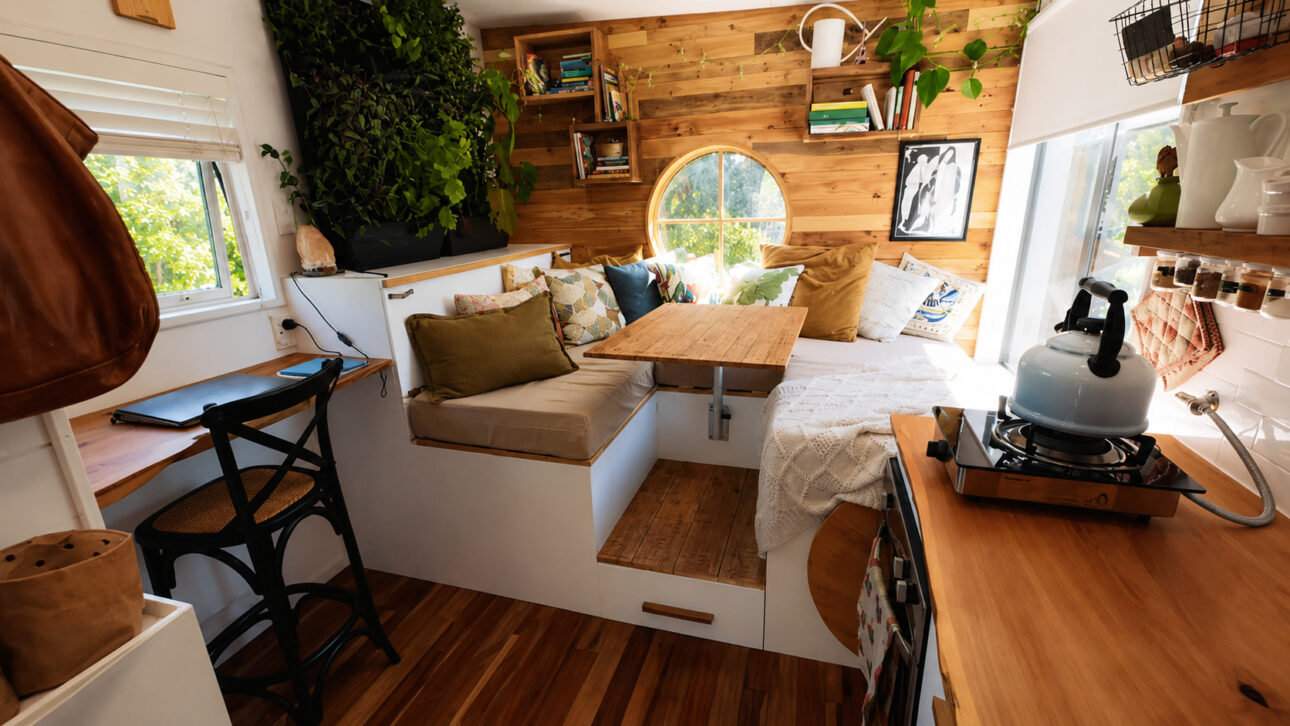
The dwelling has internal details that reinforce this carefully made construction. Among them are hanging plants, a wall made with pallet wood, and a round window that became one of the most striking points of the house.
Solar energy, rainwater, and biodigester bathroom sustain the house’s routine
Living Big in a Tiny House, a site about small houses and compact living, detailed the central systems of the studio. The house uses solar energy, collects rainwater, and features a biodigester bathroom.
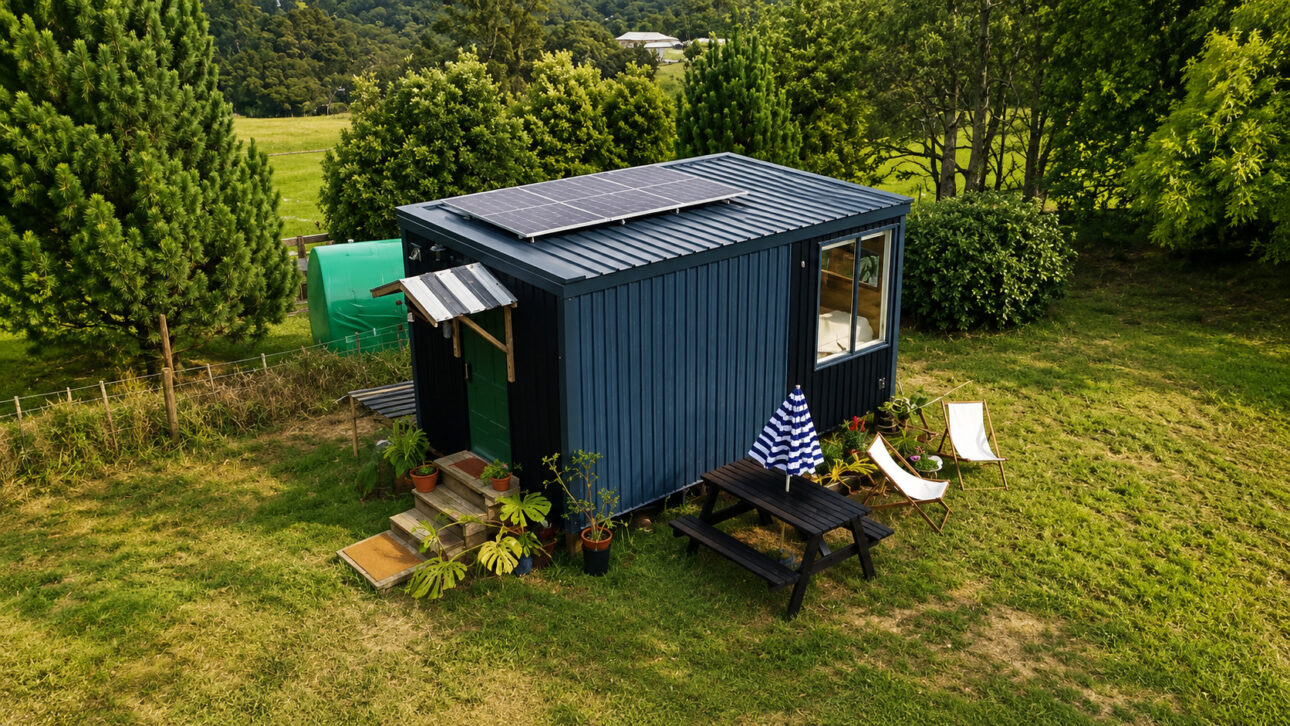
The biodigester bathroom is a system that treats bathroom waste. In Marie’s case, it transforms this waste into gas for cooking. In simple words, part of what would be discarded now has a use within the house itself.
Rainwater collection also reinforces the idea of autonomy. Still, this resource requires care, as the water needs to be stored and used responsibly.
The studio seems simple, but it depends on decisions that a common house hides
The most curious part of the story is the contrast between size and complexity. The studio is small, but the systems that keep the house running require constant attention.
In a conventional house, many things come ready for the resident. Energy comes through the grid, water arrives through the piping, and waste is handled by external systems. In Marie’s house, these processes become more visible.
Therefore, living off the grid is not just about living in a smaller space. It’s about embracing a routine where energy, water, and bathroom cease to be invisible details.
Autonomy does not mean isolation or life without work
Marie’s studio is also surrounded by community gardens shared with others living on the property. This detail helps show that autonomy doesn’t have to be synonymous with isolation.
Life off the grid can provide more control over certain resources, but it doesn’t eliminate tasks. On the contrary, the resident needs to monitor the house’s functioning more closely.
This is an important difference to understand. A small home can reduce excesses, but it also increases the need for organization, maintenance, and responsibility.
Marie’s house shows a curious alternative, but not a ready-made formula
The off-grid studio built by Marie combines elements that spark curiosity: solar energy, rainwater, a biodigester bathroom, and construction done by someone with no prior experience.
Even so, the story should not be seen as a simple solution for everyone. A house of this type requires learning, adaptation, and willingness to handle tasks that go unnoticed in conventional homes.
In the end, Marie’s experience shows that living with more autonomy doesn’t just depend on reducing the size of the house. It also requires understanding how each system works and accepting that independence comes with daily responsibilities.
The off-grid studio attracts attention because it turns a small house into a practical life laboratory. Would you have the courage to live in a space like this, with more freedom, but also with more responsibility every day?





Be the first to react!