Portuguese
  Spanish




Project Foresees Production of Renewable Gas and Use of R$ 450 Million to Expand the Transformation of Urban Waste into Energy
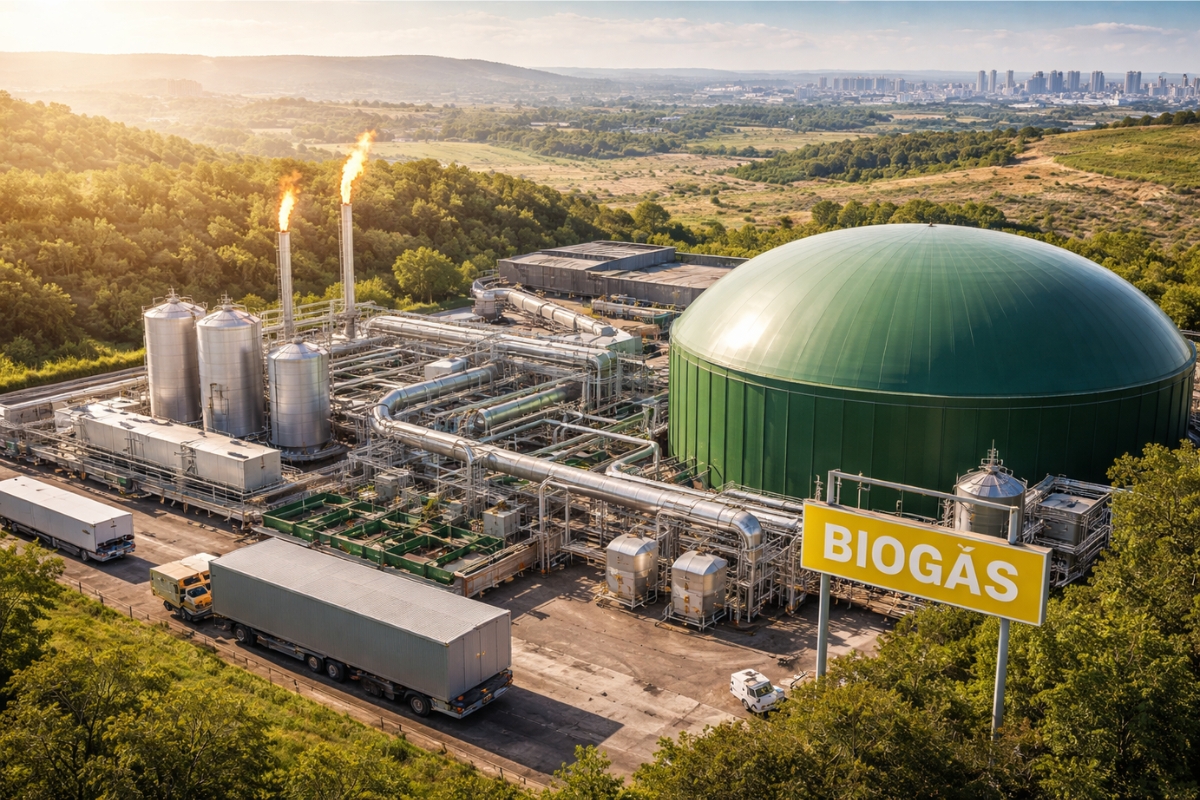
The BNDES approved a R$ 450 million loan for the construction of a biogas purification plant aimed at the production of biomethane in Paulínia (SP). The unit will be installed at the Ecoparque Orizon VR and integrates a large-scale bet on the generation of renewable gas from waste.
The investment aims at environmental and economic gains, with a direct impact on the low carbon economy. The structure also reinforces the logic of circular economy, by transforming what would be discarded into energy for industrial use.
The operation will be the responsibility of Biometano Verde Paulínia S.A. (BVP), a joint venture formed by Edge, a company of the Cosan group, and Orizon VR. The financing model combines different lines to enable the implementation.
-
Former Marketing Agency Owner Thrives on Foraging for 250 Days, Sampling Over 170 Plants, and Says He No Longer Remembers Supermarkets

-
IKEA’s AI Handles Nearly Half of Customer Calls, Company Reassigns 8,500 Staff as Design Consultants, Boosting Revenue by €1.3 Billion
-
Owner of Havan Visits Paraguay to Discuss Lower Taxes, Local Suppliers, and International Expansion with President

-
Brazilian Construction Retail Chain Closes After 60 Years, Begins Liquidation Sale Across Five Cities




What Happened and Why It Caught Attention
The approval of the credit unlocks a project that stands out for its size and focus on biomethane produced from landfill. The venture will be executed in Paulínia (SP), in an area already dedicated to waste treatment.
The plant will purify the biogas generated at the landfill, elevating the quality of the fuel to the standard of biomethane. This allows the renewable gas to be used in applications that today depend on fossil-derived natural gas.
The project is pointed out as the largest in the country for biomethane production, with installed capacity to reach 225,000 m³ per day of renewable gas.

How the Financing of R$ 450 Million Was Structured
Of the total approved, about 80% will be funded with resources from the Fundo Clima. The other 20% will come from the Finem line, also within the project support package.
This composition seeks to scale the investment and accelerate the plant’s implementation in Paulínia. Thus, the financial structure supports the construction and preparation for large-scale operation.
The approved credit reinforces the strategy of directing resources towards initiatives related to the energy transition and emission reduction.
How Biomethane Production from Urban Waste Works
Biogas arises from the decomposition of solid waste in landfills. Once captured, it goes through a purification process to remove impurities and reach the quality needed to become biomethane.
Onebio will be responsible for processing all the biogas generated from urban waste at the Paulínia landfill. The purification stage is the central point for transforming a by-product of waste into renewable fuel.
The result is a gas that can replace fossil fuels and leverage the existing natural gas infrastructure for logistics and distribution.
What Changes in Practice for the Low Carbon Economy
Biomethane is described as a 100% renewable source that strengthens the circular economy by converting urban, industrial, and agricultural waste into natural gas. The proposal is to expand decarbonization alternatives in segments that still depend on traditional fuels.
A reduction in emissions compared to diesel was also highlighted, with a decrease of almost 90% in CO2 emissions. This type of gain is one of the factors that position biomethane as a relevant route in the energy transition.
Additionally, the possibility of using the existing natural gas infrastructure reduces logistical barriers for the advancement of this market.
Jobs and Regional Effects During Implementation
During the implementation phase, the estimate is to generate around 3,000 direct and indirect jobs. The volume of jobs tends to move suppliers, services, and the local chain related to construction and operation.
The project is also associated with regional development, with reflections on the economic dynamics of Paulínia (SP). The combination of investment, job creation, and energy production reinforces the weight of the enterprise in the territory.
Thus, biomethane gains ground not only as a fuel but also as a vehicle for economic activity connected to the energy transition.
What May Happen from Now On
The Paulínia plant was presented as a pioneering step to expand the large-scale production of biomethane from landfills. The operation has also been placed as a reference for expansion to other units.
The structure of the project adopts a base already implemented in a plant located in Pernambuco, cited as an operational model for replication. The idea is to consolidate a pathway to bring biomethane to other landfills of the company.
The advancement of the project tends to increase the supply of renewable gas and strengthen the replacement of fossil fuels in energy applications.
The BNDES released a R$ 450 million financing to enable the biomethane plant in Paulínia (SP), with a structure supported by the Fundo Clima and the Finem line. The initiative connects urban waste to renewable energy and aims for industrial scale.
With capacity to reach 225,000 m³ per day and a forecast of 3,000 direct and indirect jobs during implementation, the enterprise strengthens the energy transition by expanding the production of biomethane and reducing emissions compared to fossil fuels.