






 Portuguese
  Spanish


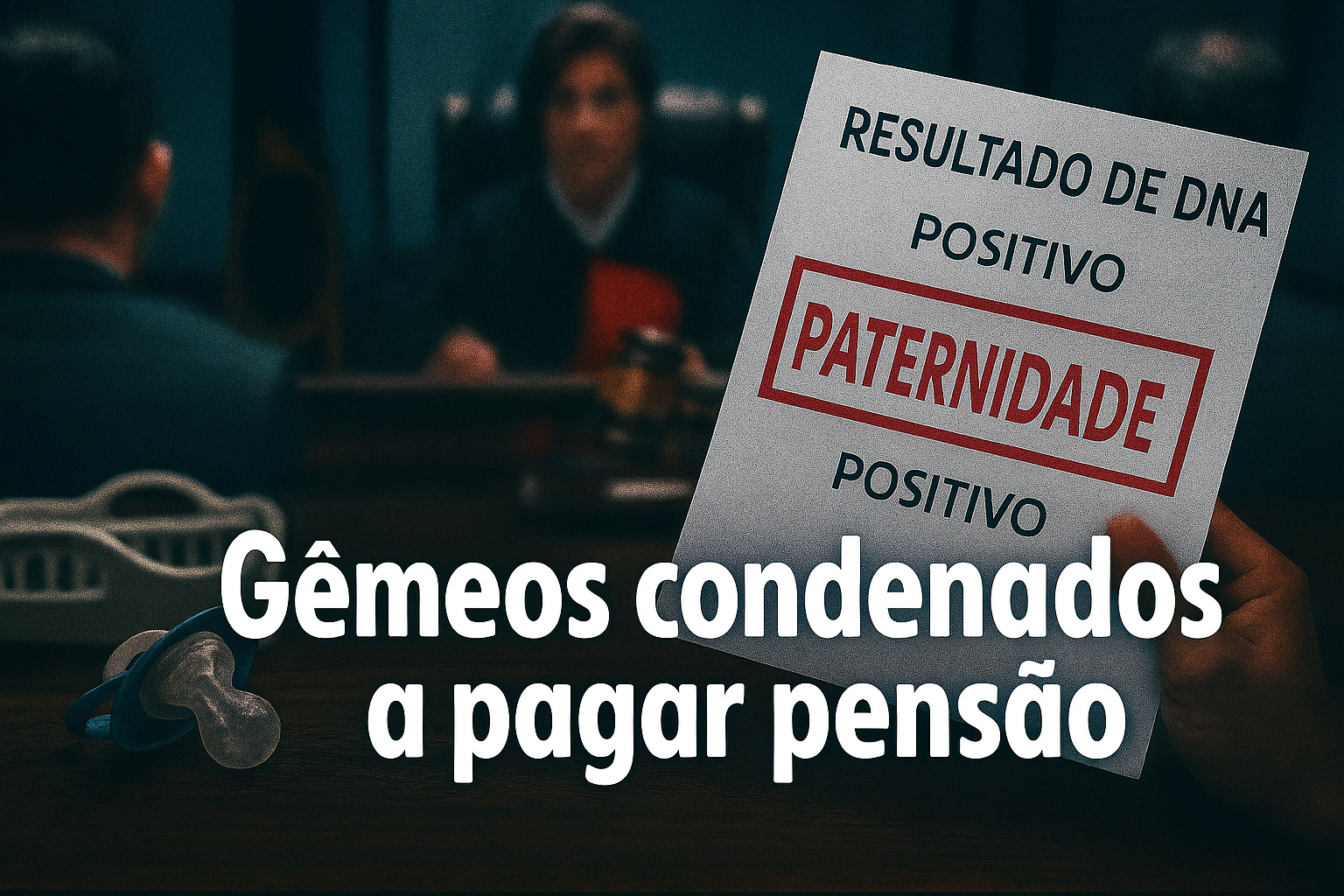

Goiás Court Sentenced Identical Twins to Pay Alimony for the Same Child After DNA Identified Both as Fathers in Unprecedented Decision That Exposed Limits of Science.
The scene took place far from the large capitals and the media spotlight. In 2019, in the interior of Goiás, a legal case involving a child, two identical twin brothers, and a DNA test brought to light a scientific and legal dilemma that seemed to come straight from fiction: when biology cannot accurately indicate who the father is, how should the justice system act? This was the question faced by the judge of the Cachoeira Alta district when ruling on a paternity investigation action in which the genetic test indicated both men as possible fathers of the child—a statistical rarity, but possible when it comes to monozygotic twins.
Recognition of Justice
The case gained national attention when outlets such as the Brazilian Institute of Family Law (IBDFAM) and legal portals reported on the ruling, which determined multiparentality and mandated that the two brothers share the responsibility for paying alimony.
The court recognized that, even in the face of the scientific impossibility of identifying a unique father, the child should not be disadvantaged.
-
Seniors Over 60 Can Travel for Free Across Brazil: Elderly Statute Ensures Two Free Bus Seats and 50% Discount When Full for Low-Income Passengers

-
Detran RJ starts requiring a toxicological test for those obtaining their first driver’s license in the car and motorcycle category starting June 29; see who will be affected.

-
Florida takes TikTok to court and accuses the Chinese giant ByteDance of ignoring the law that bars minors under 14, while parents and authorities demand more protection for children on social networks.
-
Chamber approves constitutional amendment reducing the age of criminal responsibility from 18 to 16 years; what now?




Moreover, the magistrate considered that the twins used their genetic condition to confuse the mother and hinder the recognition of the bond—thus creating a situation that required a firm response from the Judiciary.
DNA, Science, and the Difficulty of Distinguishing Identical Twins
The DNA test, considered worldwide as the most precise method of biological identification, was unable to identify a single father. In traditional cases, genetic material has a defining power greater than 99.9%.
However, when the test involves monozygotic twins—originating from the same embryo and, therefore, with almost identical genetic material, the matching pattern becomes insufficient to exclude one of the possible parents. This scientific limit is known among researchers and has been the subject of international studies published in specialized journals on genetics and forensic medicine.
The solution, in some rare cases, could involve advanced techniques such as next-generation sequencing or epigenetic analysis, capable of identifying small mutations acquired individually over a lifetime.
However, these procedures are not yet part of the routine forensic practice in Brazil, are costly, and, in many scenarios, do not guarantee absolute precision. Thus, for the Goiás judiciary, the issue was not just scientific: it was about ensuring a child’s right to support and familial identity.
The Legal Understanding and Child Protection
The decision of the Goiás Court of Justice was based on the constitutional principle of the best interest of the child, provided for in the Statute of the Child and Adolescent and the Federal Constitution of 1988. In the magistrate’s view, when science does not provide a conclusive answer, it is up to the law to fill the gap, ensuring that the minor is not harmed by a biological dispute outside of their control.
The judge also pointed out that there were strong indications that the brothers, knowing the impossibility of genetic distinction, sought to benefit from the situation. The use of genetics as a strategy for hiding paternity weighed heavily in the decision.
The outcome was unprecedented in Brazil: compulsory multiparentality with shared alimony obligation, a rarity in the courts of the country and the world. Thus, each brother became responsible for the alimony—reinforcing the message that the Judiciary will not allow scientific loopholes to undermine fundamental rights of children and adolescents.
Multiparentality and the New contours of Family in the 21st Century
The ruling also resonates with a growing phenomenon in various countries: the expansion of the concept of family.
In Brazil, the Supreme Federal Court and the Superior Court of Justice have already recognized the possibility of multiparentality in situations of coexisting affective and biological bonds. However, the Goiás case differs as it does not involve multiple affective bonds but rather a technical impossibility of genetic exclusion.
This peculiarity transformed the ruling into an academic reference, discussed in legal and scientific settings. Instead of seeking a single responsible party, the Judiciary expanded protection, ensuring that the child had not only financial support but also legal recognition.
The ruling reinforces a trend: contemporary families do not fit into narrow labels, and the law, when necessary, expands its borders to accommodate human complexity.
A Case That Provokes Ethical, Scientific, and Social Debates
The international repercussions of the episode showed that the discussion transcends national borders. Universities and legal entities used the case as an example in debates about forensic genetics, children’s rights, and civil liability theory.
The decision also rekindles a frequent ethical question: to what extent can — or should — technology be used to resolve family conflicts? And when it fails, what is the role of the State?
The case in Goiás underscores that science is advancing but still encounters limits, especially in rare situations such as identical twins involved in paternity disputes.
At the same time, it demonstrates that the Brazilian legal system has been capable of interpreting these gaps based on solid constitutional principles, placing the welfare of children above adult conflicts and concealment strategies.
In the end, what began as a genetic impasse transformed into a legal and social milestone. A child’s protection was ensured. Two adults were held accountable.
And the country witnessed, in 2019, a decision that clearly showed that science and justice walk hand in hand, but that when the laboratory does not reach a definitive answer, the court cannot shy away: it is up to it to guarantee that no fundamental right is left behind.
The ruling resonates to this day, reminding us that at the intersection of biology and law, the guiding thread must always be the same: the dignity and future of those who depend on the State to fully exist as citizens.








