






 Portuguese
  Spanish


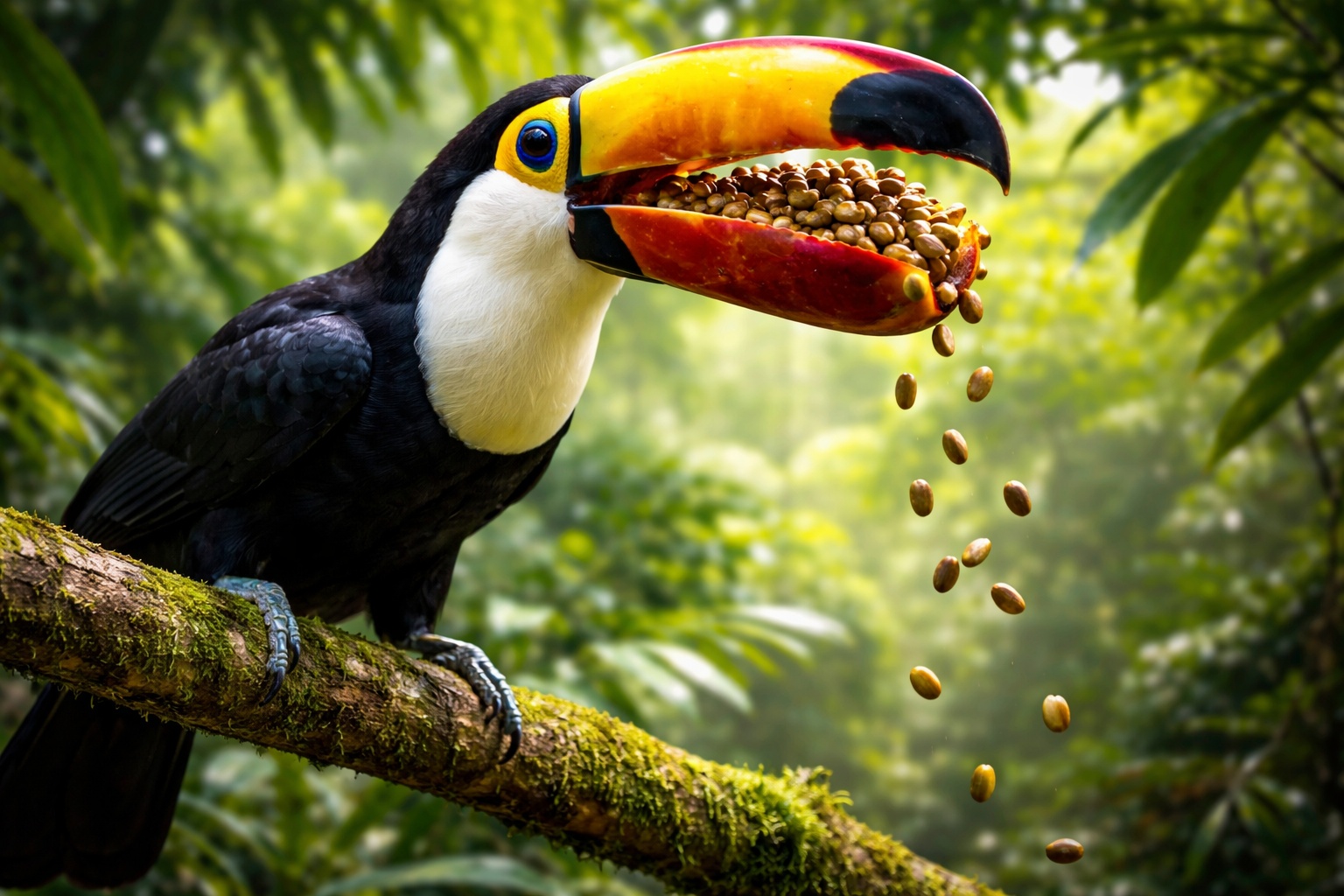


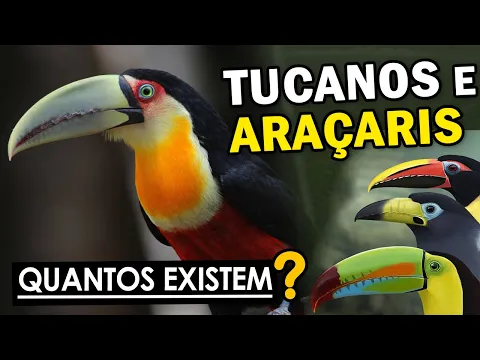
Toucans Disperse Up to 150 Seeds Per Day and More Than 50 Million Per Year, Regenerate Forests and Connect Fragments by Transporting Large Fruits Across South America.
For most people, toucans are flashy tropical birds with large beaks and vibrant colors. But in contemporary ecology, they represent something much more complex: they are structures of biological connectivity between trees, fruits, seeds, and territory. They are agents that carry genetic material from one point to another in the forest, alter landscape patterns, and accelerate the regeneration of ecosystems without any human involvement.
What science has discovered over the past few decades is that the toucan plays a unique role in South America. Unlike other frugivorous birds, it can consume large, hard fruits with bulky seeds, which depend on a few efficient dispersers. This makes the toucan a functional link between vegetation and landscape, a species capable of determining how the forest grows, expands, and recovers after natural or human disturbances.
More than just a consumer of fruits, the toucan is a forest planter.
-
India’s Sugar Export Cuts and Ethanol Shift Amid El Niño Threat Could Impact Global Prices and Stocks

-
Quarantine Pest Threatening Palm Trees Puts Brazilian Authorities on Alert, Prompts Monitoring at University of Taubaté and Potential Control Measures Across São Paulo
-
Global Alert: Report Finds 159 Pesticides in Coffee Beans Sold in Europe, Posing Serious Risks to Millions of Farm Workers
-
Low-Demand Brazilian Beef Offal Gains Popularity Abroad: Indonesia Purchases $19.5 Million, Boosting Revenue and Reducing Waste



The Toucan’s Beak and the Ecology of Seed Dispersal
The toucan’s disproportionate beak is not just a visual spectacle. It is a specialized biological instrument that serves three essential functions for the maintenance of tropical forests: consumption of large fruits, selection of seeds, and long-distance transport.

Most fruit-eating birds have small beaks, capable of ingesting small seeds and pulps. Toucans do the opposite. They ingest fruits with a larger diameter, often over three or four centimeters, such as palm berries, fig fruits, drupes, and other fleshy structures that require volume to be handled.
This difference creates an important ecological mismatch: while most birds deal with small seeds, the toucan handles large seeds. And large seeds often belong to tall trees with high ecological value, such as some figs, palms, and laurels.
Without toucans, these tree species lose territorial reach and colonization capacity.
Long-Distance Dispersal and Forest Regeneration
In ecology, there is a concept known as LDD (Long Distance Dispersal). It describes the movement of seeds several kilometers away from the original point, something rarely achieved by gravitational falls, wind, or small animals.
The toucan is one of the main LDD vectors in South America. This occurs because it feeds in one spot, flies to another to rest, and only then defecates or regurgitates the seeds. The journey can take minutes or hours, and the distance can exceed several kilometers in a day.
This phenomenon has a profound impact on four ecological processes:
- Recolonization of degraded areas.
- Increase in genetic diversity in continuous forests.
- Natural expansion of large tree species.
- Maintenance of connectivity between isolated forest fragments.
Science has already shown that forest fragments surrounded by pasture or degraded areas receive more seeds from large trees when toucans are in the region. Without these dispersers, the space tends to be dominated by small plants and opportunistic shrubs, reducing ecological complexity over the years.
How Many Seeds Does a Toucan Transport Per Day
The exact number varies among species, food availability, and the time of year. However, studies on frugivorous toucans indicate that an individual can consume between 100 and 150 seeds per day, depending on the diet and the reproductive cycle of the vegetation.
If we consider an annual average of feeding activity and periods of higher fruit consumption, a single toucan can disperse tens of thousands of seeds per year.
Now, when we take entire populations distributed across biomes such as Amazon, Atlantic Forest, Cerrado, Chaco, and Pantanal, ecological estimates converge to over 50 million seeds dispersed per year per toucan on a continental scale.
These numbers are not abstract: they result in real trees emerging in locations impacted by the flight and feeding dynamics of these birds.
Frugivorous Diet and Seed Processing
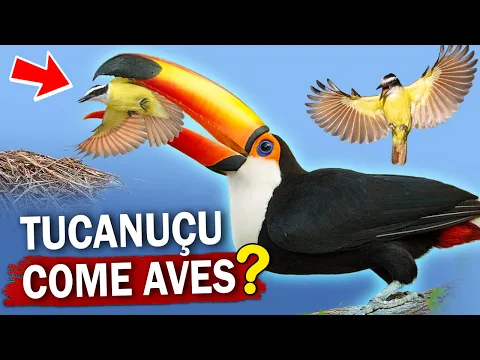
The toucan is considered a specialized frugivore. Its diet mainly consists of fruits, though it can include insects and small vertebrates in specific situations.
When it consumes a fruit, it usually swallows the whole seed. The pulp is digested, while the seed remains intact and protected. When expelled, the seed is in favorable conditions to germinate since:
- It did not fall under the shadow of the mother tree
- It reached areas with more light
- It escaped specialized predators from that microenvironment
- It received the chance to colonize soils with less initial competition
This cycle improves the germination dynamics and increases the likelihood of seedlings establishing in new areas.
The Role of Toucans in the Amazon, Atlantic Forest, and Cerrado
South American biomes have completely different plant compositions. The Amazon is humid and continuous, the Atlantic Forest is fragmented and humid, and the Cerrado is seasonal with fire cycles. Despite this, toucans exert significant ecological influence in all of them.
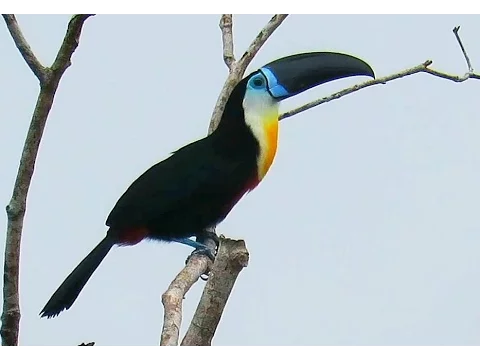
In the Amazon, they connect giant trees, helping palm and fig species colonize natural clearings and riverbanks.
In the Atlantic Forest, where forest fragmentation is severe, toucans maintain genetic connectivity between isolated fragments. In the Cerrado, they act along gallery forests and veredas, spreading seeds that depend on vegetative corridors.
Continuous forests can exist without toucans but lose regeneration speed. Fragmented forests can even persist, but with less tree diversity and greater structural homogeneity over time.
Large Seeds, Large Trees, and Large Dispersers
There is a direct relationship between seed size and disperser size. While small birds and bats deal with small seeds, tree species with large seeds depend on few animals capable of transporting them.
In South America, toucans occupy exactly that function. Without them, large trees struggle to expand territory and penetrate degraded environments more slowly.
The absence of toucans causes a silent collateral effect: the structural impoverishment of the forest. Smaller trees replace larger ones, altering the hydrological cycle, shade, microclimate, and the associated fauna.
When researchers analyzed fragments where toucans had disappeared, they observed a decline in the proportion of large tree species. This confirms that the toucan is not just a decorative piece but an ecological cog.
Dispersal and Forest Restoration After Disturbances
Fires, deforestation, hurricanes, wind-driven disturbances, and extreme hydrological events create open areas. These areas require seeds to be reconnected to the ecosystem. The toucan aids in this process by bringing seeds from afar, far enough to restore areas that no longer have a local seed bank.
Science has already studied this process in preserved areas and consolidated agricultural areas. Toucans cross natural and human ecological boundaries, carrying seeds from fragments to abandoned pastures, roadside edges, and clearings newly opened by fire or wind.
Without this vector, regeneration tends to be slow, dominated by grasses, shrubs, and opportunistic species. With toucans, ecological succession accelerates, and trees reoccupy spaces more quickly.
Toucans and Forest Genetic Diversity
Another aspect rarely discussed is genetics. Trees that reproduce in confined spaces tend to have lower heterozygosity, which reduces resistance to pests, climate variations, and diseases. Toucans combat this problem by transporting seeds from one fragment to another.
This means that a tree located on a hill can have descendants in a distant plain, connecting populations that would otherwise remain isolated.
Forest genetics works better when the landscape is connected. And this connectivity does not depend only on visible vegetative corridors. It relies on animals that transport genetic material.
The toucan is one of those invisible vectors.
Impact on Ecological Succession and Microclimate
Mature forests regulate temperature, humidity, and water infiltration in the soil. The presence of large fruit-bearing trees, dispersed by toucans, contributes to forming the upper and intermediate canopy of the forest.
With a complete canopy, the forest:
- Retains more water in the soil
- Reduces air temperature
- Decreases wind speed
- Creates shade that eliminates invasive grasses
- Stabilizes plant and animal communities
If the dispersal process is interrupted, forests become shallower, warmer, and more vulnerable to fire. Toucans, by ensuring the presence of large trees with large fruits, help sustain the microclimate.
The Importance to Agriculture and Human Landscape
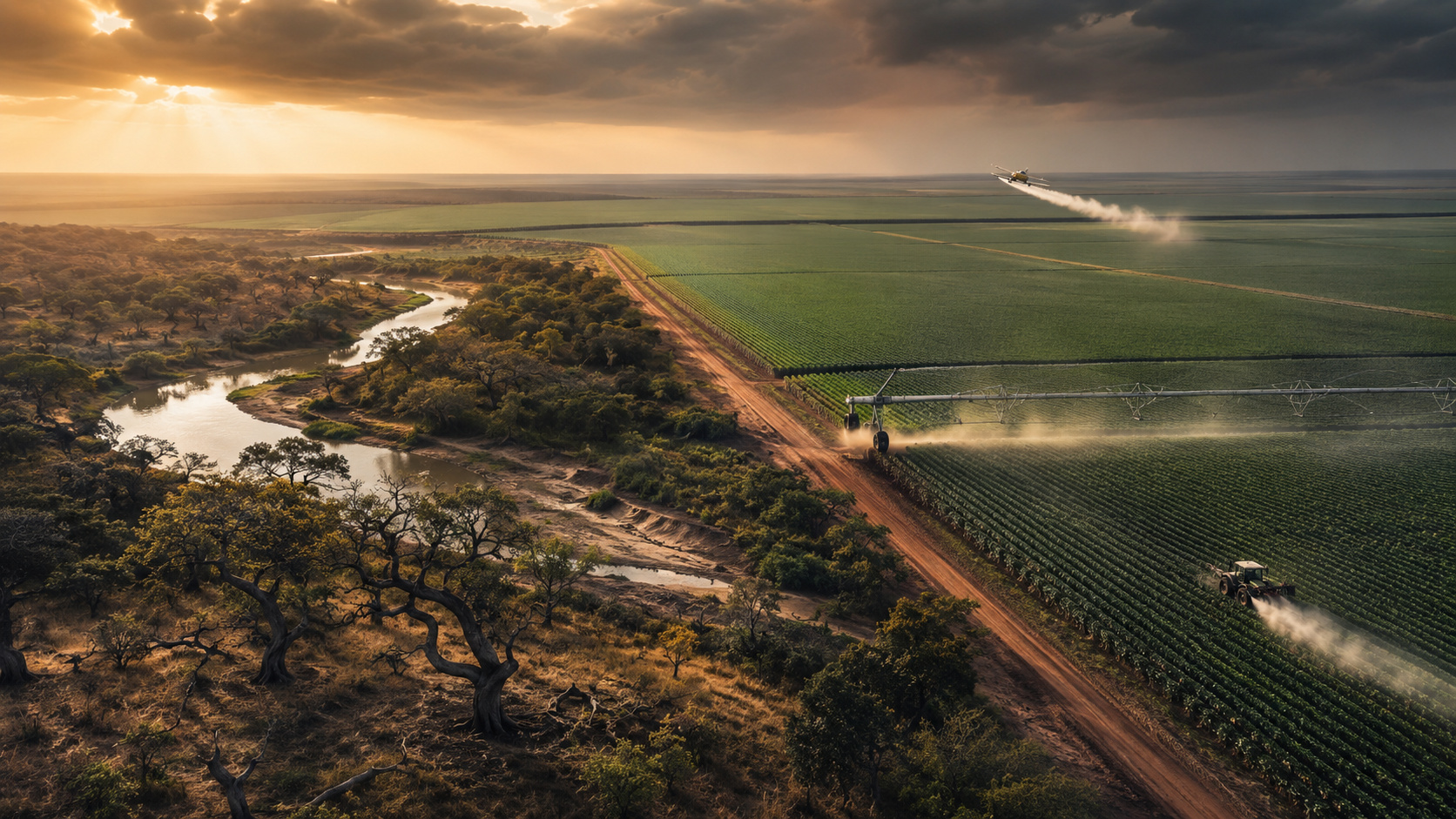
In rural regions of South America, toucans often cross agricultural areas, consuming fruits and then depositing seeds in riparian forests and degraded areas. This behavior aids in creating ecological corridors and strengthens environmental restoration processes that would be costly if conducted manually.
In some countries, researchers discuss the use of frugivores as agents of assisted restoration. The idea is simple: if the landscape is structured with fruiting trees and corridors, toucans will do the rest of the work. This reduces planting, irrigation, and maintenance costs.
What Happens If Toucans Disappear
Fragments of the Atlantic Forest have already gone through this scenario. In areas where the toco toucan has disappeared, trees with large fruits have gradually been replaced by smaller species over the decades.
This type of substitution alters the entire ecological chain. Without large trees, there is less shade, less humidity, and less structural complexity. Less complexity means fewer niches for animals, less thermal control, and lower diversity.
Without toucans, time works against the forest.
Toucan as the “Engineer” of the Forest
The toucan not only feeds on fruits. It transports seeds, connects isolated areas, strengthens the genetics of forests, accelerates environmental regeneration, and ensures that large trees do not silently disappear.
What research shows is that it is one of the most important seed dispersers in South America and, by performing this role daily, alters the composition of entire forests without any human planning. Over the years, the sum of thousands of flyovers and millions of seeds deposited creates more resilient, diverse, and balanced landscapes.
While much of the environmental concerns are focused on cutting and burning, the conservation of seed dispersers is equally strategic. In their absence, there is no natural regeneration. Without regeneration, there are no mature forests. And without mature forests, there is no functional climate, regulated water, or established biodiversity.
The toucan, no matter how discreet it may seem, is a link with territorial influence.









Excelente matéria. A partir de agora olharei para está ave com carinho e admiração
Só faltou falar que esta ave é predadora, moro em Minas Gerais
Aqui ela ataca os ninhos das aves de outras espécies, devora tudo, ovos e filhotes, de: canário, ****, João-de-barro, bem-te-vi…
Não escapa nada
Acho que esta ave é nativa do Norte e Nordeste, onde tem frutos da sua dieta
Foram trazida pro Sudeste, tá virando uma praga