Portuguese
  Spanish


In 1989, at the Central Bank of the Philippines, a batch of extremely well-crafted counterfeit $100 bills revealed the beginning of one of the largest counterfeiting operations in history, secretly led by North Korea. The case triggered an international manhunt and turned the dollar into a geopolitical weapon.
The bills, known as supernotes, fooled banks, governments, and security experts for over a decade. Made with the same type of paper and ink as real dollars, they passed all possible authenticity tests.
The case gained international attention when a suspect fled a bank in Manila after inquiries about the origin of the notes. The material was sent to the United States Secret Service, starting the process that revealed a sophisticated counterfeiting scheme.
Supernotes: The Perfect Counterfeit Dollar
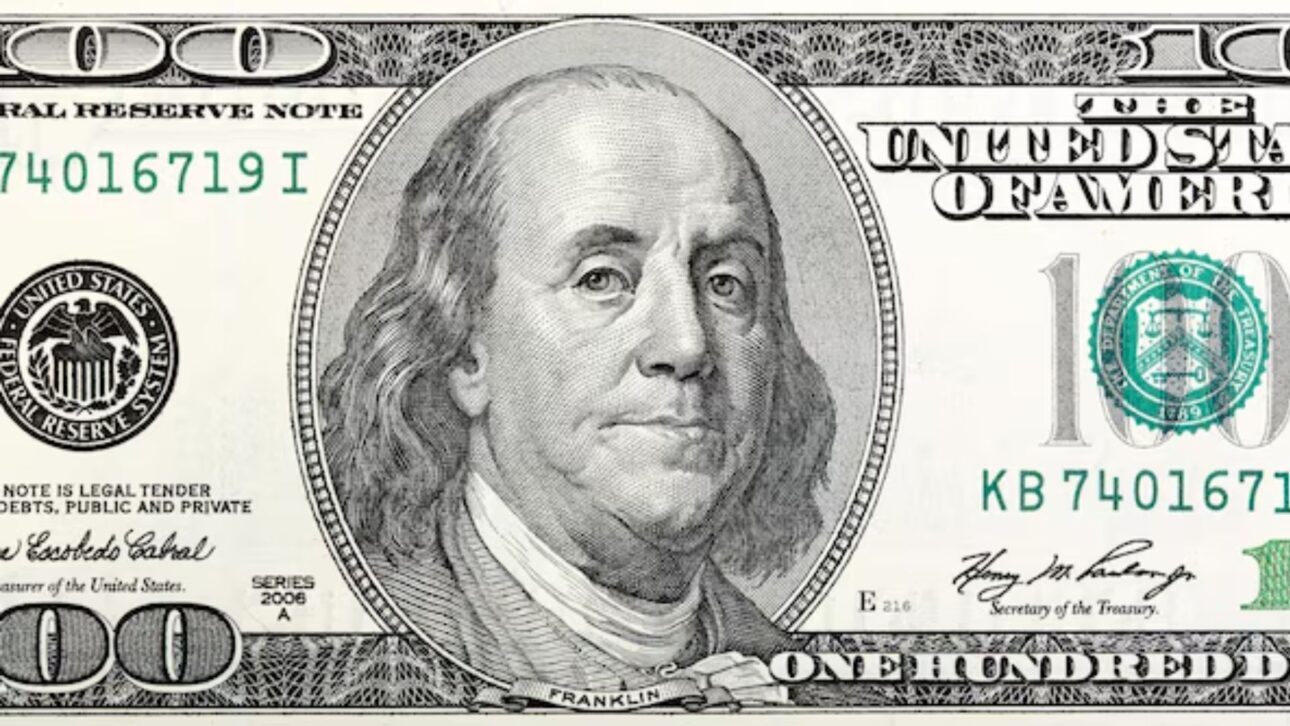
The forensic tests showed that the supernotes used 75% cotton and 25% linen paper, identical to that of the original bills, legally produced by only one American company. Moreover, the notes featured intaglio printing — a complex method used by the U.S. Treasury — and ink with components identical to the real ones.
-
Wet phone: Apple and Samsung warn against using rice to dry it, as it may release particles and worsen USB port damage.

-
Despite Extreme Heat, Politicians Reject Air Conditioning to Protect the Environment

-
New Bridge Between Tocantins and Pará Transforms Daily Commute, Replacing Costly Ferry Crossings in Brazil

-
Brazilian Brothers Invent Hydraulic Claw for Tractors, Enabling the Lifting and Stacking of 400 Rice Bags Daily


The similarities were so precise that only with high-power microscopes could tiny flaws be detected, such as a misplaced line next to Benjamin Franklin’s face. These imperfections were the only clues to identify the source of the fake dollars.
The Trail of Money in Casinos and Diplomats
Over time, the supernotes began to appear in Hong Kong casinos, Russian black markets, and even in diplomatic bags protected by immunity. In 1994, North Korean diplomats were caught with thousands of counterfeit dollars, revealing a direct link between the regime and counterfeiting.
In 1996, a woman with a North Korean passport was arrested in Cambodia with hundreds of thousands of fake bills. All showed the same microscopic patterns, indicating they came from a single centralized and extremely advanced operation.
From these clues, American intelligence pointed to the secret room known as Room 39, located within the Workers’ Party of Korea, as the command center of the operation.
Plant 62: The Secret Dollar Factory
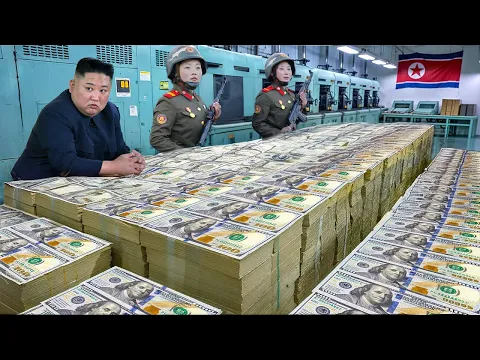
The printing center, called Plant 62, operated in a maximum-security facility with multiple layers of protection. There, the North Koreans used $5 million industrial presses and replicated every new security technology implemented by the U.S.

The operation was supplied by front companies in Hong Kong, which provided materials under the pretext of luxury stationery papers. The suppliers were unaware that they were helping to counterfeit dollars.
Over time, North Korea began to deliberately insert flaws in the supernotes, as a kind of “digital signature,” to distinguish its copies from counterfeits made by other criminal groups.
The U.S. Response: Investigations and Sanctions
In light of the advancing counterfeits, the U.S. Treasury launched a new $100 bill in 1996 with visual and security changes. Even so, in less than two years, identical copies of the updated version emerged, illegally using special Swiss-origin ink.
Operations like Royal Charm and Smoking Dragon, conducted by the FBI, dismantled distribution and money laundering networks, arresting dozens of those involved and seizing millions in counterfeit currency.
According to the channel Beyond Facts, which produced the documentary used as the basis for this content, the most effective action was freezing $25 million in North Korean regime accounts at Delta Asia Bank, generating an immediate diplomatic and financial crisis.