






 Portuguese
  Spanish
  6 min of reading
  0 comments


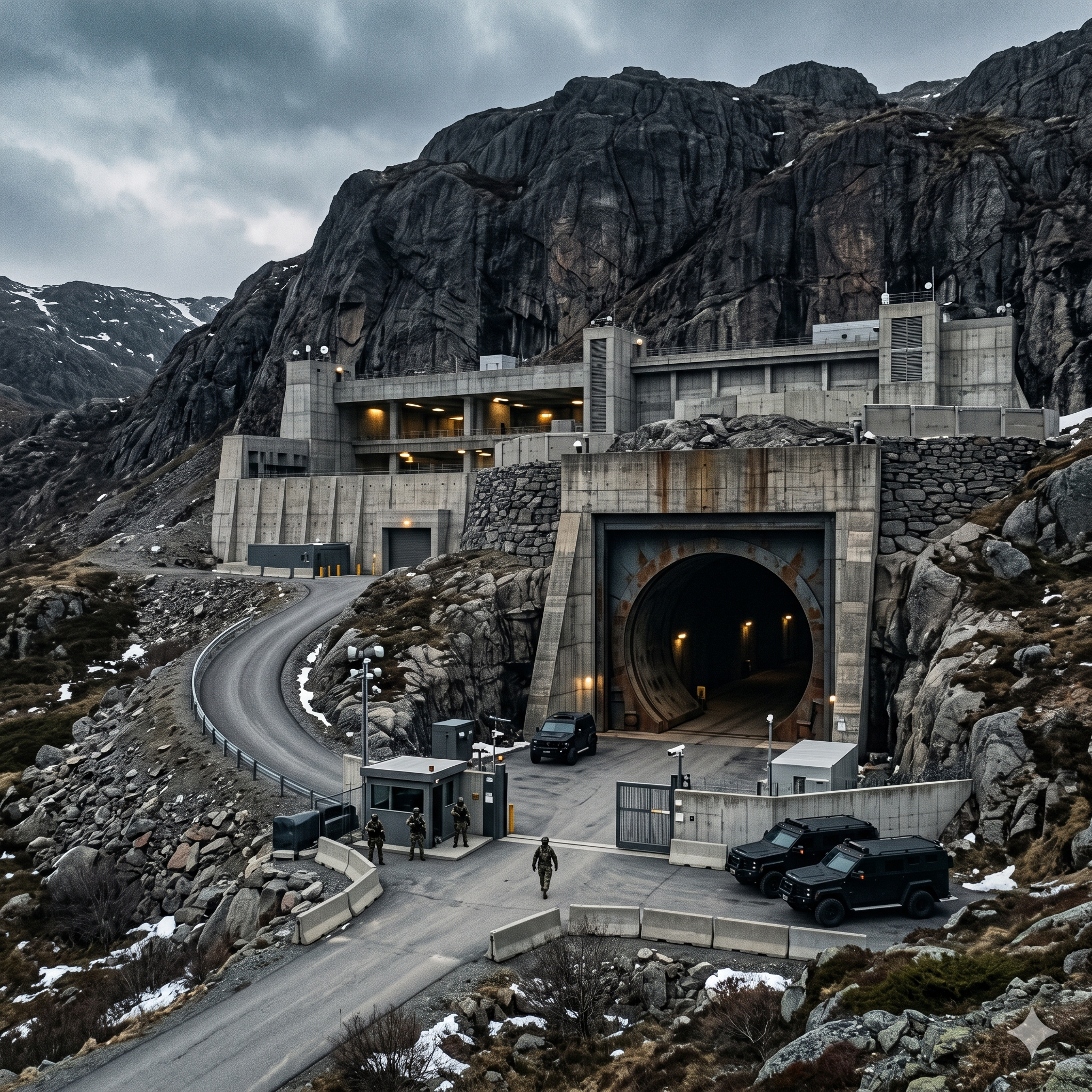
Billionaires invest millions in bunkers, islands, and refuges while discussing global collapse scenarios and survival strategies.
According to Wired, the investigation published by the magazine in December 2023 and confirmed by licensing documents obtained from Kauai county authorities revealed that Mark Zuckerberg is building a 1,400-acre complex on the Hawaiian island with an underground shelter of more than 460 square meters, with a metal door filled with concrete, an emergency exit accessible by stairs, and self-sufficient energy and food capacity. The total estimated cost of the complex, including the land, exceeds $270 million. When confronted with the investigation in an interview with Bloomberg, Zuckerberg dismissed the characterization: “I don’t think that’s it. It’s like a basement. It’s like a basement.”
This response — that the Facebook co-founder, whose net worth is around $200 billion, compares his $270 million underground shelter to a common household basement — accurately captures the paradox of billionaire doomsday prep. It’s not a denial of the phenomenon. It’s the most concise expression of how the tech elite thinks about the distance between what they build and what the rest of humanity would consider preparation for the end of the world.
Peter Thiel’s account of an escape plan to New Zealand reveals a survival strategy adopted by Silicon Valley investors
Peter Thiel has a story about the end of civilization that he himself told. According to the account widely circulated in the specialized media, at a dinner in Silicon Valley, Thiel described his personal emergency plan to Sam Altman, founder of OpenAI and creator of ChatGPT: in case of a major natural disaster or political collapse, he would board his private jet to New Zealand, where he would have a prepared refuge.
-
Brazilian mechanic invented a lamp made from a PET bottle during the 2001 blackout, the idea turned into an NGO present in 30 countries and has already illuminated 40,000 people in 200 communities without electricity in Brazil.

-
Centuries-old mystery gains new chapters in Greece after excavations reveal a possible lost temple of Poseidon, hidden among ancient lagoons, monumental remains, ritual objects, and an architectural plan that surprised even the experts.

-
2-month-old baby says “I love you” to parents and the video froze the internet: doctors say most babies only speak after the first year of life
-
At 98 years old, Priscilla Sitienei returned to school in uniform, sits next to children, and has a new dream: to become a doctor, after decades of working as a midwife in rural Kenya.


The story has multiple layers that make it more revealing than it appears.


Thiel is not an eccentric fringe member of the tech elite. He is one of the most influential investors in Silicon Valley, co-founder of PayPal, the first outside investor in Facebook, creator of the Founders Fund, and financier of Donald Trump’s presidential campaign in 2016 and 2024.
When Thiel makes a capital allocation choice, Silicon Valley watches closely. And Thiel has been allocating capital in New Zealand for over a decade.
Accelerated citizenship and land acquisition in New Zealand show long-term planning for collapse scenarios
In 2011, Thiel obtained New Zealand citizenship in a process that typically requires four of the previous five years of residency in the country.
He spent only 12 days in New Zealand before becoming a citizen. The application was approved with exceptional speed after Thiel promised to promote the country internationally, a trade-off considered strategic by the government at the time.
Thiel was transparent in stating that he had no immediate plans to live there. What he had was a different plan: a refuge.
In 2022, leaked planning documents revealed that Thiel had submitted a license application to build an 18-acre complex in a remote region of the South Island, with accommodations for him and guests, as well as management infrastructure integrated into the landscape.
The application was rejected by local authorities due to visual impact, but the 477-acre land remains in his possession, with access to a helipad and structures described by local residents as ready for emergency use.
Douglas Rushkoff’s book reveals how billionaires discuss survival and social control in collapse scenarios
In 2022, writer and media theorist Douglas Rushkoff was invited to speak with a group of extremely wealthy men on a private island.
He didn’t know where he was or who the participants were before arriving. The event was closed, paid, and not public.

The group expected insights into the future. But the questions asked were not about technology or economics. They were about survival.
Tech elite discusses security guard loyalty, property defense, and isolation strategies after collapse
The questions revolved around collapse scenarios.
- How to ensure the loyalty of armed security guards when money loses value.
- How to structure an isolated property for defense.
- Which geographical location offers the best chance of survival in a prolonged collapse.
Rushkoff described the experience in the book Survival of the Richest and in subsequent interviews. What disturbed him was not the fear of the future, but the logic applied: it was not collective prevention, it was individual escape.
Zuckerberg’s complex functions as a self-sufficient system with food production, energy, and reinforced shelter
Zuckerberg’s Ko’olau Ranch complex is the most detailed example because it was directly investigated.

In addition to the underground bunker, the project includes multiple residences connected by tunnels, organic agricultural production areas, proprietary energy systems, and environmental conservation initiatives.
The scale of the undertaking is not just residential. It is structurally a self-sufficient system capable of sustaining a small community indefinitely.
Billionaires concentrate properties on islands with geographical control, restricted access, and strategic natural resources
Larry Ellison bought about 98% of the island of Lanai, Hawaii, for approximately US$ 300 million.
- Oprah Winfrey owns over 650,000 square meters in Maui.
- Frank VanderSloot acquired a 2,000-acre ranch near Zuckerberg’s properties.
The choice of islands is not casual.
They offer natural borders, access control, isolation, and favorable conditions for food production and resource management.
Luxury bunker market grows with projects costing up to US$ 100 million and replicating above-ground living standards
For those who don’t own an island, there’s an intermediary market. The Swiss company Oppidum builds custom luxury bunkers, with prices ranging from US$ 10 million to US$ 100 million.
These spaces include wine cellars, gyms, cinemas, and advanced air filtration systems. It’s not just about survival. It’s the continuation of a lifestyle in an underground environment.
Sam Altman admits to having a survival plan and reinforces recurring behavior among tech leaders
Sam Altman, CEO of OpenAI, stated he has “apocalypse insurance”. A rural property with food, energy, and weaponry. The statement was made to The New Yorker and revisited in recent analyses.
The fact that one of the main figures responsible for the advancement of artificial intelligence has a plan to escape civilization reinforces the central contradiction of the phenomenon.

The most recurring question is direct: do they know something the rest of the population doesn’t? The most consistent analysis indicates no.
Bunkers are just another asset within a risk portfolio. Alongside investments in space, cryogenics, and biotechnology.
The difference between billionaires and the common population lies in the scale of preparation, not in the nature of fear
This behavior is not exclusive to the elite. Millions of people maintain emergency supplies. The difference lies in the scale.
For a billionaire, US$ 270 million represents the proportional equivalent of a basic survival kit for an average family.
The central point is not just preparation. It’s the signal. When the architects of global systems invest in individual exits, it reveals a perception of structural fragility.
Now we want to know: if those who build the future are preparing to escape it, does this indicate extreme prudence or a loss of confidence in the very system they helped create?


Be the first to react!