Portuguese
  Spanish


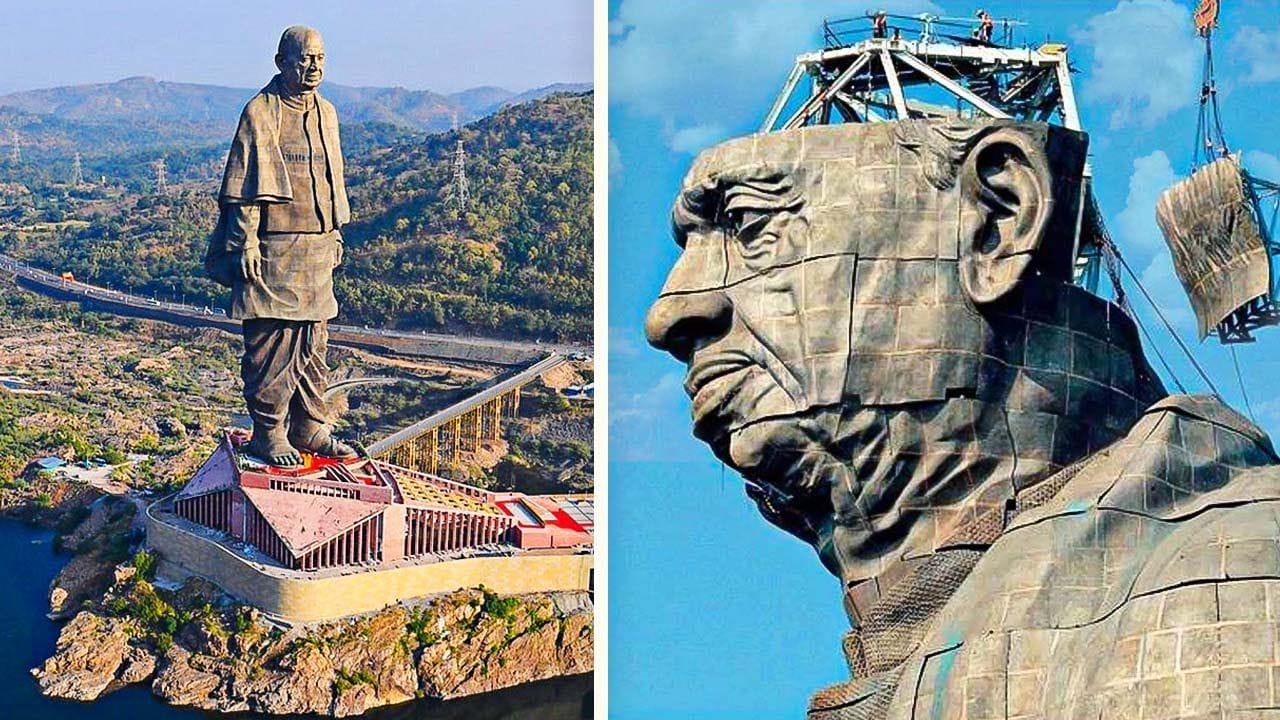


The Statue of Unity Is an Impressive Example of How Engineering and Art Can Come Together to Create Something Truly Monumental. It Represents Not Only Technical Skill and Innovation, but Also the Rich History and Culture of India.
The Statue of Unity, located in India, is not only an aesthetic wonder but also a triumph of engineering. Standing at 182 meters tall and adorned with 12,000 unique bronze panels, this 50-story statue is the tallest in the world and represents a significant milestone in modern engineering.
Foundation and Materials of the Megaproject
The statue was built in honor of Vallabhbhai Patel, known as the “Iron Man of India,” for his contribution to the unification of the princely states of India during independence. Interestingly, the foundation of the statue is made of recycled iron, sourced from agricultural equipment donated by around 100 million Indian farmers, totaling 129 tons of recycled iron.
The renowned Indian sculptor Ram V Sutar led the design team for the megaproject, creating models at different scales before arriving at the final design. After a meticulous 3D digitization process, the Chinese company Jiangxi Tongqing Metal Handicrafts was responsible for manufacturing the outer bronze layer. The construction was supervised by the New York firm Michael Graves Architecture and Design, along with Singapore’s Meinhardy Group and the Indian infrastructure giant Larsen & Toubro.
-
28-meter, 156-ton titans traveled 20,000 km from China to the port of Santa Catarina: Portonave received 7 fully electric megacranes, part of a R$ 210 million package, to double container handling.

-
They exchanged the idea of a large house for a 35 m² warehouse, spent US$ 12,000 on the structure, and created a tiny house in Colorado with space to live and work.

-
A newly opened terminal in the middle of the Amazon has begun transporting soy and corn through Amapá, eyeing the queue of ships that is congesting the ports in the South.

-
Goodbye to old tiles: renovation technique without construction transforms bathrooms in a few hours, eliminates debris, and reduces costs with coverings using special paints, high-resistance adhesives, and modern finishes that completely renew the space.



The Statue Faced Several Engineering Challenges
Primarily due to its “slenderness ratio,” which refers to the ideal proportion of width to height for tall structures. To overcome this, two separate concrete cores were created, incorporating a significant amount of cement, structural steel, and reinforced steel. Moreover, the statue was designed to withstand earthquakes of up to 6.5 on the Richter scale, as major earthquakes are common in that region.
The statue features a steel “framework space,” designed in CAD software, where the bronze panels were mounted. Each panel is unique and was designed to slightly overlap, allowing movement in strong winds and preventing stress transmission throughout the structure; the skin of the statue weighs over 2,000 tons.
In addition to the statue, the megaproject included the construction of an access road, a visitor center, and a three-star hotel with 52 rooms. The statue quickly became a popular tourist attraction, drawing millions of visitors. However, it also faced criticism for its high cost and environmental impact.