






 Portuguese
  Spanish


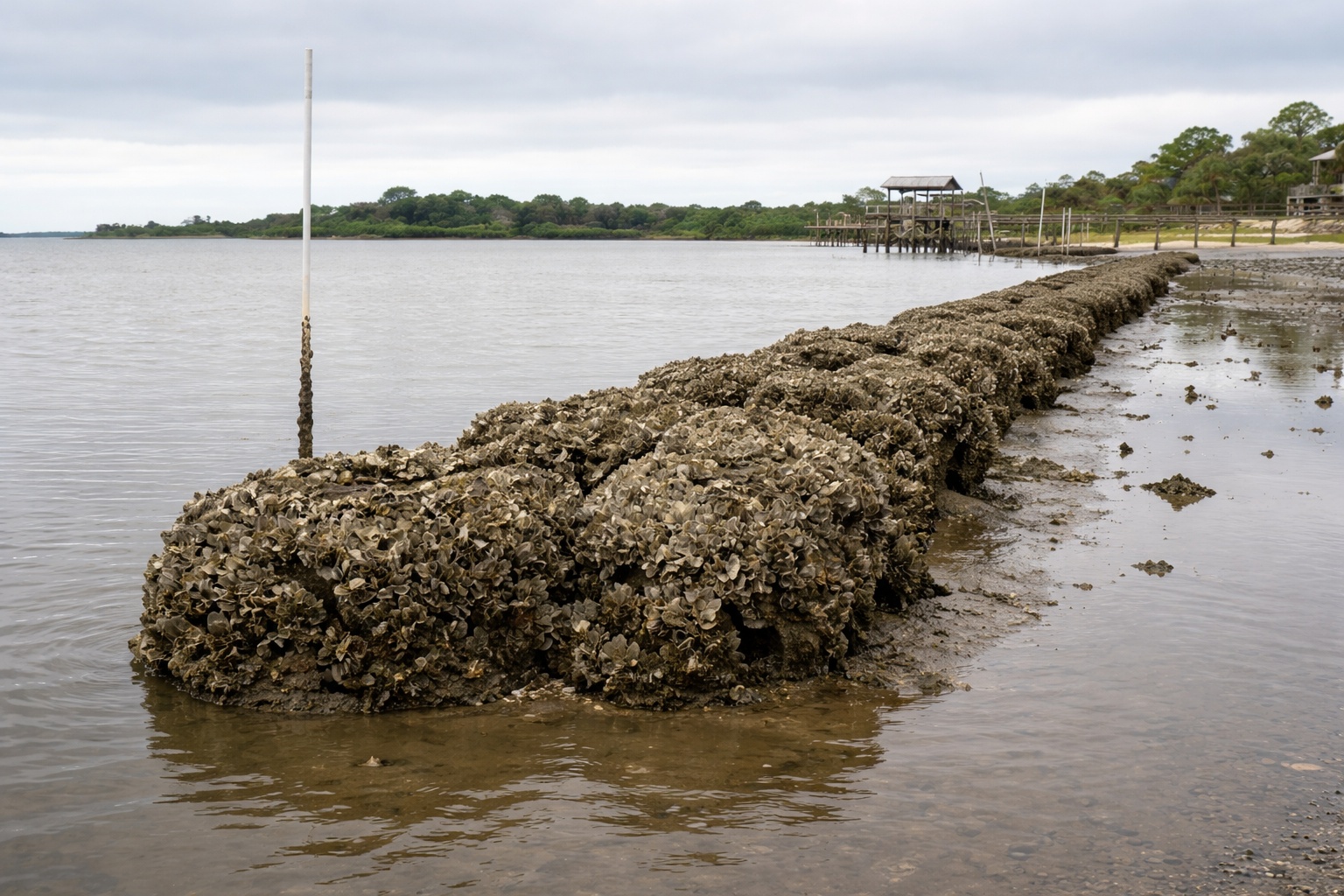


Oysters Reefs Are Being Used in Bangladesh to Contain Sea Advancement, Reduce Wave Force and Rebuild the Coast — an Ecological Experiment That Can Inspire the World.
Bangladesh, one of the most vulnerable countries on the planet to rising sea levels, faces an existential challenge: to protect a coast that is receding by up to 200 meters a year in some areas. Since 2021, local scientists and engineers, in partnership with Wageningen University (Netherlands) and the University of Chittagong, have been testing an unexpected solution — using oyster reefs as natural barriers against erosion.
These living structures, formed by the attachment of millions of oysters to artificial bases, dissipate up to 76% of wave energy, reduce erosion, and create conditions for sediment to accumulate again. The aim is to naturally rebuild the coastline and protect threatened villages without relying on concrete dikes.
Ecological Engineering in Action
The pilot project was implemented on Kutubdia Island, in southern Bangladesh — a region where the sea has already swallowed lands, crops, and entire roads. Instead of building walls, the engineers created perforated concrete structures, which serve as a base for the attachment of oyster larvae. Over time, these larvae form dense colonies that grow, harden, and become living reefs.
-
China Develops Custom 140-Ton Electric Mining Truck with 770 kWh Swappable Battery, Deploys 290 Units in Xinjiang’s Largest Zinc Mine

-
Meta to Launch Arena, a New Prediction App Targeting 3.56 Billion Users, Competing with Polymarket and Kalshi

-
Scientist Challenges Famous Human Evolution Theory, Argues Homo Sapiens Evolved Gradually Over Thousands of Years
-
15-Year-Old American Builds Ocean Generator with PVC Pipe and 3D-Printed Propeller for $12, Wins National Prize, Presents at White House, and Makes Forbes 30 Under 30 List




Initial measurements showed that, in areas with reefs, sediment accumulation reaches up to 30 centimeters per year, reversing an erosive process that had lasted decades. Behind these structures, coastal vegetation has begun to regrow — and in some areas, mangroves have started to naturally regenerate.
The Power of Oysters as Natural Barriers
The secret lies in the biology of oysters. They attach themselves to any hard surface and build calcareous colonies that expand over time.
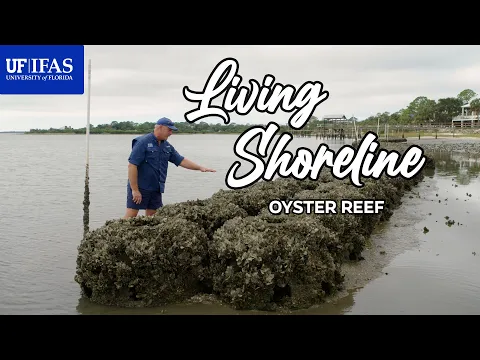

These reefs have an irregular shape that breaks the impact of waves and slows water movement. Additionally, they filter impurities — each oyster can filter up to 190 liters of water per day — helping improve water quality and creating a microecosystem around them.
Unlike artificial dikes, reefs have the ability to grow and self-repair. If sea levels rise, oysters continue to attach to new layers, keeping the reef active and functional. This makes these barriers a regenerative technology with low maintenance costs.
A Natural Laboratory of Climate Adaptation
The project in Bangladesh has become a global reference in “engineering with nature” (building with nature), a concept that seeks to use biological processes to address environmental crises.
The initiative is supported by institutions like the Netherlands Water Partnership, Deltares, and the Bangladesh Water Development Board, within the national plan known as Delta Plan 2100.
This program anticipates that by the end of the century, the country will implement sustainable coastal defenses based on natural solutions, such as oysters, mangroves, and coastal forests, instead of conventional walls and dikes. The idea is to gain time and territory while the sea rises at a rapid pace.
Challenges and Risks
The system, while promising, still faces limitations. Oysters need specific conditions of salinity, oxygen, and temperature to survive.
Strong delta currents and monsoons can damage structures before the reefs consolidate. Additionally, the dependence of local communities on activities such as fishing and wood extraction can hinder large-scale expansion.
Even so, the project has already inspired studies in India, Indonesia, and the Philippines, where researchers are analyzing how living reefs can protect coastal urban areas and industrial ports. Bangladesh, which has been cited for 30 years as one of the most vulnerable countries to climate change, is now starting to be seen as an example of adaptive innovation.
A Boundary Between the Sea and Hope
The oyster reefs of Bangladesh show that, even in one of the planet’s most extreme scenarios, nature can still be an ally of engineering.
They do not completely block sea advancement, but they reduce its force, create new land, and buy time for entire communities to adapt.
While other nations build walls to hold back water, Bangladesh bets on a living wall — silent, growing, and resilient. A symbol of how small creatures can sustain an entire country in the face of the ocean’s fury.






