






 Portuguese
  Spanish


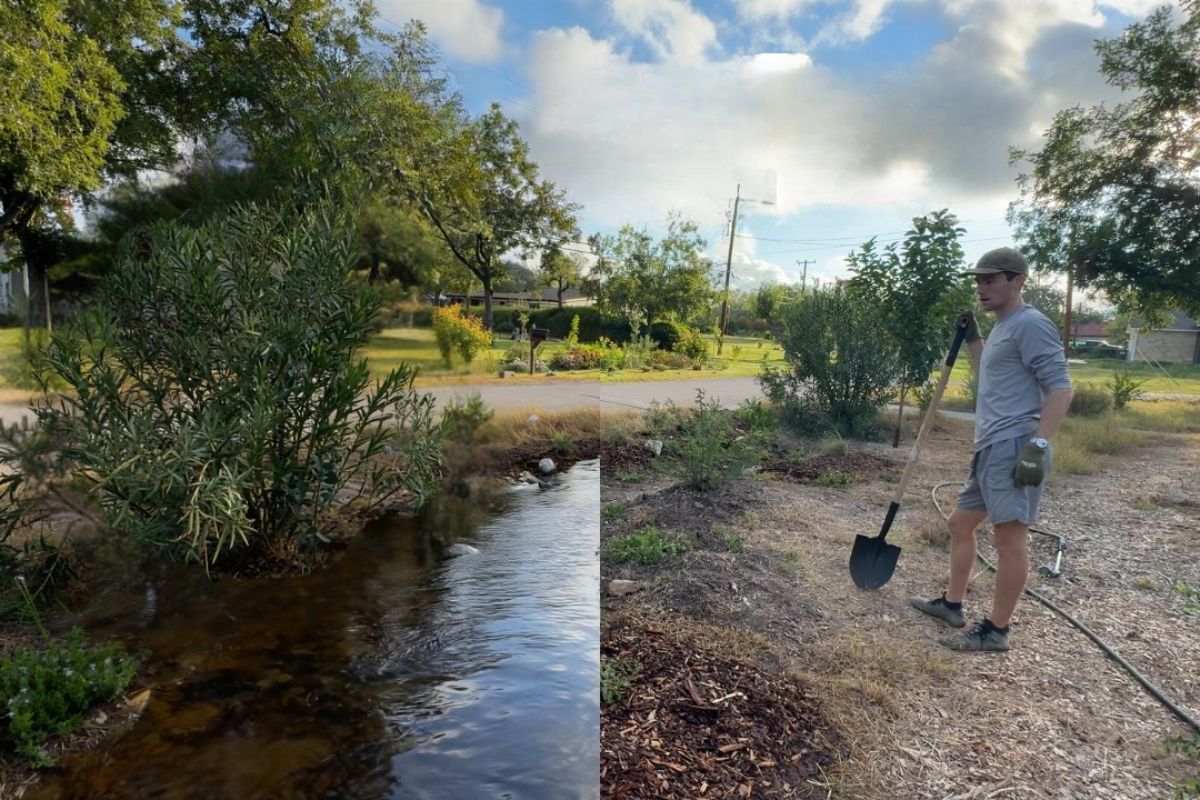


In A Neighborhood In Central Texas, A Dry Creek Of About 15 Cm Deep By 1.2 M Wide Began To Capture Thousands Of Gallons Every Time It Rains, Using Local Stones, Reinforced Outlet And Native Plants To Reduce Flooding On The Street And Infiltrate Water Into The Soil Right Here
The dry creek ceased to be just an aesthetic detail when the street water began to flow into the yard as if it were a planned channel. Instead of rushing straight into sewers and drainage ditches, part of the flow slows down, spreads, and infiltrates, converting flooding episodes into a reservoir of moisture in the soil.
In Central Texas, where heavy rains can concentrate volume in a matter of minutes, this type of home solution creates a collective effect: less speed at the source and more local recharge. The proposal is simple yet technical at the same time, and it works because it combines urban slope, stones, and native plants in a design that respects gravity and reduces erosion.
The Urban Slope That Turns The Street Into Collection

The logic starts before excavation: street water already has a preferred path, guided by small depressions, the slope of the asphalt, and the edges of the curb.
-
Canada Makes Historic Decision to Purchase New German Submarines in $70 Billion Defense Program, Replacing Aging Victoria-Class Fleet by 2033

-
4,000-Year-Old Stone Circle Discovered Near Belfast, Unveiling Prehistoric Ritual Complex in Irish Countryside

-
Brazilian Innovator Transforms 1962 Mercury Comet with Nissan Leaf Electric Motor, Achieving 125 km Range for Under $6,000
-
China Tests Giant 582-Ton Magnets to Contain Plasma Hotter Than the Sun’s Core, Aiming to Cut Superconductor Costs and Generate First Electricity from “Artificial Sun” by 2030


When this runoff encounters an opening, it can be redirected to a dry creek, instead of continuing as runoff into the stormwater system.
The critical point is to understand where the water goes when the system fills up.
In a low-consequence scenario, the excess returns to the street itself or crosses the yard without threatening the house or neighboring properties.
This safety check determines whether the intervention is viable and prevents turning a flooding problem into a structural risk.
Measures, Excavation And The Test That Prevents Rework

The design was marked to create curves and a winding path, because the sinuosity increases travel time and helps to slow down the water sheet.
To capture real volume, the reference width ranged from 60 cm to 120 cm, with sections reaching nearly 1.2 m, while operational depth was maintained at around 15 cm.
The excavation began manually, but an affordable electric cultivator made the work executable in the available time.
With the soil loosened, removal was quicker, and the shape adjustment was done iteratively: digging, observing, correcting slope, and only then advancing.
Before bringing stones, the path was tested with a hose to ensure that water flows downhill without creating unwanted puddles.
Stones And Outlet As Infrastructure Against Erosion
In a dry creek, stones are not just for looking natural.
They function as energy dissipators, stabilize edges, and prevent the flow from eroding the bed during each storm.
The strategy followed a hierarchy: large stones as focal points and anchorage, medium stones for stabilization, and small stones to fill gaps and reduce turbulence.
The most vulnerable spot is the entrance, where street water falls powerfully onto the bed.
There, the outlet needs to be reinforced with larger stones to withstand impact and prevent erosion that could block the passage.
If the outlet collapses, the system loses its function and the water flows back down the street the old way, maintaining the flooding cycle.
Native Plants To Infiltrate, Shade And Secure Slopes
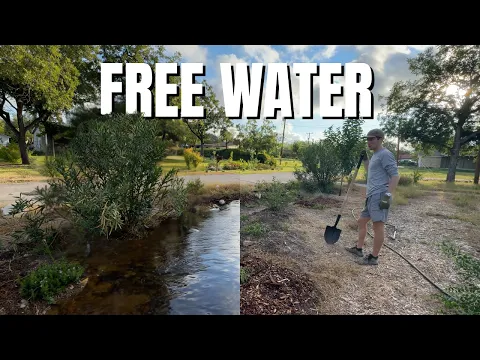

Once the path is defined, native plants enter as part of the hydraulic system, not as decoration.
Grasses and shrubs tolerant to full sun and dry periods are used on the edges to secure slopes and reduce sediment displacement.
During rains, these native plants support the passage of water for several hours, and when the water sheet lowers, continue to function without relying on constant irrigation.
The gain appears underground.
Deeper roots create channels that increase infiltration and help the captured water enter the soil profile, favoring silent recharge instead of surface runoff.
Even in clay areas, like the Blackland prairie mentioned in the project, the central point is to reduce speed and give time for the water to infiltrate.
Gallons That Stop Being Floods And Become Reserves
The impact is measured in gallons.
In typical storms, the dry creek can capture thousands of gallons of water that, without intervention, would flow straight to the storm drainage and contribute to downstream spikes.
The reported cost to set up the system was around US$ 500, including about US$ 200 in tools and approximately US$ 300 in native plants, with stones obtained from the land itself.
This scale contrast helps explain why the idea attracts attention in flood-prone areas. There was a budget of around US$ 15,000 to execute something similar, and the direct work was estimated at 8 to 10 hours, distributed according to availability.
The argument is urban, not rural: when each lot retains part of the volume, the city gains time and reduces pressure on streets, sewers, and channels in critical events in Central Texas.
When looking at your neighborhood, what would be the most obvious entry point for a dry creek to capture gallons from the street without increasing the risk to your home, and what else is stopping you today: lack of stones, lack of native plants, or fear of altering the slope?





Eu tenho uma Sisterna a de apenas 9 mil litros e isso me proporciona uma economia de água de 50 à 60 por cento, quando as chuvas aqui no RS normais. Em 15 anos que tenho a Sisterna já economizei aproximadamente 3.240 metros ****bicos de água ou 3.240.000 litros. Para esse sistema Cantareira que vive colapsando essa é uma das medidas que podem ser tomadas por casas, pequenos prédios e condomínios, reter uma parte das águas diminuem o volume das enchentes e gera economia de consumo. Há dezenas de outras medidas que podem ser tomadas por moradores e poder público, como esse da reportagem, tanto para evitar alagamentos ou crises de abastecimento.
Pessoas reclamam da privatização da Sabesp, mas desde que tomeii conhecimento da vida nunca vi pelo menos na minha cidade São Vicente tantas obras sendo realizada ao mesmo tempo a ponto de surgir transtorno para os munícipes. Então vamos deixar o lado político de lado e agradecer o empenho dessas pessoas.
Faça igual ao TF ( Tarcisio de Freitas) . Entrega a Sabesp na mão de mercenarios do Saneamento, que Eles resolvem o problema da água em São Paulo.