





 Portuguese
  English
  Spanish
  5 min of reading
  1 comment


China Introduces Concept of Hypersonic Glide Vehicle with Capability to Launch Weapons Independently
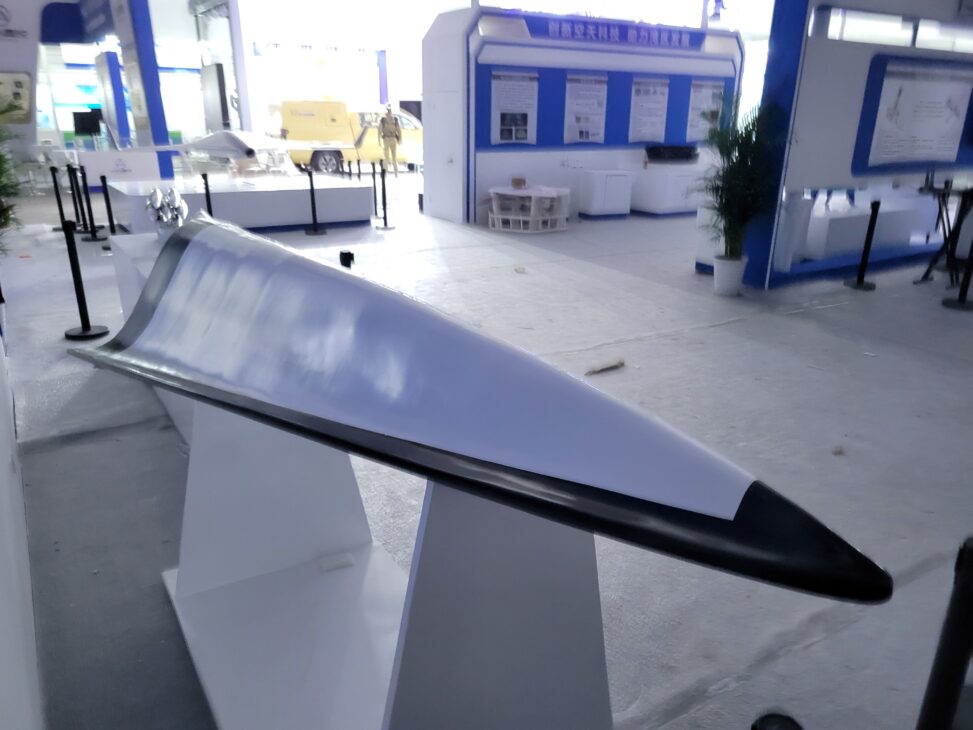
Imagine a scenario where a weapon travels at hypersonic speeds, launching different types of submunitions at multiple targets. It sounds like something out of a science fiction movie, but this is the concept behind the GDF-600, the new unmanned hypersonic glide vehicle developed by the Guangdong Aerodynamic Research Academy (GARA). Here are the details of this hypersonic vehicle.
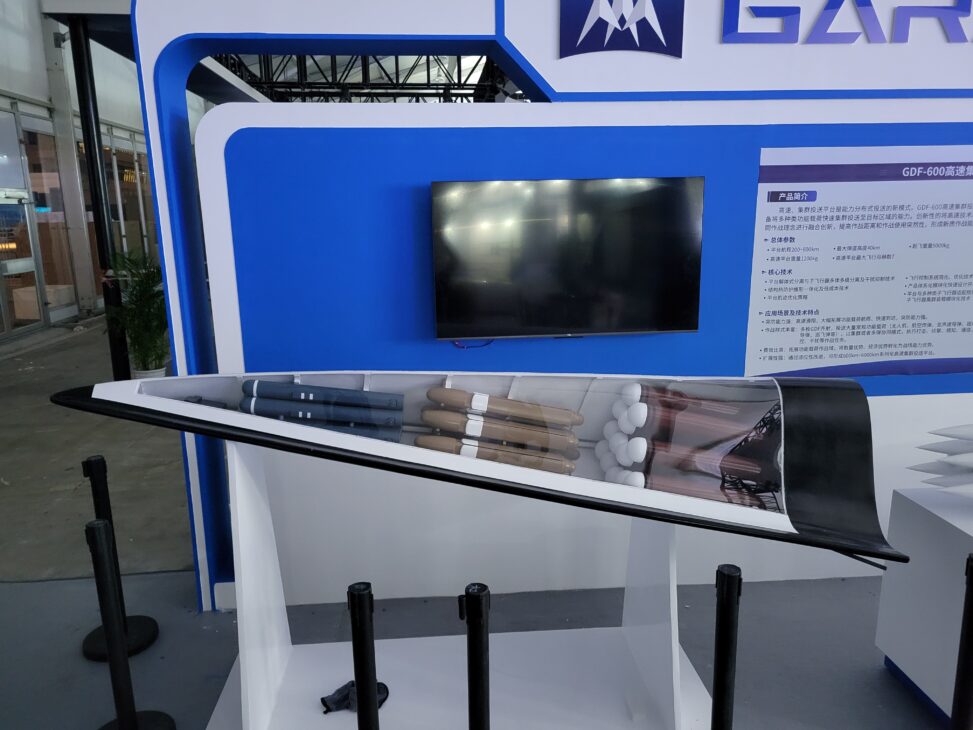
Recently unveiled at the Zhuhai Airshow in China, the GDF-600 is capable of launching missiles, drones, and other submunitions, making it a versatile platform for electronic warfare, reconnaissance, and kinetic strikes.
Understanding the GDF-600: A Revolutionary Concept
The GDF-600 is not an ordinary vehicle. It combines speed and maneuverability to carry up to 1,200 kg of sub munitions and hit targets within a range of up to 600 km. Launched with a total weight of 5,000 kg, it has achieved an impressive speed of Mach 7, placing it well above the speed of sound.
-
Starship Flight 12 approaches as Blue Origin relaunches the New Glenn booster in record time and reveals an aggressive plan to reach the Moon.

-
Mystery on Mount Ararat: alleged tunnels of Noah’s Ark appear in a site shaped like a boat and reignite one of the oldest searches in history.

-
Scientists use light to sculpt a portrait of Albert Einstein in sensitive crystal, paving the way for a new technological era in photonics.

-
Unprecedented phenomenon: scientists record trees emitting visible electric discharges and chemical radiation during severe storms.




But what truly sets it apart is the ability to release multiple submunitions along the way, allowing for a broader range of attacks and tactical operations.
This gliding propulsion weapon presents a new challenge for efficient defense systems. Traveling in erratic trajectories at high speeds, ground defenses have little time to react, increasing the complexity of interception.
The Importance of Submunitions
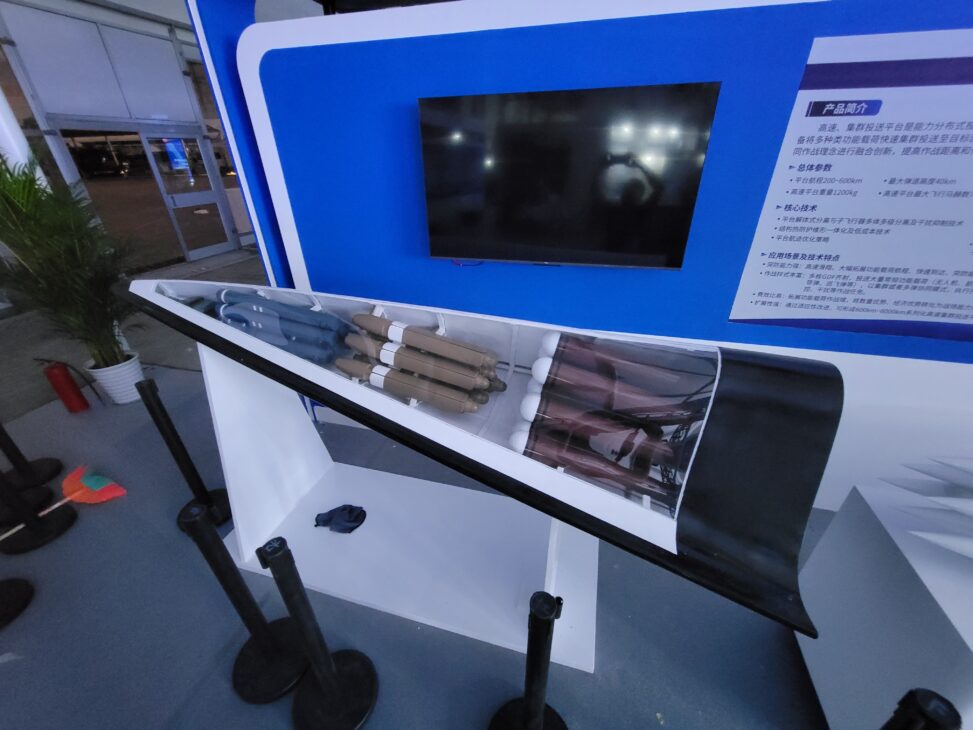
The GDF-600 is designed to carry five different types of submunitions, including drones and subsonic and supersonic missiles. Imagine a weapon that can hit targets in various ways and for different purposes with a single launch. For instance, a supersonic missile launched from the GDF-600 could strike targets up to 500 km away, nearly doubling the range of the initial hypersonic weapon.
Additionally, drones and other unmanned vehicles carried by the GDF-600 could conduct reconnaissance operations or even deceive enemy defenses by acting as decoys. It is a multifaceted attack approach that not only maximizes the weapon’s efficiency but also significantly increases pressure on enemy defenses.
A practical example: In a scenario in the Taiwan Strait, where the GDF-600 could be deployed, the system’s specifications would allow it to quickly target multiple threats while drones perform real-time reconnaissance, providing essential information for adjustments in subsequent strikes. This adaptability in combat would be invaluable in tactical operations.
The Technological Challenges of the GDF-600
For those who think launching submunitions from a hypersonic vehicle is a simple task, it’s worth considering the challenges involved. The speed of the GDF-600 means that any payload will face extreme physical and thermal conditions at the moment of launch.
This becomes even more complicated with drones and more fragile equipment, which would need to be decelerated to avoid destruction when released at high speed. It’s a problem that GARA has yet to fully solve, but the potential is clear.
On the other hand, wedge-shaped hypersonic glide vehicles like the GDF-600 are particularly complex, requiring advanced flight technology to maintain control at high speeds while also performing erratic maneuvers.
Comparisons with Other Military Projects
As GARA advances with the GDF-600, other countries are also developing hypersonic projects. The U.S. Army, for example, is exploring incorporating submunitions into its precision missions, such as the Precision Strike Missile (PrSM), which could evolve into a long-range weapon. This short-range ballistic missile is already an alternative to the ATACMS system and represents the U.S. effort to modernize its operational capability.
The GDF-600 is analogous to China’s DF-17, which utilizes a propulsion and aircraft concept, but without the same capability to carry diverse submunitions. Meanwhile, the U.S. has faced difficulties developing its hypersonic weapons, such as the AGM-183A and Dark Eagle, highlighting the advancement that the GDF-600 could represent for China’s arsenal.
This scenario suggests that while hypersonic development is a global challenge, China may be ahead in the race to create weapons with multifunctional and long-range capabilities.
The Application of the GDF-600 in Real Scenarios
GARA suggests that the GDF-600 can be adapted for land, air, or maritime weapon systems, making it a flexible tool for different theaters of operations. In a simulation of use in the South China Sea, where tensions between different countries are constant, the GDF-600 could provide a quick and efficient response to a variety of threats.
Its current range of up to 600 km makes it ideal for regional operations, but GARA is already envisioning a version with an intercontinental range of 6,000 km.
However, defenders will have to fully compensate for interception strategies. Unlike common ballistic missiles, the GDF-600 combines the element of surprise of a stealth weapon with the lethality of multiple submunitions. When drones and missiles are launched from the same vehicle, the response capability becomes significantly impactful.
The Race for the Future: Where Does This Lead Us?
The advancement of the GDF-600 is just a piece of the hypersonic technology puzzle, but its submunition carrying capability offers a glimpse into the future. In practice, developments in hypersonic weapons show that the arms race has shifted its focus to specifications and efficiency.
Instead of simply launching a warhead, the GDF-600 carries a range of options that can be adapted in real-time, depending on the situation on the battlefield.
As the GDF-600 evolves, the potential for a global strategic shift emerges, where air defenses would need to adapt to new types of threats that move more quickly, with greater lethality and unpredictability. In modern warfare, this combination of speed, stealth, and multifunctionality is undoubtedly the way forward.
The GDF-600 represents a new paradigm of hypersonic warfare, challenging defense capabilities and expanding the concept of multifunctional attack. With the potential to become one of the most innovative and dangerous weapons in recent years, it raises critical questions about the future of global security and the capabilities of current defense systems.
This new era of hypersonic weapons seems to be just beginning, and it is clear that the GDF-600 will be a central piece of this development.







…alguém tem que enfrentar a “ganância ” norte-americana, dentre outras…