Portuguese
  Spanish


Concrete Production Impacts Carbon Emissions in Brazil. Lack of Separation and Irregular Disposal Hinder Recycling of Construction Waste in the Country.
Concrete production is responsible for approximately 8% of carbon emissions worldwide, according to international data. In Brazil, this impact is also significant. The industrial processes and products sector (IPPU), which includes the production of cement and other construction inputs, accounts for 6.4% of national greenhouse gas emissions, according to the National Inventory of Greenhouse Gas Emissions published by the Ministry of Science, Technology, and Innovations.
Concrete Dominates Construction in the Country Even with Available Alternatives
Despite existing alternatives, concrete remains the main material in Brazilian construction. According to Professor Roberto Lucas Jr. from Ibmec-RJ Architecture School, the use of concrete has been a consolidated practice for over 100 years in Brazil. He notes that there is an increase in the use of steel and wood, but these materials still face barriers regarding application and cost in the country.


The system known as “steel frame,” which utilizes steel structures, reduces waste generation and can bring environmental benefits; however, its adoption is still limited in the national territory. Wood, widely used in countries like the United States, finds less space in Brazil, both for regulatory and cultural reasons.
-
Giant Robots Build Entire Neighborhood of 100 3D-Printed Homes in the U.S., Showcasing Technology’s Impact on Construction Industry

-
Helsinki Residents Receive Water That Travels 120 Kilometers Through a Hidden Rock Tunnel from a Lake Before Treatment

-
Brazil’s Sertão Region Nears Completion of Latin America’s Longest Artificial River, Transforming Water Access in Drought-Prone Ceará
-
Pre-mixed stabilized mortar set to revolutionize construction in 2026: extends usability to 36 or 72 hours, boosts productivity, and minimizes waste in building projects.


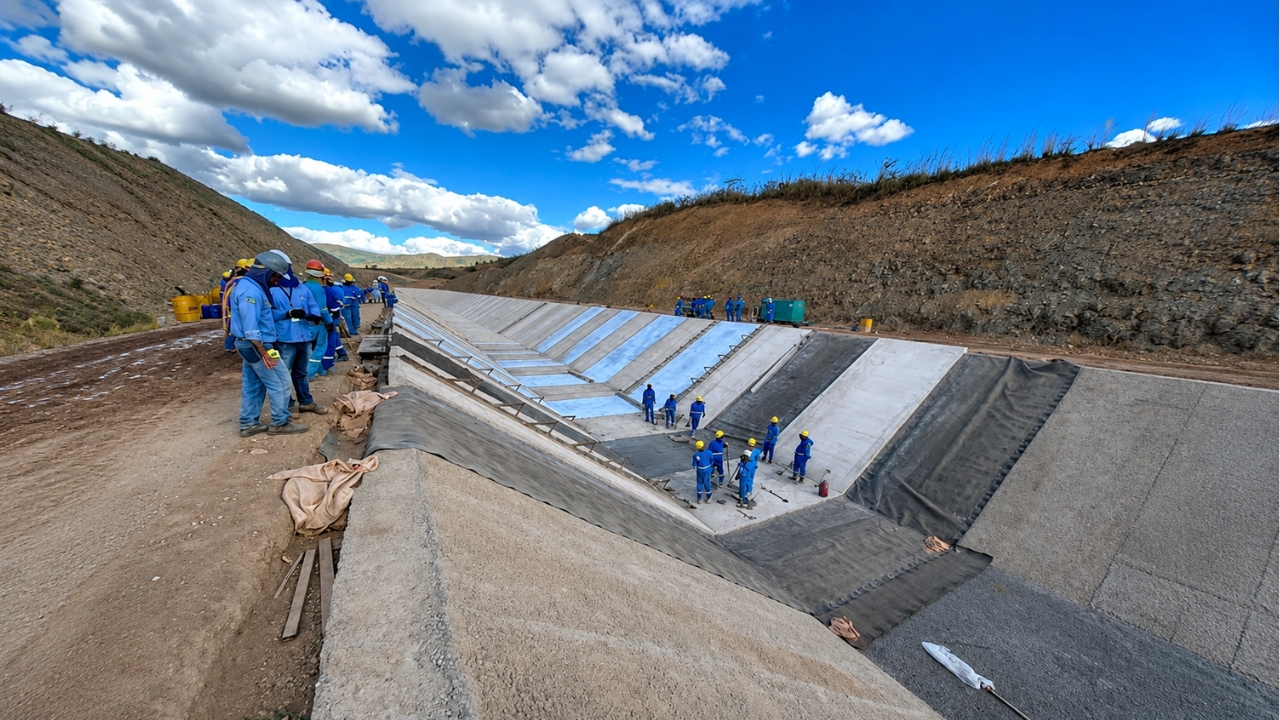

Concrete Mixtures with Styrofoam Hinder Waste Recycling on Construction Sites
Other proposals include the use of Styrofoam mixed with cement, aiming for lightness and cost reduction. However, this combination creates problems in the recycling process of construction waste, as it prevents the material’s reuse after demolition. For specialists, the lack of a holistic approach to the entire lifecycle of the material still limits sustainable advances in the sector.
Levi Torres, coordinator of Abrecon (Brazilian Association for Recycling of Construction and Demolition Waste), states that the current greatest difficulty is not the recycling of concrete itself, but how waste is managed on construction sites. According to him, there is little planning for the proper separation of materials.
Waste Separation on Construction Sites is Still Neglected
The proper separation of waste on construction sites can result in savings of up to 20% in costs between sorting and recycling, in addition to providing a cleaner and safer environment for workers. However, what is often seen is the disposal of mixed waste, making its reuse unfeasible.
A large portion of construction waste ends up being disposed of improperly. It is estimated that about 70% of the materials deposited in dumpsters on the streets are sent to clandestine dumps, despite the existence of around 700 legal disposal sites in the country. This practice contributes to urban pollution and hampers the recovery of materials that could be reintegrated into the productive chain.
National Regulation Exists, but Application is Still Limited
Resolution 307/2002 from Conama (National Environment Council) establishes that companies must carry out the proper separation and disposal of construction waste. However, the application of this regulation depends on municipal and state legislation. In many locations, this regulation is not implemented, which hinders enforcement and compliance with environmental requirements.
Data from Abrecon’s Sectoral Research conducted in 2022 indicates that only 30% of construction waste in Brazil is recycled properly. This rate exceeds the federal government’s official target set at 25% by the National Solid Waste Plan (Planares) but is still far from the potential for reuse that could be achieved.
Jundiaí Shows Positive Results with Local Policies
The city of Jundiaí in São Paulo is considered a reference for the reuse of construction waste. The city hall determined that construction debris must be recycled, with clear disposal rules. As a result, almost 100% of the waste from the sector is reused in the municipality.
The initiative not only prevents irregular disposal but also reduces costs. In just four months of 2022, Jundiaí’s city hall saved over R$ 350 thousand by reusing recycled waste such as sand, rock, and other materials for public works. Recycled concrete, in this context, has proven to be economically viable, costing up to 50% less than conventional materials used in paving.
Incentives and Enforcement Are Paths to Reduce Sector Emissions
Experts point out that to decrease carbon emissions linked to concrete production, it is necessary to combine the use of new materials with public policies focused on waste recycling. The construction sector, due to its magnitude, plays a significant role in the transition to more sustainable practices.
Investment in recycling plants, sorting systems, professional training, and enforcement of environmental regulations are factors that can accelerate this change. Without coordinated actions, inadequate disposal will continue to be an obstacle to reducing emissions and optimizing the utilization of waste generated on construction sites.
Environmental Performance Depends on Material Choice and Management
Although concrete remains essential for various constructions, its use requires responsible planning and recycling techniques. The recycling of construction waste represents a viable alternative to reduce pressure on landfills and lower construction costs.
At the same time, monitoring carbon emissions needs to integrate urban development policies and environmental licensing guidelines. With accessible solutions and practical examples, such as that of Jundiaí, the sector can evolve to more sustainable and economically efficient practices.