






 Portuguese
  Spanish


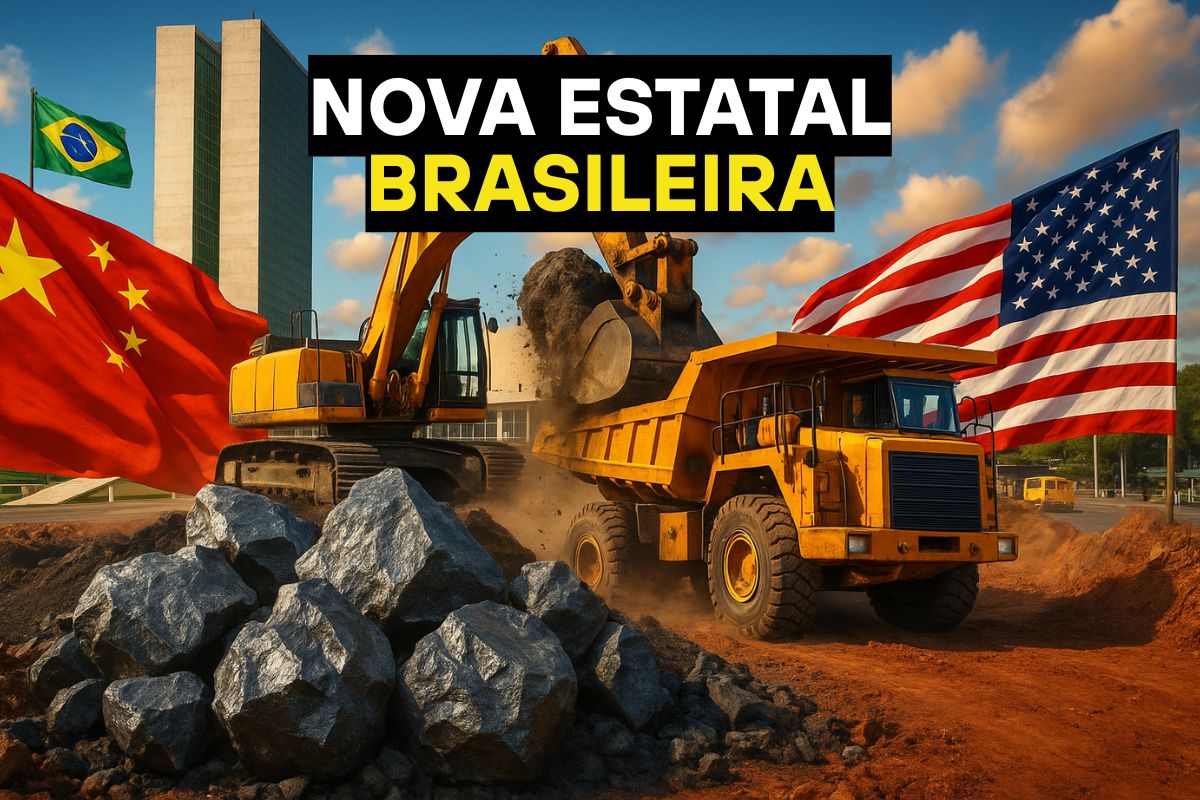


Proposal to Create a New State-Owned Company to Coordinate Critical Minerals Exploration Advances in Congress and Promises to Move Billions in Investments, Amid the Geopolitical Dispute Between Powers and the Race for Strategic Inputs
The debate over the creation of a new billion-dollar state-owned company for critical minerals has reignited in the National Congress, with lawmakers arguing that Brazil should assume a central role in the global race for strategic inputs used in batteries, semiconductors, and clean energy. The proposal, which is part of the Bill 2780/2024, envisions the creation of EBMinerals, a public company dedicated to coordinating policies, investments, and intelligence in the sector.
According to a report by Folha de S. Paulo, the initiative arises at a time when China and the United States are competing for access to Brazil’s underground, considered one of the richest in the world in lithium, nickel, copper, and rare earths. The text, which had an urgency regime approved in the Chamber, can go straight to the floor without passing through committees — a development that concerns part of the government and attracts international attention.
Project Proposes State-Owned Company and Billion-Dollar Fund for the Sector
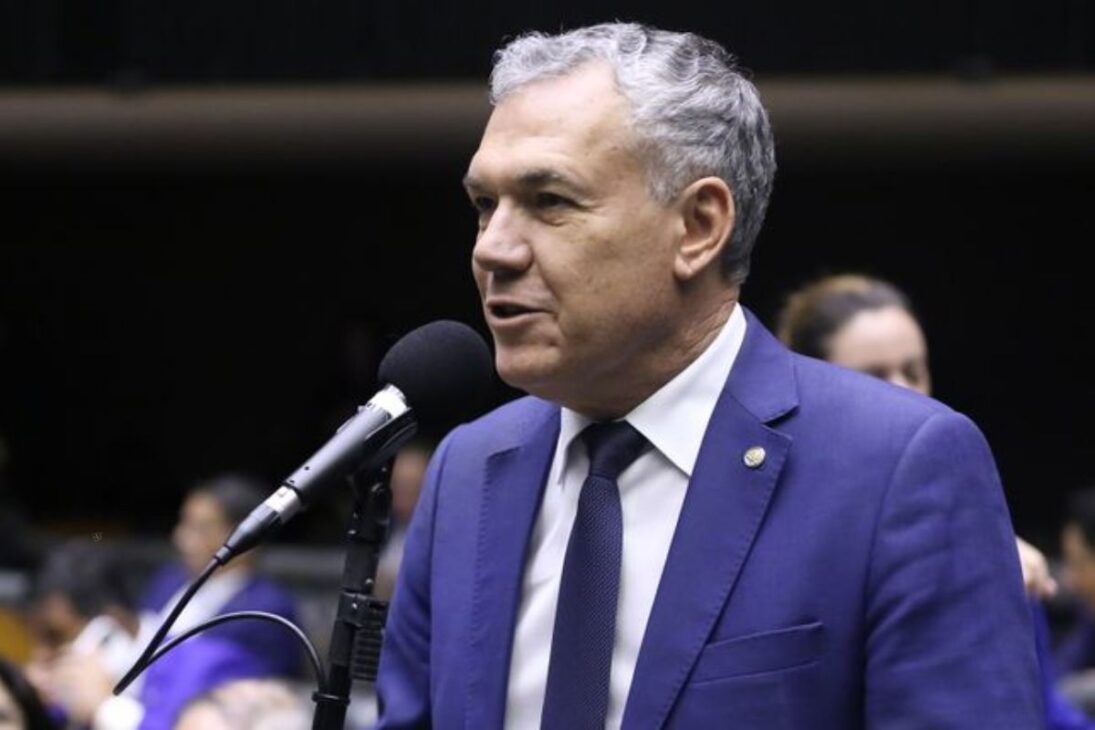
The main project, authored by Deputy Zé Silva (Solidariedade–MG), gained momentum after the addition of other proposals, including that of Deputy Aureo Ribeiro (Solidariedade–RJ), which proposes the creation of EBMinerals (Brazilian Company for Mineral Planning and Critical Technologies).
-
Saudi Arabia to Connect Border with Kuwait to UAE with Massive 672 km Railway as Part of 2,186 km Megaproject to Transform Gulf Transport

-
Polish Billionaire to Invest £35 Billion in Building 14 Small Nuclear Reactors Across the UK for Over 60 Years of Energy Production
-
White Martins CEO Plans $200 Million Investment by 2026, Boosts Focus on Industrial Gases and Green Hydrogen in Brazil

-
$1.5 Billion Project to Deploy 2,000 LNG Trucks and Establish Brazil’s Largest Gas-Powered Heavy Transport Network


The state-owned company would function as an intelligence and coordination body, similar to the Energy Research Company (EPE) in the electric sector.
“The creation of a new company to address this issue will provide the agility we need to advance in this market”, justified Aureo Ribeiro.
The text also envisions the creation of a Fund for Investment in Critical Minerals, to be managed by BNDES, aimed at financing research, exploration and industrialization of these resources in the country.
Under the proposal, mining companies operating with critical minerals will have to invest 0.4% of their gross revenue in research and innovation.
Additionally, a Committee on Critical and Strategic Minerals (CMCE) will be established, with representatives from the government and civil society, responsible for approving plans and monitoring results of the new national policy for the sector.
Government Resists, but Sees Chance for a Legal Framework
Despite the political maneuvering around the project, the federal government shows caution.
Sources from the Ministry of Mines and Energy assess that there is no fiscal space to create a new state-owned company at a time when several public companies face budget constraints.
Nonetheless, Minister Alexandre Silveira is trying to balance political pressures and strategic interests.
Recently, he announced the resumption of the National Mineral Policy Council (CNPE) and the creation of a specific strategic council for the critical minerals chain, with the participation of 16 ministries and representatives from academia and the private sector.
The first meeting of the council is scheduled for October 16, with the presence of President Luiz Inácio Lula da Silva, who intends to use the topic as a showcase during the COP30 in Belém (PA).
Deputy Zé Silva confirmed that the goal is to approve the text before the international event, to demonstrate Brazil’s commitment to the green economy and the sustainable use of its natural resources.
Geopolitical Dispute Accelerates Processing
The movement in Brasília occurs amid a global dispute for strategic minerals, driven by the energy transition and the race for lithium batteries, solar panels, and semiconductors.
Brazil is on the direct radar of China and the United States, which are already discussing the topic in diplomatic negotiations.
Last week, Donald Trump mentioned Brazil’s mineral potential in a speech on international trade, reinforcing American interest in forming agreements for access to critical inputs.
At the same time, China has been increasing investments in regions like Minas Gerais and the Northeast, with companies focused on lithium and niobium production.
Vice President Geraldo Alckmin also highlighted strategic minerals as an area of cooperation between Brazil and the US, especially in the context of industrial policy and digitalization, which includes data centers and clean energy chains.
Lawmakers Diverge on the Size of the State
While part of the Chamber advocates for the creation of the state-owned company as a tool for sovereignty and planning, other lawmakers fear a bloated public machine.
Deputy Zé Silva states that the focus should be on efficiency, not state expansion.
“I think it’s difficult for the state-owned company to pass. I don’t see the need to increase the size of the state. We need to be effective and make what already exists work”, the lawmaker said.
Meanwhile, Patrus Ananias (PT–MG), author of an alternative text, advocates for a more nationalist line, with restrictions on foreign capital in strategic areas and stricter rules for exploration.
The final report was assigned to Deputy Arnaldo Jardim (Cidadania–SP), who is expected to present his opinion in the coming weeks.
The expectation is that the report will seek a balance between state control and encouragement of private initiative, with the definition of guidelines for a modern and sustainable regulatory framework.
What Is at Stake for Brazil
The approval of a new billion-dollar state-owned company for critical minerals could redefine Brazil’s role in the global economy.
The country holds large reserves of niobium, lithium, copper, and manganese, essential resources for the battery industry and low-carbon technologies.
Experts point out, however, that the challenge is to avoid the country remaining solely an exporter of raw materials. The creation of a legal framework and clear governance could allow for attraction of investments in industrialization and technology, generating qualified jobs and increasing the added value of national production.
Without an efficient management model, however, the risk is to repeat the historical pattern of external dependency and deindustrialization, warns a consultant interviewed by the report.
The proposal to create a new billion-dollar state-owned company for critical minerals places Brazil at the center of the global dispute for strategic inputs but also raises dilemmas about the role of the state, fiscal balance, and national sovereignty over the underground.
Do you think Brazil should have a specific state-owned company to manage its strategic minerals, or should the private sector lead this advancement? Leave your opinion in the comments; we want to hear from those closely following the direction of Brazilian mineral policy.


