






 Portuguese
  Spanish
  2 min of reading
  0 comments


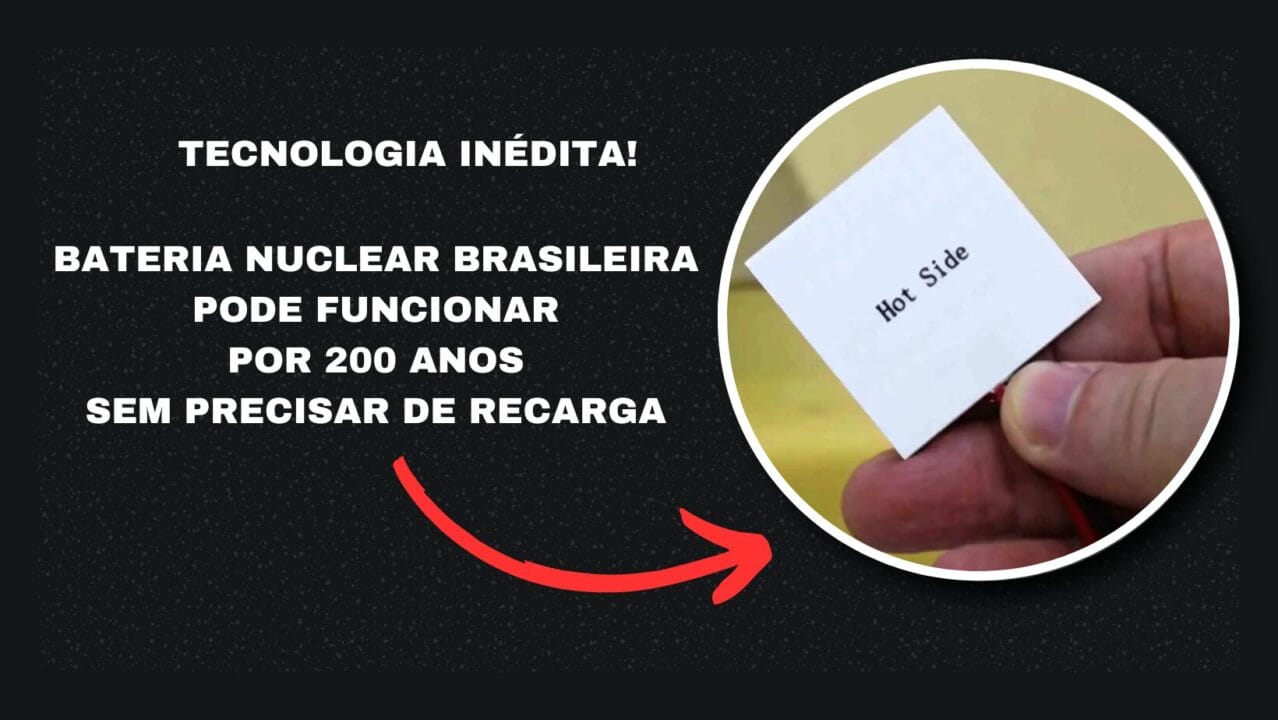
Brazilian Researchers Develop Unprecedented Nuclear Battery Capable of Lasting 200 Years with a Single Charge, Made with Americium-241.
Brazilian scientists from the Institute of Energy and Nuclear Research (IPEN-CNEN) have announced Brazil’s first nuclear battery. Based on americium-241, the battery promises over 200 years of lifespan without frequent recharges. Known as a radioisotope thermoelectric generator (RTG), it generates energy safely, without nuclear fission, making it ideal for remote locations. The research still faces technical challenges, but the team hopes for an enhanced version with a power of 100 mW in the coming years.
Brazil’s First Nuclear Battery Developed by IPEN-CNEN Scientists
Scientists from the Institute of Energy and Nuclear Research (IPEN-CNEN) have achieved a new milestone in history by creating Brazil’s first nuclear battery, ensuring a highly powerful lifespan.
The new battery, based on americium-241, is standing out for its unique ability to provide energy for over 200 years without the need for frequent recharges.
-
Helicopter Drops 180 Tons of Sand and Gravel on Swedish River to Revive Ecosystem Damaged by Decades of Exploitation

-
Brazilian Company Launches Retro Smartphone with 48 MP Camera, T9 Keyboard, and Privacy Features for Social Media-Free Use

-
Self-Taught Chinese Farmer Builds 5-Ton Submarine from Scrap, Launches It in Anhui River
-
Invisible Induction Technology Enables Wireless Power for Blenders, Coffee Makers, and Air Fryers, Reducing Countertop Cables



Known as a radioisotope thermoelectric generator (RTG), the nuclear battery generates electricity by harnessing the heat emitted during the decomposition process of americium.
Additionally, the energy generation process does not involve nuclear fission, providing a safe and efficient source for the sector.
Researcher Maria Alice Morato Ribeiro, the project leader, highlights technical challenges, including improving the reliability of the thermoelectric pellets.
However, she emphasizes that the team aims to develop an enhanced version of the battery, to achieve a power output of 100 mW.

New Technology Developed with Americium-241 Aims for Greater Safety
Although the term “nuclear” may raise concerns, safety is a priority in the development of these batteries.
Measures such as efficient shielding and encapsulation of the radioactive material ensure its safe use.
Ribeiro recalls that, in the past, nuclear batteries were used in pacemakers, and they can be used to generate energy in various applications.
Another positive point highlighted by the scientists who created the new batteries is the possibility of producing them from the recycling of radioactive isotopes from used nuclear reactor fuels, including americium-241.
This not only contributes to sustainability but also efficiently manages nuclear waste.
Thus, with the new nuclear battery developed by scientists, Brazil can prepare for an even safer and cleaner form of energy generation in the future.





Be the first to react!