






 Portuguese
  Spanish


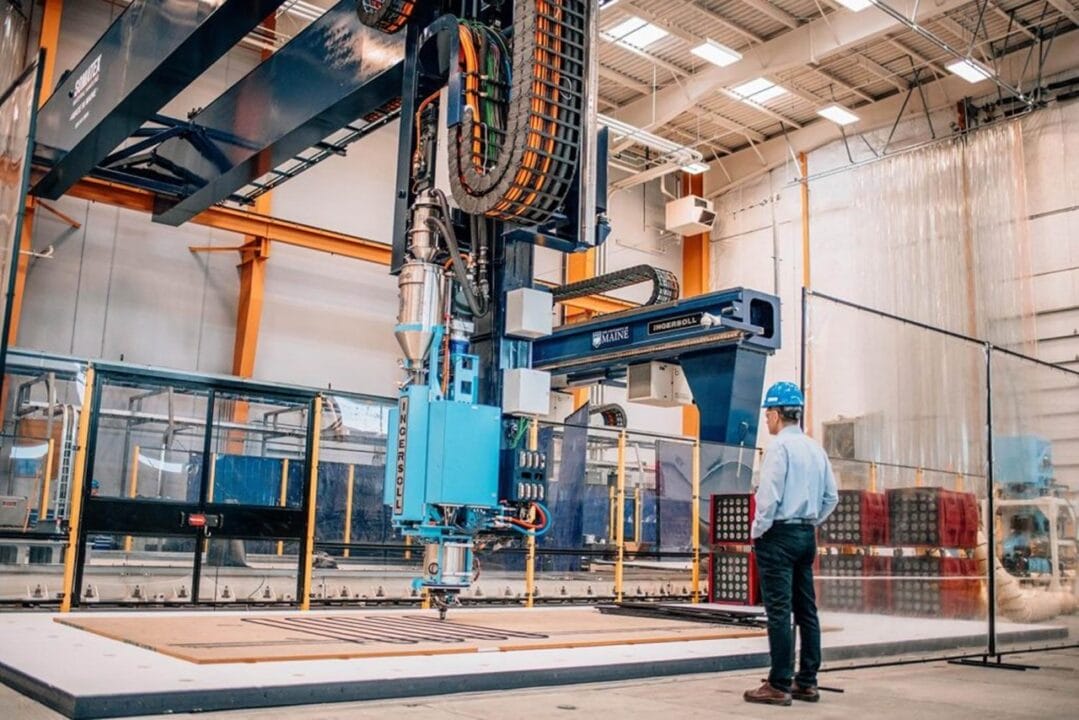


Explore How The World’s Largest 3D Printer, FoF 1.0, Transforms Waste Into Sustainable Homes In 80 Hours. Revolutionizing Construction!
The University of Maine has introduced an innovation that could transform various industries worldwide, such as construction: the world’s largest 3D printer, capable of building a small house in just 80 hours.
This technology not only sets a new Guinness record, surpassing its own achievement from 2019, but also marks a significant advancement in advanced manufacturing with a focus on sustainability.
Learn About The Presentation Of The World’s Largest 3D Printer At The University Of Maine


Description And Capabilities Of The FoF 1.0
The printer, named Factory of The Future 1.0 (FoF 1.0), was unveiled at the Advanced Structures and Composites Center (ASCC) before an audience that included representatives from the U.S. Department of Defense and Energy, state housing authorities, industry partners, and other stakeholders.
-
Key Infrastructure Projects for Brazil’s Next President: Expanding Railways to Cut Transport Costs, Reduce Truck Traffic, Create Jobs, and Boost Industries Nationwide

-
While China Builds Undersea Rail and Mexico Connects Two Oceans, Brazil Struggles with Grain Transport Due to Lack of Railways

-
Students Build Kansas’ First Hemp-Insulated Social House for a Needy Family: 85% Less Concrete, Solar Roof Returns Energy to Grid, Carbon Negative in Under 20 Years

-
China to Drill 90 Kilometers Under the Sea to Connect Two Cities Currently Linked Only by Ferry


This thermoplastic polymer printer can print objects up to 29.26 meters long, 9.75 meters wide, and 5.49 meters tall, with a production capacity of up to 226.8 kilograms per hour.
Impact On Housing And Sustainability
One of the most promising applications of the FoF 1.0 is the construction of affordable housing. Utilizing wood waste, abundant in Maine, this technology not only aims to provide affordable housing solutions but also promotes the use of bio-based and sustainable materials.
The BioHome3D project is a clear example of how 3D printing can revolutionize the housing construction sector, making it more accessible and sustainable.
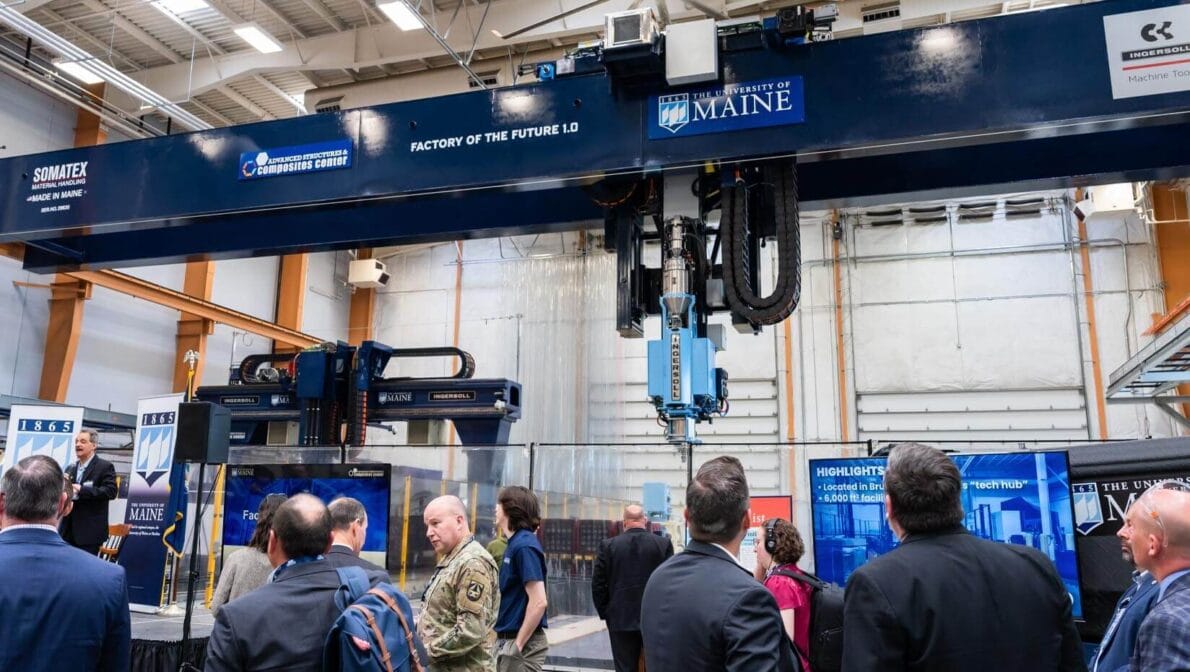
Significant Advances And Collaborations
The development of the FoF 1.0 was made possible with support from the U.S. Department of Defense, through the Army Corps of Engineers. The printer allows large-scale collaborative robotic operations and the integration of new technologies, such as high-performance sensors and artificial intelligence, establishing new standards of quality and efficiency in manufacturing.
Future Of Construction With The 3D Printer FoF 1.0
With the upcoming inauguration of the new GEM Factory of The Future research facility, Maine positions itself as a global leader in advanced manufacturing and materials science. This center aims to innovate in sustainable manufacturing, introducing next-generation solutions and biomaterials, with an objective to strengthen the local economy and address challenges such as a shrinking workforce and strained supply chains.
The 3D printer Factory of The Future 1.0 not only represents a significant technological advancement but also stands as a testimony to the University of Maine’s commitment to collaborative excellence and sustainable innovation. This development promises to be a game changer not only for the construction industry but for various sectors, aligning advanced engineering with the needs of sustainability and national security.
Source: umaine.edu


