





 Portuguese
  English
  Spanish
  3 min of reading
  0 comments


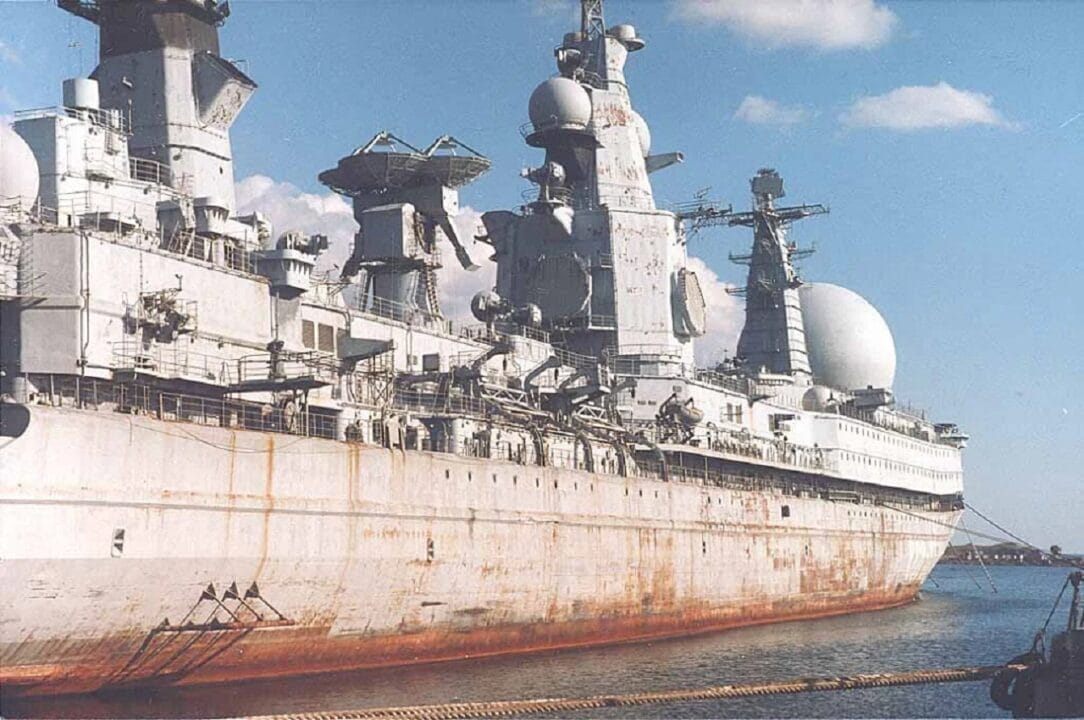
Meet The Ural SSV-33, Giant Of The Seas Of The 80s. The Soviet Navy Ship Featured Nuclear Propulsion And Drew Attention For Its 265-Meter Size.
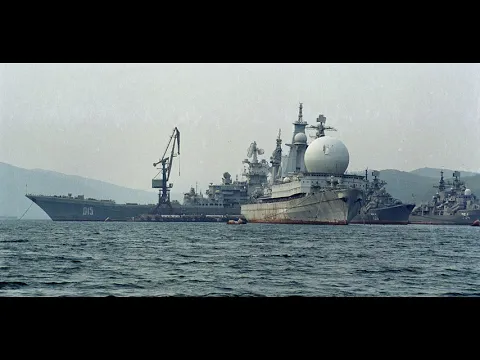
Ural SSV-33, an imposing command and control ship with nuclear propulsion that was operated by the Soviet Navy starting in 1988. This remarkable vessel measured 265 meters in length, surpassing the French aircraft carrier Charles de Gaulle by four meters, and was distinguished by its gigantic radome situated over the bridge.
How Did The Soviet Navy Ship Operate?
The Ural SSV-33 housed a scientific crew and very advanced equipment to perform early nuclear alerts, with capabilities in electronic intelligence, missile tracking, space tracking, and communication relay or jamming functions to monitor the United States during the Cold War.

In the early 70s, tensions between the United States and the Soviet Union increased with the increasingly effective development of new ballistic missiles capable of destroying the enemy through nuclear warfare. The American military created the concept of “decapitation strike,” a rapid preemptive nuclear attack focused on destroying Soviet command capabilities.
-
China is designing a container ship with a thorium nuclear reactor that will operate for 40 years without refueling, and the 25,000-container giant from Jiangnan Shipyard will cross oceans without emitting carbon in an industry that burns 300 million tons of fuel per year.

-
An entire boat came out of the 3D printer without a mold and without seams: CEAD’s giant robot creates hulls up to 12 meters in a single piece, replacing months of shipyard work with code and putting shipbuilding on the brink of a turning point that seems like science fiction.
-
Nestlé’s factory in Araras, inaugurated in 1921, enters a new phase with R$ 1 billion, artificial intelligence, industrial automation, and a projected increase in soluble coffee production until 2028.

-
The retro detail that many people added to the bathroom to make the house charming is now being questioned by designers because it multiplies grout, darkens over time, and turns cleaning into double the work.




The absence of Soviet bases or surveillance facilities in the Pacific led Soviet leaders to authorize the construction of a ship with espionage and tracking capabilities, with very high navigation autonomy and very high tonnage.
This desire gave rise to the program named Project 1941 “Titan”, approved by the Military-Industrial Commission of the Central Committee of the Communist Party and the Ministry of Defense of the Soviet Union in 1977, which resulted in the SSV-33 ship.
The Soviet Navy ship had its keel laid in June 1981 and launched in May 1983 at the shipyards of Leningrad.
When Did The Ural SSV-33 Enter Service?
Once finished and tested at sea in 1988, the Soviet Navy ship entered service on December 30 as the flagship of the reconnaissance section of the Pacific Fleet.
During its first official voyage of 59 days, it headed west of Okinawa while testing its equipment on the United States from the space shuttle Columbia and two electro-optical surveillance satellites belonging to the military program Strategic Defense Initiative, known as “Star Wars.”
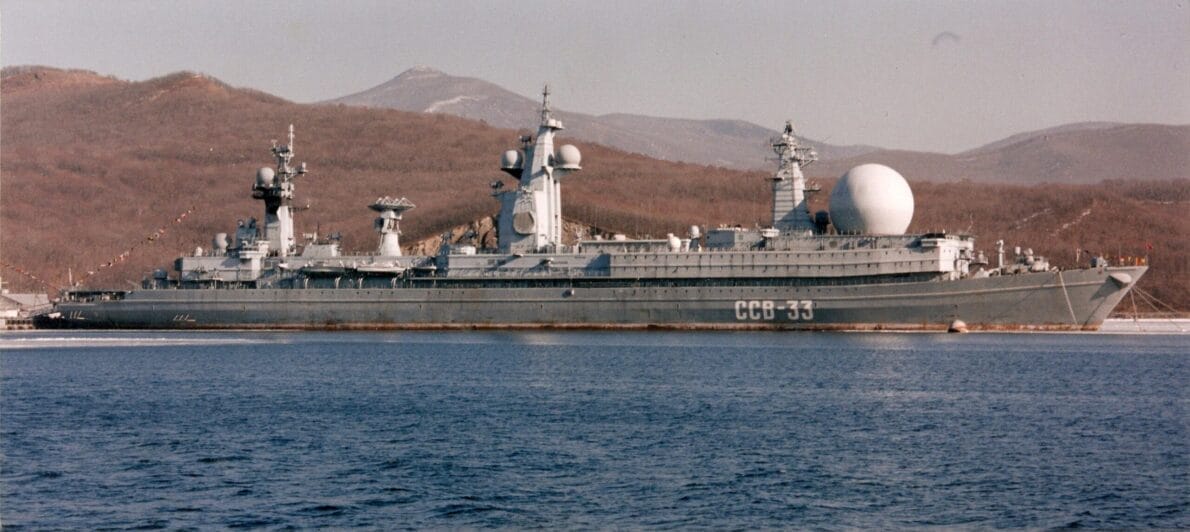
However, its navigation coincided with the end of the Soviet Union and resource shortages, as well as various issues with the complex operation of its systems, leading it to begin losing its operational capabilities, in addition to not having the infrastructure built to dock at the Soviet Pacific Navy base, Vladivostok, and it ended up being permanently anchored at the Zvezda shipyard in Bolshoi Kamen.
Ural SSV-33 Ship Delivered 140,000 Hp
The hull of the Soviet Navy ship was designed and developed at the Baltic shipyards, based on the work done on the Kirov-class battle cruisers, which were powered by two powerful pressurized water reactors (PWR), model KN-3, capable of generating up to 171 MW to provide a power of 140,000 horsepower, able to maintain a constant cruising speed of 22 knots.
The Ural SSV-33 had a crew of almost 1,000 people, and in addition to its military and scientific functions, it featured billiard rooms, sports facilities, cinemas, two saunas, and a swimming pool.
In 1990, a faulty cable triggered a fire in the aft engine room, and in 1992, its reactors were finally shut down.
From then on, until 2001, when it was decommissioned, the ship served as accommodation for fleet officers with a minimum crew and practically without maintenance. In 2010, it was finally decommissioned and began to be dismantled.









-

1 person reacted to this.