Portuguese
  Spanish


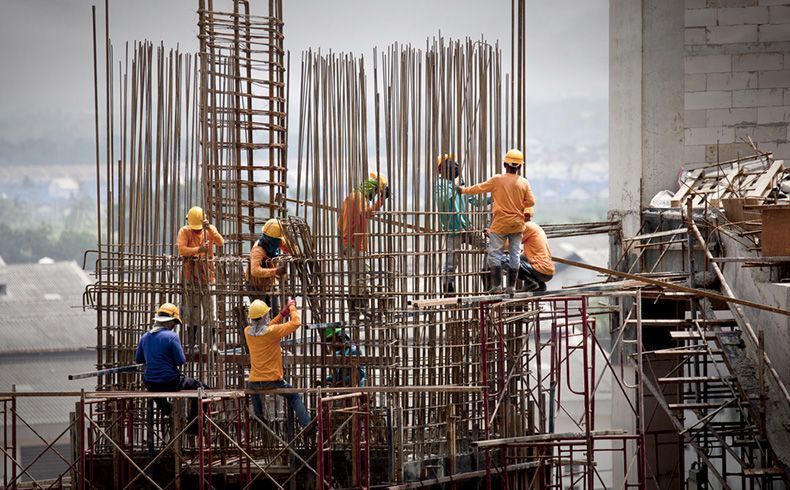

In Brazil, even with all the measures taken due to the covid-19 pandemic, the construction industry continues to operate without major difficulties, which raises concerns from entities regarding the safety of workers.
See Also:
- Exports – Agribusiness Reaches US$ 9.2 Billion in March with China Highlighted Despite the Pandemic
- Talent Bank Available for Electrician, Mechanic, Boiler Maker, Welder, Analyst, and Many Other Positions
- Petrobras May Reduce Oil Royalties Distribution to Producing Municipalities by Up to 60%
Governments of the three states with the largest populations in the country (São Paulo, Rio de Janeiro, and Minas Gerais) have not established restrictions for the construction industry to this day, and entities are questioning the safety of workers.
-
Brazil’s Busiest Port to Triple Soybean Loading Speed with $1.1 Billion Investment in Paraná Terminal, Reaching 8,000 Tons per Hour

-
Abu Dhabi Acquires Brazil’s Largest Soybean Export Terminals for $835 Million, Gaining Control Over Key Ports in Santos and Itaqui
-
Cost of Installing Subflooring in 2026: The Importance of Proper Slope to Prevent Water Damage and Costly Repairs
-
New Offshore Borehole Mining Technique Extracts Lithium and Cobalt Without Damaging Ocean Floor


Only states with a lower volume of work in the construction sector, such as Pernambuco and Goiás, have halted activities, ensuring the safety of workers. When approached, none of the states wanted to comment.
According to labor auditor Luiz Alfredo Scienza, the measures taken as precautions during activities do not guarantee worker safety: “The construction site is not a safe environment. Construction gathers most workers in certain activities; they are close together. How can we ensure that this worker’s integrity is maintained given how this virus spreads?”
In defense of the activities, São Paulo Governor João Doria placed the construction industry in the same category as security and health services and stated that it is an essential activity and that the lack of contact with the public allows for the continuation of activities.
On the other hand, Tiago Cavalcanti, labor prosecutor, disagrees: “There is no minimally reasonable basis for industries, which includes the construction industry, to be considered essential activities.”
As a result, in Rio de Janeiro, some entities of architects and engineers are calling for an immediate halt to activities, justifying that there are no safe conditions for workers to continue: “If retail has stopped, why shouldn’t a construction site stop? If remote work isn’t possible, the work must be halted. This is the case for construction in general; the only option is to stop.”