






 Portuguese
  Spanish


Brazilian Construction Technology Creates Giant Inflatable Structures, Surpassing Chinese Projects in Scale and Innovation.
While Chinese engineering has gained international prominence by using inflatable domes to accelerate large construction projects, Brazil has been implementing even bolder solutions for over a decade. In the heart of the cerrado and even in tropical forests, national companies have developed inflatable structures that cover colossal areas and withstand extreme climate challenges.
With dimensions four times larger than the Chinese model and applications in pipelines, highways, and agricultural storage, the country silently innovates with a flexible, fast, and sustainable construction technique, consolidating a new paradigm in national engineering.
National Engineering with DNA Adapted to Brazil
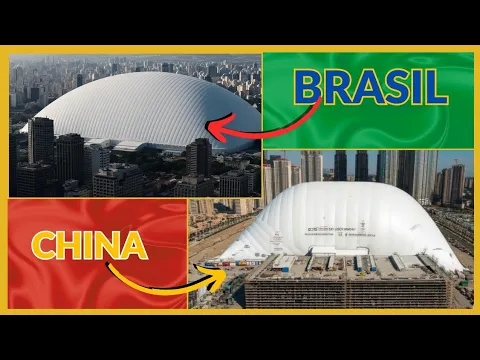

Building in Brazil requires much more than technique. It is about facing heavy rains, extreme heat, and uneven terrain. To cope with these conditions, the Brazilian company Pistel Pels, with over 40 years of experience, has developed custom inflatable domes for each region and type of soil. The structure consists of a high-strength PVC membrane supported by air pressure, which can be assembled in days — a much faster and cheaper alternative than traditional metal warehouses.
-
Cost of Installing Electric Fences in 2026: Price Per Meter and Factors Affecting Installation

-
Retired Builder Constructs House Using Over 4,000 Milk Cartons in Brazil, Engineer Estimates Structure Could Last 100 Years

-
Concrete-filled PVC homes could be cheaper than traditional masonry, UPF research finds; with ready modular panels, less waste, and faster construction, the Concrete-PVC system aims to cut costs and transform affordable housing in Brazil.
-
Brazilian House Built with 32.8 Tons of Construction Debris Offers Affordable Housing Solution


The key difference lies in the engineering: the domes are anchored to withstand storms, undergo treatment against intense UV radiation, and allow application in inhospitable locations. Instead of projects that are delayed for months, the cover can be installed in a matter of days, protecting equipment, materials, and workers from any weather conditions.
Project Surpasses Chinese Dome by Four Times
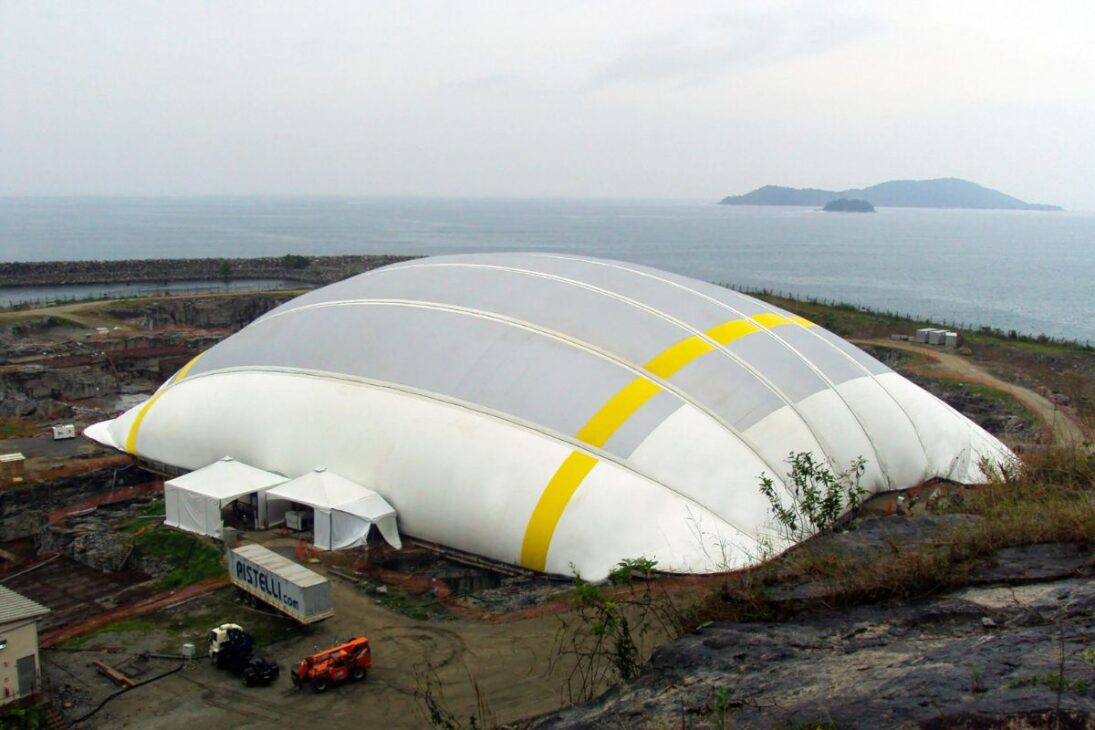
In 2010, during the construction of a pipeline in a dense forest area, Brazil installed a series of inflatable domes covering over 98,000 m² — four times larger than the most publicized Chinese project recently. The structure spanned mountains, valleys, and dense vegetation, with underground passages for wildlife, respecting environmental regulations.
The same model was used in the construction of sections of BRs 163 and 364 in Mato Grosso, where the domes ensured continuous work 24 hours a day, 7 days a week, reducing total time by up to 30%. In projects involving millions of reais, each day of halted work represents significant losses. And it is precisely this type of bottleneck that the domes resolve.
Giant Warehouses for Agribusiness
The Brazilian agribusiness has also adopted the technology. In locations where the storage of sugar, grains, or fertilizers suffers from humidity and sun exposure, inflatable domes of up to 100 meters of clear span have begun to be used as flexible silos. These structures without internal pillars allow for the efficient movement of heavy machinery.
In addition to time savings, the domes offer thermal protection, resistance to strong winds, and predictive maintenance. Regular inspections of the membranes and ventilation systems ensure durability for decades. The solution has become a viable alternative for ports, railway terminals, and agricultural cooperatives — a clear example of engineering applied to the economic reality of the country.
National Technology Little Known, but Highly Advanced for Construction
Despite the positive impact and technical complexity involved, the technology of Brazilian inflatable domes is still little known outside of engineering circles. Pistel Pels, responsible for the largest projects of this type in the country, maintains a complete technical portfolio on its own website. The domes are now part of temporary production lines, mobile logistics centers, and emergency solutions for natural disasters.
More than just a trend, it represents a real advancement in how Brazil builds, with speed, efficiency, and structural intelligence adapted to our climate and territory. While China promotes its innovations, Brazil continues to innovate in practice — silently, but with solutions four times larger.
Do you think this Brazilian technology can be applied in other areas, such as ports, large events, or climate emergencies? Leave your thoughts in the comments!


