Portuguese
  Spanish


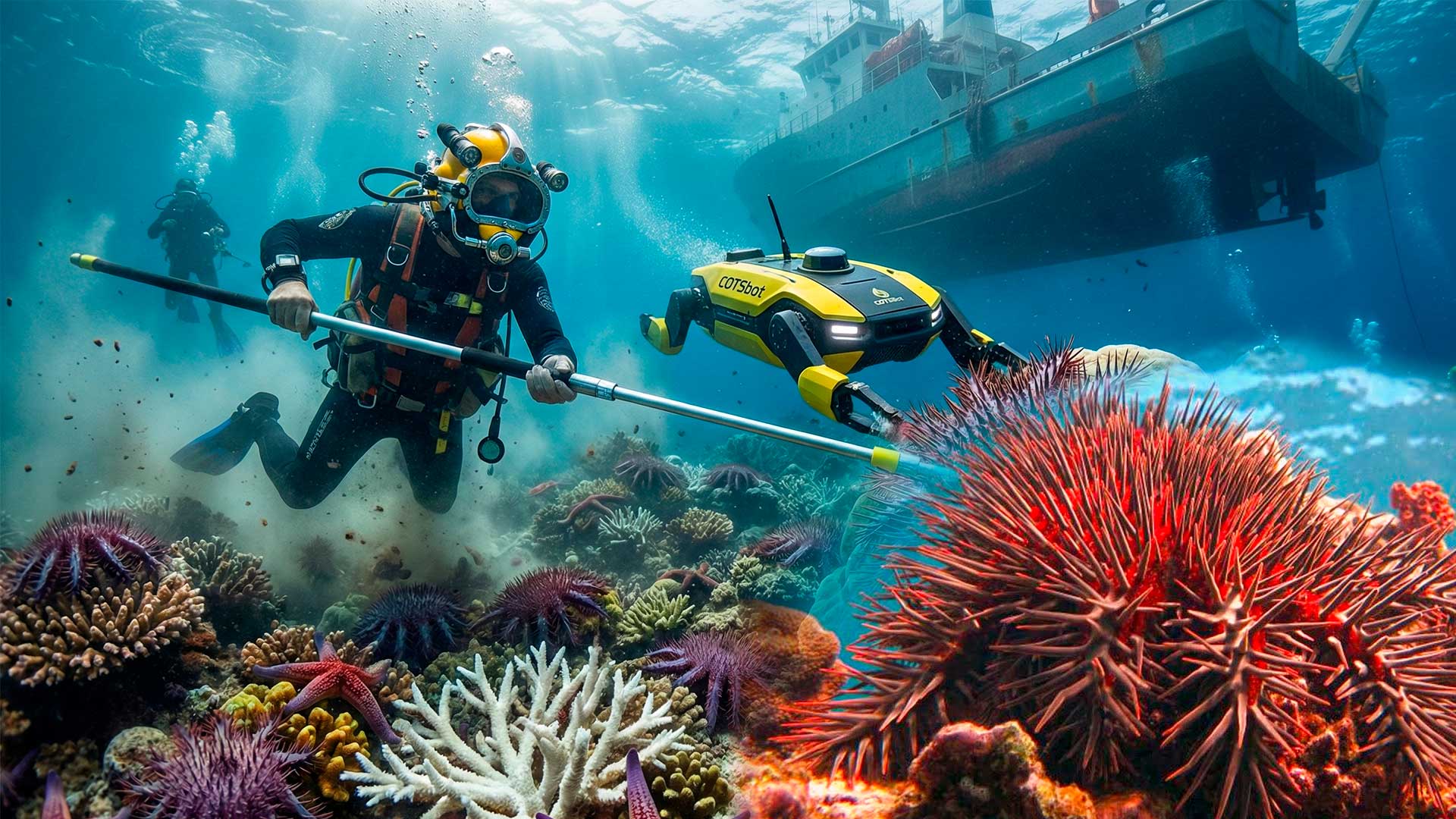

An Operation That Combines Data, Fleet, and Divers Attempts to Curb Recurring Outbreaks of the Crown-of-Thorns Starfish That Devours Coral in Strategic Areas of the Reef in Northeastern Australia.
The crown-of-thorns starfish may seem just another reef animal, but at high densities, it becomes a predator capable of wiping out large areas of live coral in a short time. Thus, control has shifted from targeted actions to operating on a scale logic, almost like an assembly line at sea.
In practice, the mission is simple to explain and hard to execute. Reduce the amount of crown-of-thorns in priority reefs to levels considered sustainable for coral recovery.
The challenge is that the Great Barrier Reef in northeastern Australia, within the Great Barrier Reef Marine Park, off the coast of Queensland, is immense, and outbreaks do not occur in just one place. They advance along the system, requiring planning, monitoring, and repetition of actions.
-
Bottle Caps in the Garden: A Creative Solution You Won’t See the Same Way Again

-
Brazilian Producer Adopts Hydroponic Strawberry Farming in Western Paraná, Achieving Year-Round Harvests and Becoming a Model for Continuous Production

-
Vale Achieves 45% Female Hiring in Mining by 2025, Surpassing Target a Year Early with 109% Increase in Six Years

-
Over 400 Gold Coins Found in Shipwreck Linked to 17th-Century Dutch Vessel, Unveiling Historic Trade Between Morocco, the Netherlands, and England




It is in this context that technologies like underwater robots and artificial intelligence come into play, not as magic but as an attempt to increase response speed. At the same time, the heavy lifting still falls on trained human teams and a continuous mission schedule.
From Natural Pest to Recurring Crisis in the Largest Reef on the Planet
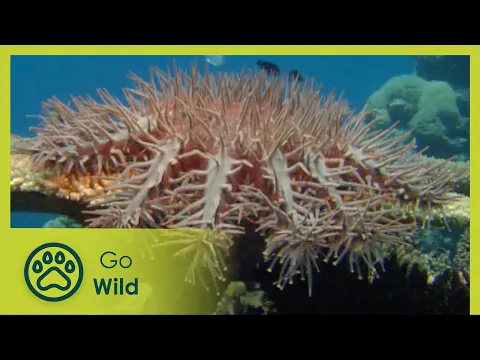

The crown-of-thorns is native to the Indo-Pacific and exists naturally at low densities, without necessarily causing disaster. The problem begins when an outbreak occurs, generally defined by densities at which it consumes coral faster than the reef can grow.
According to the marine park authority in Australia, the large contemporary outbreaks in the Great Barrier Reef tend to follow a pattern, with recurring onset approximately every 15 years in a northern range and then spreading southward over a decade or more.
This means that the impact is present at some point in the reef most of the time, shifting location as the outbreak progresses.
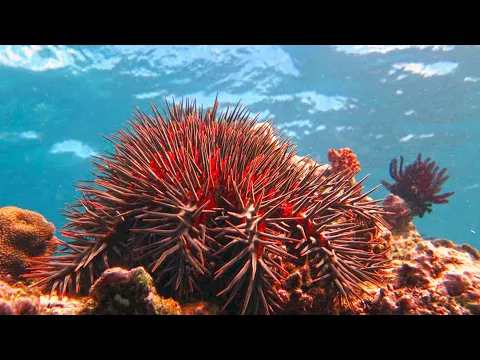
Besides the spatial pattern, there is an operational reason for the alarm. Classic studies on the historical decline of coral cover indicated that predation by crown-of-thorns was responsible for a large share of the losses observed between 1985 and 2012, which helps explain why control has become a management priority.
How Fleet and Data Control Works at Scale
The modern control program in the Great Barrier Reef was established in 2012 and began operating as a tactical response within a broader management framework. The central idea is to focus effort where there is the greatest ecological and economic return, as there is no resource to “protect everything.”
The park authority itself emphasizes that since 2018, it has implemented a decision-making model inspired by integrated pest management, making the operation more strategic and adaptive. During the same period, there was an expansion of operational capacity, including an increase in vessels in 2018-19 to reach areas previously out of routine reach.
Since the reef has thousands of structures and a huge area, the core of the system is choosing “where to go first.” For this, monitoring data, sighting records, and field intelligence come into play, including integration with information from AIMS’ long-term monitoring program.
At sea, work divides between surveillance and direct action. Surveillance uses methods like manta tow and reef health surveys to locate areas with high activity and measure progress after missions.
Once the area is defined, divers conduct systematic searches and carry out elimination via injection, recording effort and outcome to calculate performance indicators. The goal is not to exterminate the species, but to reduce predation pressure below thresholds associated with coral recovery.
What the 2024-2025 Season Reveals About the Size of the Operation
The latest figures consolidated by the Australian government illustrate the almost industrial nature of the response. In the 2024-25 cycle, the program operated in 234 target reefs with surveillance and control actions, combining thousands of field surveys.
During the same period, the official panel reported 18,282 manta tow surveys, 3,457 reef health surveys, and the elimination of 73,881 crown-of-thorns over 11,710 hectares, with 18,008 hours of underwater work. It is a scale of effort that depends on logistics, repetition, and prioritization, not on a single targeted action.
Underwater Robots Enter as Multipliers and Raise Debate
The promise of robots appears as a response to an obvious bottleneck; there are not enough divers to cover all hotspots quickly. One of the most cited projects is the COTSbot, described by the QUT robotics team as a vehicle that uses computer vision to identify the animal and apply lethal injections, operating for hours and delivering hundreds of “doses” in one mission.
Nevertheless, the official management makes it clear that the backbone of control today is human and based on fleet and diving teams, with surveillance and repetition until sustainable levels are reached. In other words, the robot acts as an additional force and potential accelerator, not as an immediate replacement for the current model.
The effectiveness of targeted control also helps explain why the operation continues to grow. On April 30, 2024, the Australian government released results of a study using data from the program indicating that regions with sufficient and timely effort had reductions of crown-of-thorns by up to six times and a 44 percent increase in coral cover, reinforcing the argument that intervention works when well applied.
The controversial point is that this “war” happens while the reef faces other stressors, such as bleaching events, cyclones, and floods, making each investment decision more contested.
The AIMS describes that the summer of 2024 brought multiple stressors and that mass bleaching was the primary mortality factor during that period, increasing the pressure for local measures like crown-of-thorns control to buy time for coral.