






 Portuguese
  Spanish


From giant truck operators to mine managers with 310 people on the team, the female workforce of Brazil’s largest mining company has more than doubled since 2019, changing the face of one of the most male-dominated sectors of the economy
Women in mining are no longer an exception within Brazil’s largest mining company. Since 2019, Vale has increased the number of female employees by 109%, according to Vale’s official pages, reaching 2025 with 28% of the workforce made up of women, many of them operating the heaviest equipment in a mine, from off-road trucks to trains over 1 kilometer long.
According to Vale, the company promised in 2019 to double the female presence, going from 13% to 26% of the workforce by 2025, and met the goal in 2024, one year ahead of schedule. Today, 28% of the workforce is female, 23% of high leadership positions are occupied by women and 45% of all hires made in 2025 were female professionals.
The goal that seemed impossible: doubling the female presence in a male-dominated sector
When the commitment was made in 2019, women in mining were a statistical rarity, and the company’s starting point confirmed this: only 13% of employees were women. Promising to double this in 6 years sounded like a speech goal, not a spreadsheet one.
-
Over 400 Gold Coins Found in Shipwreck Linked to 17th-Century Dutch Vessel, Unveiling Historic Trade Between Morocco, the Netherlands, and England

-
Why Many People Choose to Keep Silica Gel Packets Instead of Discarding Them

-
São Paulo Unveils $19 Billion Metro Project: 15 Stations, 15.3 km, Cutting Commute from 90 to 23 Minutes with Trains for 2,044 Passengers After Record-Breaking Tunnel Excavation.

-
Brazilian Nurse Turns Unscheduled Massage Sessions into a Franchise Network with 24 Locations, Generating Up to $42,000 Monthly per Store


The result came before the agreed time: the 26% mark was reached in 2024, one year ahead of schedule, as Vale records on the official page Women at Vale. And the movement didn’t stop at the entrance: the rate continued to rise to the current 28%, with almost half of the vacancies opened in 2025 filled by women.
For a sector that moves billions and employs tens of thousands of people in states like Minas Gerais, Pará, Espírito Santo, and Maranhão, this statistical turnaround means thousands of qualified jobs reaching an audience that historically stayed outside the mine’s gate. Women in mining have moved from the footnotes of diversity reports to the center of workforce planning.
Who are the women operating the giants of the mine
Statistics take on a face in the web series Mining By Women, maintained by the company, which profiles the professionals behind the numbers. Rosilane Duarte operates an off-road truck, that mining colossus whose wheel is taller than an adult. Josiane Dias drives a truck in operations, Evanielly Heredia operates mobile equipment, and Thaís Araujo works as an electrician at the heart of industrial plants.
These are exactly the roles that, for decades, were considered exclusive territory for men, and now they appear in the company’s official showcase with a female name, surname, and badge. The list continues through all technical layers: Kelly Silva and Silvia Cristina do Carmo operate equipment and facilities, and Kamylle Santos became the first geoprocessing technician to work at the company’s ports.
This is not an image project with a handful of isolated cases. According to Vale, women are now present in all sectors of the operation, from railway maintenance to mine leadership, including the operation of large equipment.
A 1.1 km Train and 110 Wagons Under the Command of an Engineer
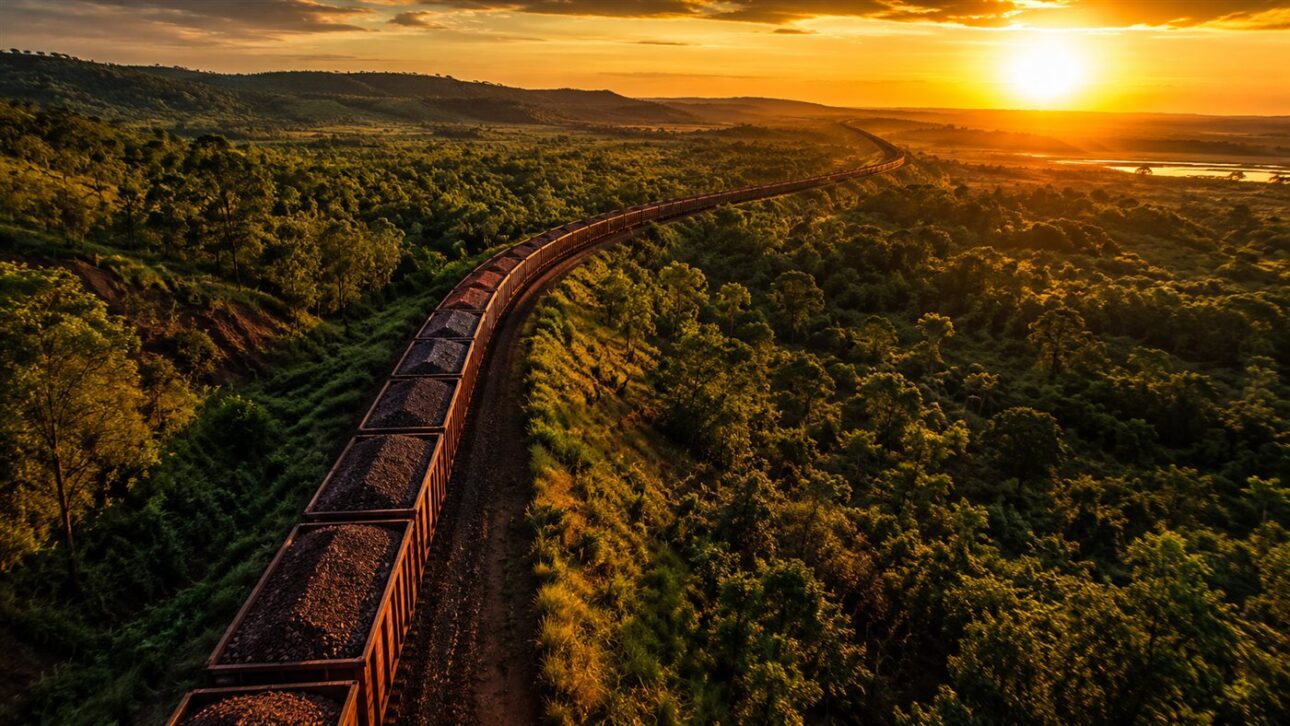
Among the profiles in the web series Mining By Women, one gives the exact measure of the responsibility: Marcely Lima, rail yard engineer and safety leader, works with a composition 1.1 kilometers long and 110 wagons loaded with ore.
To visualize the scale: such a train, when stopped, occupies the equivalent of 11 blocks of 100 meters lined up. Any wrong decision on braking, speed, or coupling involves thousands of tons in motion. It’s heavy engineering in its purest form, and it’s a woman who is responsible for it.
In the web series, Marcely summarizes the lesson that became the program’s involuntary slogan: women can be wherever they want to be. The phrase, spoken by someone who commands 110 ore wagons, ceases to be a rallying cry and becomes a routine statement.
From Operation to Leadership: 310 People Under the Command of a Mine Manager
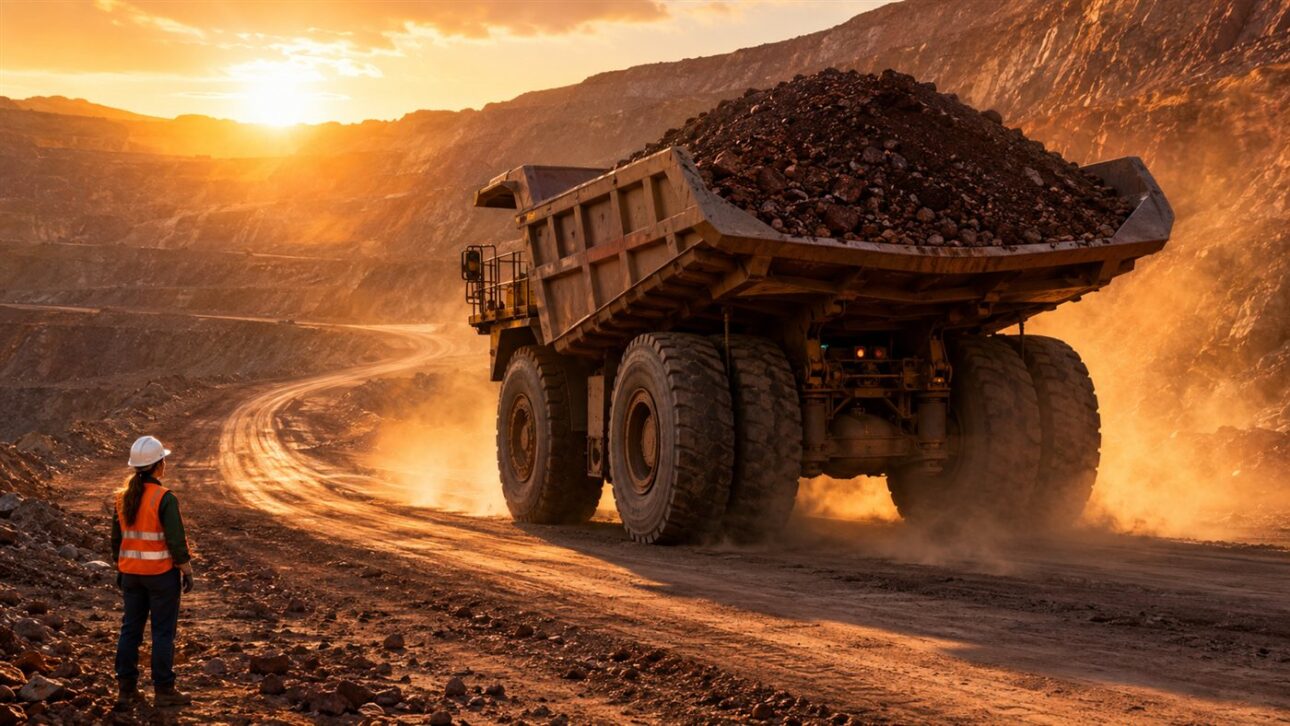
The advancement was not limited to the operational base. According to Vale, Kilma Cunha manages a mine operation with 310 employees under her responsibility, Heloísa Oliveira is the executive manager of the Mariana Complex in Minas Gerais, and Gabriela Castro commands the maintenance of mine equipment, one of the most technically critical areas of the operation.
At the top of the pyramid, South African Deshnee Naidoo reached the executive vice-presidency of Basic Metals at the company. Today, 23% of the high leadership positions in the mining company are held by women, a number that changes the standard of the entire labor market in the mineral sector, because those who lead hire, promote, and set the standard for future generations.
The funnel turned: 45% of the hires in 2025
If the current picture is impressive, the film is even more revealing. According to Vale, 45% of all hires made by the company in 2025 were women, almost double the proportion they held in the total workforce in 2019.
The entry funnel was redesigned for this. The company maintains specific access doors, such as the Professional Training Program, the Young Apprentice, the internship program, and the engineering trainee, which feed the operations with professionals trained within the company’s own culture. It is through these pathways that future off-road truck operators and the next mine managers arrive.
The program that has already placed 2,100 women in the promotion queue
Hiring is only half the game; the other half is making a career move forward. According to Vale, the #SomosÚnicas program, aimed at female professional development, already gathers more than 2,100 women enrolled, combining structured learning paths, support networks, and practical application in the workplace.
The most concrete result: 35% of the program participants have already recorded career progression. In a sector where promotion historically depended on informal networks dominated by men, creating a formal development pathway is the kind of mechanism that transforms entry statistics into leadership statistics.
What needed to change inside the mines
Placing thousands of women in mines, railways, and ports required changes in physical infrastructure and culture. According to Vale, the units now have adapted facilities and personal protective equipment designed for the female body, a detail that seems small but practically determined who could or could not work in an operational area.
In terms of behavior, the company maintains a zero-tolerance policy for harassment and discrimination, supported by the No Harassment program and an independent reporting channel. Without this foundation, no hiring goal survives the first work shift.
Why women in mining shake up the entire job market
The impact of the movement goes beyond the walls of a company. Vale is a signatory of the UN Women’s Empowerment Principles and participates in initiatives like Women in Mining and the Women 360 Movement, which spread the same practices among suppliers, contractors, and competitors.
When the largest mining company in the country starts hiring 45% women and showcases large equipment operators in its institutional display, the ripple effect reaches the entire job market of the mineral chain, from maintenance companies to transporters, which need to compete for and retain this new professional profile.
The next horizon passes through 2030
The bar keeps rising: the company is working with the horizon of doubling female representation by 2030, deepening a cycle that began as a promise in 2019 and turned into a competitive advantage. Each new group from the Professional Training Program and each promotion from #SomosÚnicas pushes the number forward.
The mine, the train, and the giant truck remain the same; what changed was the hand on the lever. If in 6 years the female presence more than doubled within the largest mining company in Brazil, what prevents the rest of the Brazilian heavy industry from doing the same? Leave your opinion in the comments: has the sector where you work already gone through this turnaround?


