






 Portuguese
  Spanish


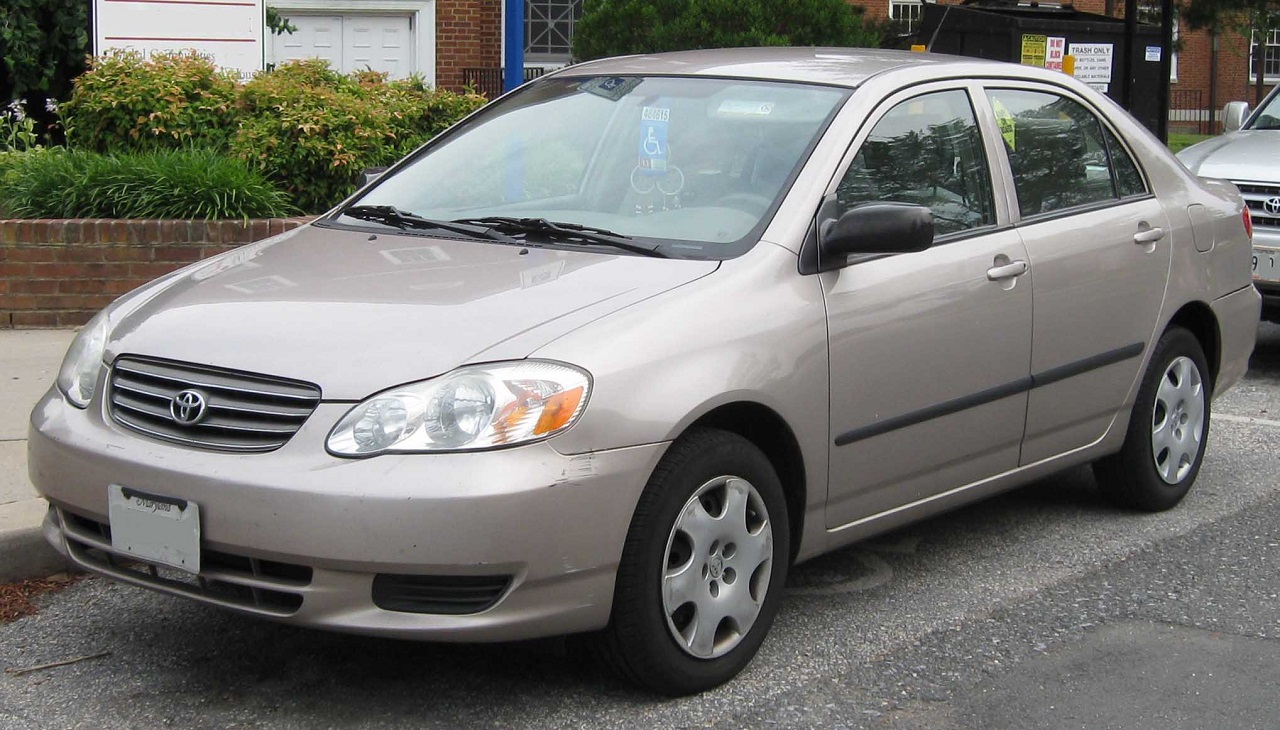


Corolla 2003 Turned Legend In The Countryside For Its Durability, Resistant Engine, Reliable Transmission, And Low Maintenance; See Why It Is The Most Reliable Sedan In Brazil.
The Toyota Corolla 2003 occupies a very particular place in the history of the Brazilian automobile. It is not just an old mid-size sedan that “aged well.” It has become something larger: an absolute reference of durability, the preferred car of app drivers from the pre-app era, taxi drivers, rural fleet operators, doctors traveling daily between small towns, and families driving thousands of kilometers per month.
It is no exaggeration to say that the Corolla 2003 became a kind of mechanical myth, especially in the countryside of Brazil. In small towns, where gas stations may have lower quality fuel, shops are simpler, and maintenance relies more on skill than on advanced scanners and electronics, it became an almost unbeatable car.
Today, more than two decades later, it continues to circulate with mileages that challenge any statistic. Examples with 300,000, 400,000, and even over 500,000 km are driven daily, many still with original engine and transmission — a rare feat even among much newer cars.
-
Turbocharged Engines with Direct Injection: Why High-Performance Engines Over 130 HP/Liter and Turbines at 200,000 RPM Challenge Durability

-
Chevrolet’s Parent Company to Invest Billions in Brazil to Modernize Factories, Update Cars, and Accelerate Hybrid Launch by 2028

-
Practical Driving Tests in Brazil Surge by 23.5%, Exceeding 2.2 Million by 2026, as New Rules Make the Process Cheaper and Simpler
-
Brazil’s Lula Government Allocates $463 Million Quota for Electric Car Parts, Waives Import Tax Until December, Sparking Competition Among BYD, Automakers, and Unions as Consumers Question Impact on Prices and Local Industry


To understand how the Corolla 2003 became this legend, one must look beyond the technical sheet. It is necessary to comprehend the historical context, the engineering of the model, Toyota’s philosophy, and the way the car was adopted in regions where mechanical demands are higher and preventive maintenance is often more limited.
The Project That Prioritized Durability Above Any Other Virtue
The generation launched in Brazil in 2002 (2003 line) was built on the E120 platform, used globally and recognized for its robustness. Unlike many mid-size sedans of the time, the Corolla had a simple philosophy: to be durable, absorb rough roads well, and deliver stable driving without requiring fragile or expensive components.
The engine was the heart of this proposal: 1.8 16V VVT-i with 136 hp, with a timing chain (not a belt), low compression ratio, high tolerance to fuel variations, and a design focused on minimizing wear.


The timing chain is one of the most celebrated aspects by mechanics to this day. While competing sedans required timing belt replacements every 60,000 km — a risk if the owner neglected it — the Corolla kept running, maintaining perfect timing even over 250,000 km.
The onboard electronics were also minimal and easy to diagnose. Few sensors, few modules, and no highly complex systems that could fail over time. The philosophy was clear: the car needed to be predictable, simple to maintain, and resistant to severe use.
The 4-Speed Automatic Transmission That Became Synonymous With “Indestructible”
Another fundamental point for the reputation of the Corolla 2003 is the A245E automatic transmission, a four-speed design by Toyota known worldwide for its durability.
While many saw just “an old transmission,” mechanics saw a simple, strong, and hard-to-destroy unit. It could withstand heat, old oil, heavy traffic, long trips, and irregular fuel without showing critical wear.
It was a transmission that prioritized:
- smooth shifts
- low heat generation
- low maintenance costs
- extreme longevity
This combination led drivers who drive a lot — especially taxi drivers — to adopt the Corolla as their definitive car.
There are numerous reports of original transmissions exceeding 400,000 km without opening the engine or transmission. And when maintenance is needed, the cost is much lower than the average for automatic sedans of the time.
A Sedan Made For Bad Roads — And That Does Well On Any Terrain
The Corolla 2003 was designed with not only the city in mind but also global markets where poorly paved streets, dust, potholes, and thermal variations are common.
The front McPherson suspension and the rear torsion axle worked excellently on uneven surfaces. This made the car much more comfortable and durable than rivals with more delicate designs. In the interior of the Northeast, the Midwest, and rural areas, this made a difference. The Corolla withstood:
- dirt roads
- asphalt patches
- deep potholes
- long distances without breaks
- constant dust
The car not only survived — it maintained comfort and stability even under severe use. This is why mechanics in the countryside recommended this model above any other: it was a hard car to break.

Balanced Fuel Economy And Sufficient Performance For Any Trip
Although the 1.8 engine may seem large for the time, it proved to be very efficient. Actual fuel consumption could vary between 9 to 11 km/l in the city and 12.5 to 14 km/l on the highway. For an automatic sedan from two decades ago, this performance is still admirable.
But what impresses even more is not the isolated number — it is the consistency. Even with extremely high mileages, many Corollas maintain fuel consumption almost equal to when they were new.
The performance has always been adequate. It is not sporty, but it accelerates smoothly and safely, maintaining enough vigor even when the car is loaded.
Low Depreciation And Affordable Maintenance
The Corolla 2003 maintains high values in the used car market to this day for a very logical reason: it does not incur expenses.
Parts are abundant, compatible with other versions, and most components have slow wear. Suspension, brakes, bearings, bushings, peripheral belts — everything has spaced replacements and affordable costs.
Moreover, it is a car easy to sell. Any well-preserved unit finds a buyer quickly, often for prices above the category average.
Why Mechanics Consider The Corolla 2003 One Of The Most Reliable Cars Ever Made In Brazil
When talking to specialized workshops, the response is almost unanimous: the Corolla 2003 is the car that “enters the shop the least for repairs.” When it does appear, it is usually for preventive maintenance. The reasons are clear:
- engine with a simple and robust design
- legendary automatic transmission
- robust suspension
- minimal electronics
- low sensitivity to adulterated fuel
- above-average durability
For those who work with cars, the Corolla is synonymous with mechanical peace.
The Corolla 2003 Became Legend Because It Combines Simplicity, Efficiency, And Mechanical Immortality
The reputation of this car did not arise by chance. It was designed to last, widely adopted by those who drive a lot, and proven in practice, in workshops and roads all over the country. That is why, in 2025, it still runs as if it had just come out of the dealership — silent, comfortable, and intact.
Few cars have managed to unite all these factors. And that is why the Corolla 2003 is, for many, the most reliable sedan ever manufactured in Brazil.


