






 Portuguese
  Spanish


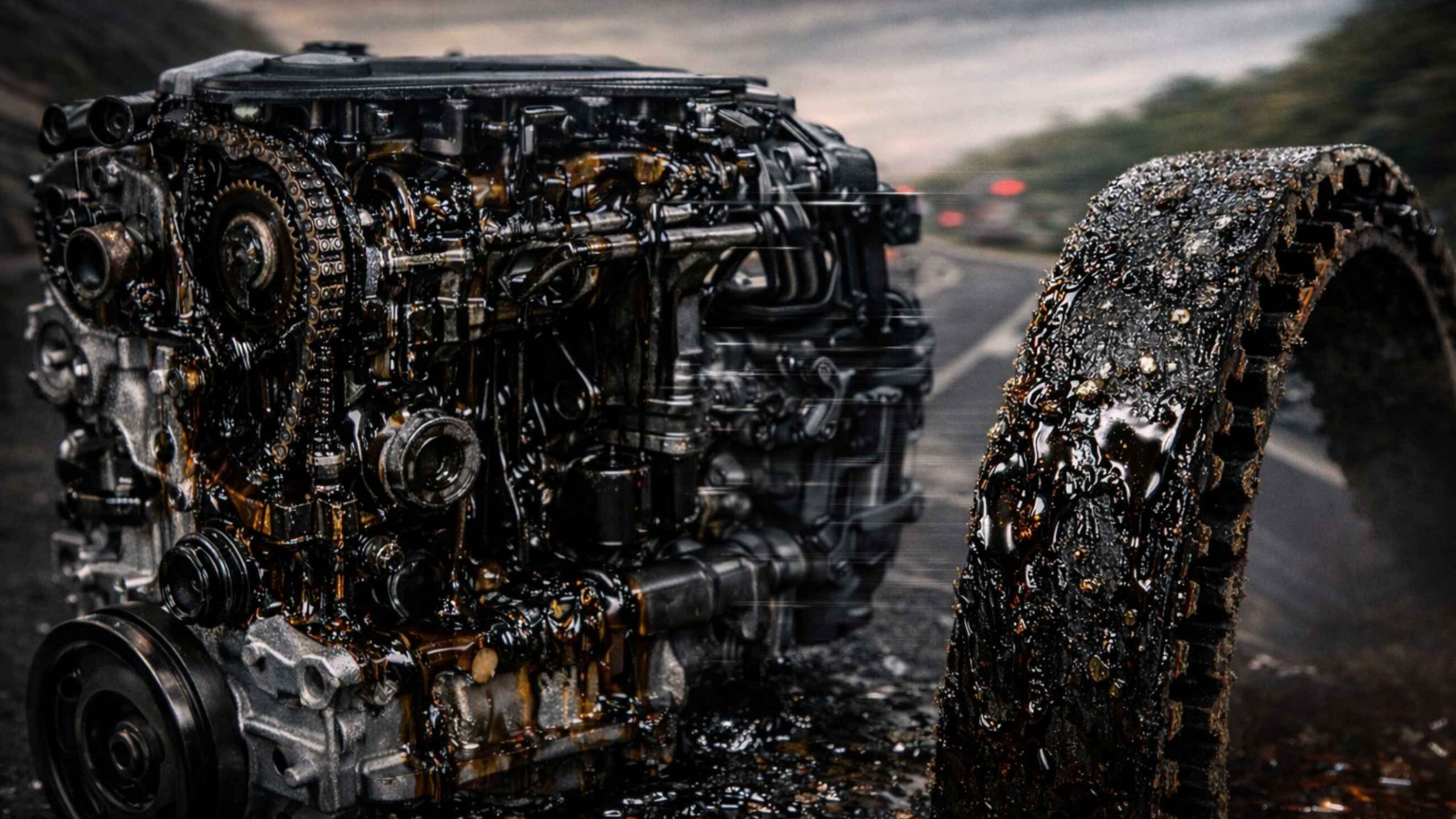
Investigation in the U.S. Examines Silent Failures in the EcoBoost 1.0 Engine Following Reports of Sudden Shutdown While Driving, Focusing on the Oil-Saturated Belt, Road Safety Risks, and Possible Corrective Measures Involving Thousands of Ford Vehicles.
An investigation opened by the United States National Highway Traffic Safety Administration (NHTSA) is looking into reports of sudden loss of power in Ford vehicles equipped with the 1.0 EcoBoost engine.
The agency states that it has received complaints of engines stalling during use, in some cases with a low oil pressure warning appearing shortly before the failure, and it aims to assess the scope of the problem and its risks to safety.
The document formalizing the inquiry describes the central suspicion: fragments of material from the belt in the timing system, which operates submerged in oil, may detach with wear and accumulate inside the oil pump assembly.
-
Uber Black Revamps Fleet, Drops Ten Car Models and Sets Deadline for Electric BYD Dolphin

-
Chinese Giant Uses Metal Structures and Cranes to Deliver Over 700 Electric Cars to Brazil

-
Uber Faces Shareholder Scrutiny as Board Accused of Ignoring Safety, Compliance, and Harassment Warnings Amid Over 3,500 U.S. Lawsuits
-
Ferrari’s First Electric Car Divides Fans, Priced at $630,000, Amid Concerns Over Limited Editions; Brand Clarifies It’s Not Just for Future Perks


Over time, these residues could clog the pickup screen, reducing or interrupting engine lubrication, which may lead to seizing and shutdown of the vehicle while in motion.
NHTSA Investigation into the EcoBoost 1.0 Engine
The NHTSA has opened a “preliminary evaluation” to examine the possibility of a timing belt failure associated with power loss in specific vehicles.
According to the investigation summary, the focus is on 2015 to 2017 Ford Fiesta and 2015 to 2018 Ford Focus, all with the 1.0 engine and manual transmission, within an estimated universe of 10,473 vehicles.
The same material records 44 complaints attributed to the problem, with no indication, at this stage, of accidents, fires, injuries, or fatalities related to the reported cases.
Nonetheless, the agency emphasizes that loss of power while the vehicle is in motion is a type of occurrence that can pose a risk, especially as it reduces the driver’s ability to react in heavy traffic scenarios.
Although it is still in the initial phase, the inquiry has a practical objective: to ascertain the extent of the potential defect, the severity, and whether there are sufficient elements to justify measures like a broader corrective action.
In the United States, this path could include technical guidance updates or a recall campaign, depending on what the analyses and gathered data indicate.
How the Silent Failure Occurs in the Oil-Saturated Belt
The description compiled by the agency points to a typical sequence observed in some complaints: the driver notices a low oil pressure warning and shortly thereafter experiences a severe reduction in power or total engine shutdown.
The preliminary hypothesis is that particles from the belt, accumulating in the circuit, hinder oil flow and can cause sudden loss of lubrication.
With compromised lubrication, internal engine components become more susceptible to accelerated wear.
In cases of severe oil insufficiency, there is a risk of significant damage and even seizing of the assembly, which would explain the “silent” nature of the failure: it can evolve without a persistent signal and, when it manifests, appears as power loss or engine shutdown.
There is currently no conclusion in the public materials from the investigation about specific causes beyond the hypothesis regarding wear and residues, nor a confirmation of the occurrence rate relative to the total number of vehicles.
The NHTSA itself highlights that the preliminary evaluation is precisely aimed at consolidating information, deepening inspections, and determining if the issue constitutes a safety defect.
Recent History of Ford with the 1.0 Engine in the U.S.
This new case adds to previous discussions involving the brand’s 1.0 engine in the country.
In a recall issued by Ford itself, the automaker described a risk of loss of power and also of loss of brake assist, associated with a component of the system that activates the oil pump.
In that notice, the company explained that a part of the tensioner could fracture or separate, which could cause the vehicle to lose power and increase the risk of collision.
The investigation now opened by the NHTSA, however, addresses a different aspect: the focus is on vehicles with manual transmission and a possible dynamic of wear and accumulation of material from the belt in the lubrication system.
As the process is ongoing, the agency may still request additional data from the automaker, expand the analysis universe, or adjust the scope as new reports and inspections are incorporated.
Road Risk Associated with Unexpected Loss of Power
Traffic safety experts often treat unexpected loss of power as a critical event because it can occur without the driver having the margin to “pull over” safely, especially on highways, expressways, and busy intersections.
Even when there is no collision, the interruption of engine operation can affect systems that rely on the assembly being fully operational, increasing the complexity of vehicle control when the problem occurs.
On the other hand, the absence of recorded accidents or injuries in the initial summary released by the NHTSA does not mean, in itself, that the risk is nonexistent.
This type of assessment typically cross-references complaints, technical inspections, manufacturer information, and field data to understand frequency, usage conditions, and failure mechanisms.
Debate on Oil-Saturated Belt in Brazil and Other Markets
The discussion about timing belts operating in an oil bath is not limited to the North American market.
In Brazil, owners of Chevrolet models with engines that use the same concept have reported concerns regarding wear and maintenance, and the topic has gained traction in forums, workshops, and social networks.
In August, Autodata magazine reported that General Motors switched suppliers for the oil-saturated belt applied to the Chevrolet Onix.
The publication reported that the belt is now produced by Dayco, reinforced with fiberglass, and that the part would have a 240,000-kilometer warranty, according to statements attributed to a company executive.
GM, in turn, maintains in public statements that severe cases would be linked to the use of lubricants outside the standards specified in the manual, while consumers claim to have followed the recommendations and still faced problems, keeping the debate open.
With ongoing investigations and differing technical actions in each market, the issue remains on the radar of regulators, automakers, and owners, especially as it involves a component that operates at the heart of the engine and whose degradation, in some scenarios, may lead to sudden operational failure.







Be the first to react!