Portuguese
  Spanish


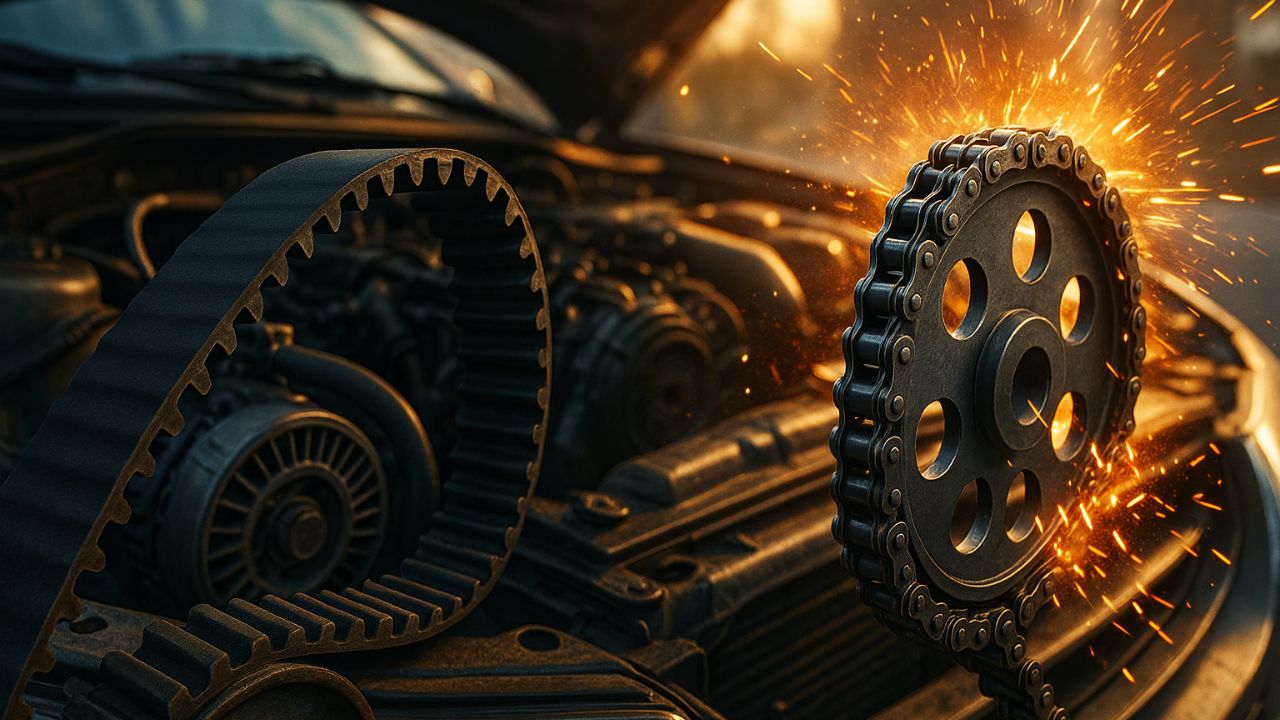

Understand How Timing Belt or Timing Chain Works, What Lasts Longer, What Costs More, Signs of Failure, and What Really Matters for Your Usage Profile
The decision between timing belt or timing chain seems like a technical detail, but in practice it defines risk, cost, and peace of mind. One system typically requires replacement within a certain timeframe, while the other tends to last much longer, and the difference can mean anything from a simple revision to a heavy loss in the engine.
Many people buy a car without knowing whether the engine uses a timing belt or a timing chain, and only find out when the maintenance bill arrives or a strange noise occurs. The good news is that by understanding the basics, you learn to choose clearly, avoid surprises, and don’t fall into unnecessary maintenance.
What Timing Belt or Timing Chain Does in the Engine
Both the timing belt and the timing chain serve the same purpose: to synchronize the crankshaft with the camshaft.
-
End of the Affordable Car Era: Fiat Argo 1.0 2026 Offers 14.7 km/l Efficiency and Easy Maintenance, but $18,000 Price Raises Cost-Benefit Concerns

-
Honda XR 300L Tornado Special Edition 2026: Off-Road Focused Motorcycle with 293.5cc Engine, 24.3 HP, Priced at $6,200
-
Indian Government Offers Up to $1,000 Incentive for Drivers to Swap Old Cars for Electric Vehicles

-
Tesla Begins Testing Two-Seater Autonomous Robotaxi Without Steering Wheel or Pedals, Featuring Onboard Safety Monitor


This ensures pistons and valves are working at the correct timing without colliding. If the synchronization fails, the engine can stop immediately and suffer internal damage, depending on the engine design.
Timing Belt: Why It’s Quiet and Why It’s Concerning
The timing belt is made of rubber reinforced with fibers. It is lightweight, operates smoothly, and tends to be quieter, helping to reduce vibrations and, in some cases, contributing to efficiency. The problem is that rubber ages, suffers from temperature, friction, and time, even with low mileage.
That’s why the timing belt has a replacement timeframe and mileage. This is where the biggest risk lies: when the timing belt breaks while the engine is running, the failure can be catastrophic. In many engines, pistons and valves meet, and the loss can turn into a reconditioning or replacement of expensive components.
Timing Chain: Why It Lasts Longer and Why It Can Be Expensive
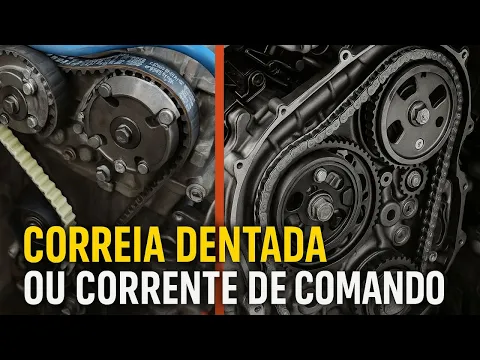

The timing chain is made of steel, resembling a chain, and works inside the engine, bathed and protected by oil. The main advantage is its durability. In many cases, the timing chain lasts over 200,000 km and can outlast the engine’s lifespan.
However, there is a “but”: when the chain shows slack, wear, or a problem related to lubrication, the repair tends to be more complex and costly since it involves internal components and more labor.
Durability: Who Truly Wins
On average, the timing belt usually requires replacement between 60,000 and 100,000 km, with some cases going higher but not as a rule. The timing chain, when well looked after, tends to last much longer and often does not make the list of periodic replacements.
If longevity with fewer interventions is the priority, the timing chain has the advantage. If the focus is on lower part cost and more affordable replacement, the timing belt appears as a common option in many engines.
What Costs in Practice
The timing belt is cheaper to manufacture and replace, but it requires discipline. The replacement usually involves the belt, tensioner, and often, in many engines, the water pump as well. This means it’s not just about “replacing the belt,” it’s about replacing the whole set.
The timing chain almost always requires fewer replacements throughout the car’s life; however, when intervention is needed, the service tends to be more expensive.
In summary: the timing belt has more frequent and predictable maintenance, while the timing chain has rarer and costlier maintenance when it occurs.
Failure and Signs: Which Gives Warning and Which Can Break Without Warning
An important difference for the driver is the behavior of the failure. The timing belt can fail without clear warning, which is why scheduled replacement is so important.
On the other hand, the timing chain, being metallic, tends to give signs when it has slack or wear: metallic noise, failures, difficulty starting, loss of performance.
The timing chain often gives you time to act. The timing belt requires prevention.
Oil-Bathed Belt: The Promise and the Controversy
Some engines use an oil-bathed timing belt, aiming to combine lightweight with greater durability. In practice, this system can be sensitive to contaminated oil and material degradation, posing the risk of residues affecting the engine.
Therefore, it is a topic that requires extra attention to oil, timelines, and maintenance quality, and does not automatically replace the trust many drivers place in the timing chain.
How to Choose for Your Driving Style
If you seek peace of mind and want to reduce the chance of catastrophic failure, an engine with a timing chain tends to be more “forgettable” in daily use, as long as the oil is up to date. If you perform timely revisions, follow the manual, and track timelines, the timing belt works well and can be a rational choice.
Some profiles help in decision-making:
Urban Use and Focus on Lower Cost: Timing belt can work well, as long as the replacement is on the radar.
Long Trips, Intense Use, and Search for Reliability: Timing chain tends to be safer.
Used Car with Dubious Maintenance History: Engine with a timing chain can reduce immediate risk, but still requires checking noises and oil.
There is no one-size-fits-all answer. Timing Belt or Timing Chain is a choice that depends on your budget, your discipline with maintenance, and how much you want to reduce risk.
The timing belt is efficient, quiet, and typically cheaper to replace, but it requires commitment to timelines. The timing chain tends to last longer and give signs before the worst, but may cost more if repair is needed.
And now tell me: in your next purchase, do you prefer timing belt or timing chain, and why?