






 Portuguese
  Spanish
  3 min of reading
  0 comments


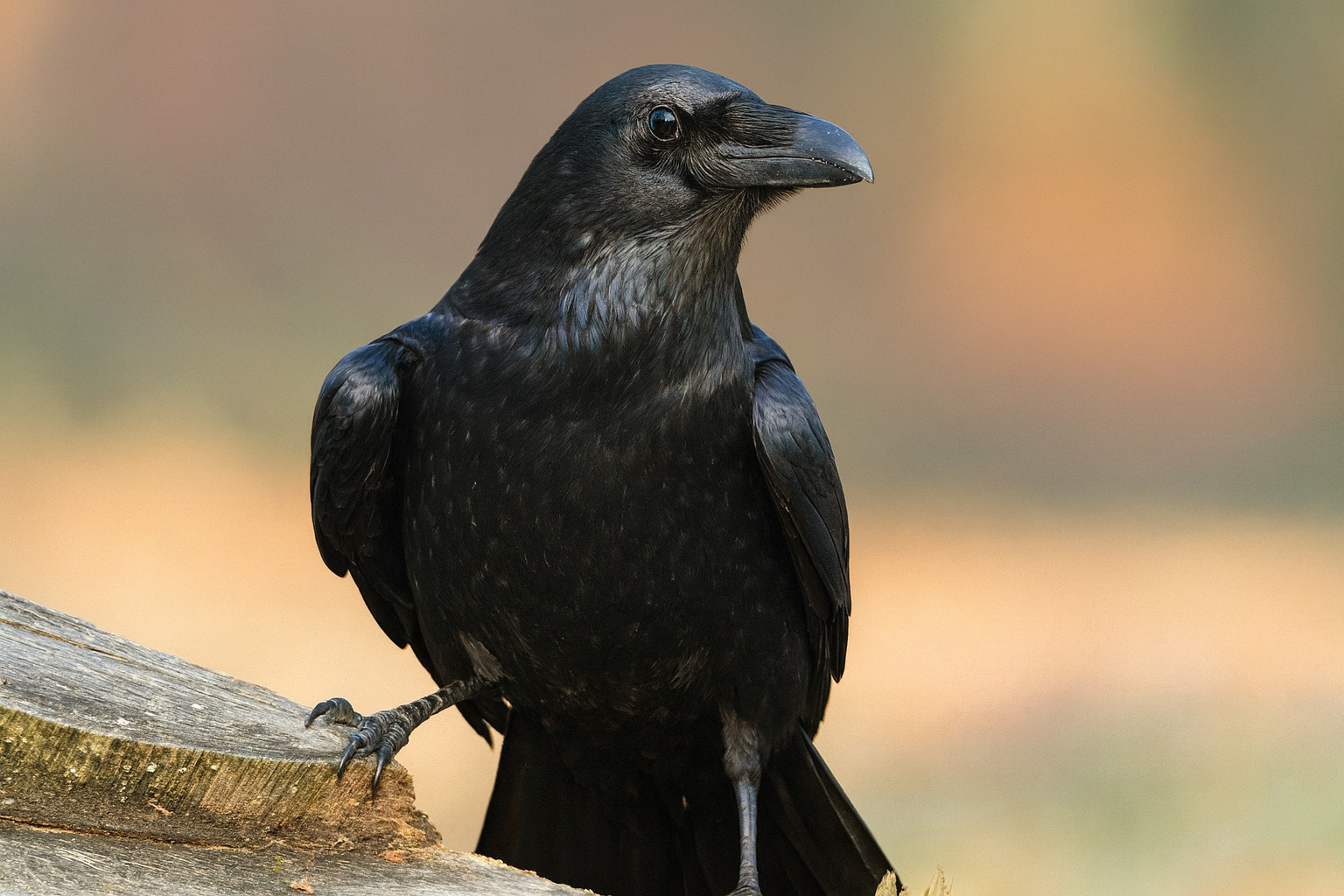
Crows Display Complex Behaviors That Reveal Prolonged Memory, Facial Recognition, And Emotional Responses To Negative Experiences Related To Humans
Crows, birds recognized for their intelligence, demonstrate behaviors that reveal prolonged memory and a precise ability for facial recognition. As a result, these birds can associate human faces with negative experiences over long periods, which reinforces scientific interest in their cognition. These records highlight that crows hold grudges for up to 17 years, demonstrating a unique level of mental complexity.
Behaviors Linked To The Prolonged Memory Of Crows
Studies show that crows can remember human faces for many years, and therefore, react consistently to what they have experienced. Furthermore, these animals share information with other members of the group, which means that even individuals not directly involved learn by observing. Thus, this social learning reinforces the idea that a crow’s memory goes beyond visual fields and also involves emotional aspects.
Research highlights that crows maintain memories associated with negative experiences for long periods, and therefore, quickly recognize faces deemed threatening. These records suggest that prolonged memory is part of a complex cognitive process.
-
Survivor of 1966 SS Daniel J. Morrell Shipwreck in Lake Huron Recounts 38-Hour Ordeal in Extreme Cold

-
The Greatest Hoax in World Cup History? The Film That Denied Brazil’s 1958 Victory and Exposed How Fake Evidence Can Seem Convincing on TV
-
Fake South Korean Online Stores Offer Shopping Thrill Without Spending Money or Receiving Products
-
The War of Jenkins’ Ear: How a Severed Ear Sparked One of the 18th Century’s Most Unusual Conflicts


Common Reactions Observed Among Crows In The Face Of Threats
Crows manifest this memory in various ways, and thus emit chirps, perform low flights, or execute coordinated actions when they perceive danger. These behaviors represent reactions directly connected to emotional memories, reinforcing the notion that these birds integrate memory and emotion in their responses.
According to the observations described in the base text, these behaviors demonstrate that crows unite perception, memory, and emotion. Thus, these actions highlight that the cognition of these animals involves more than simple instinctive reflexes.
How Crows Use Collective Learning
Records indicate that crows frequently utilize social learning, and thus, share important memories with other group members. This process reinforces internal communication among individuals and demonstrates social organization. These observations reveal that negative memories can be transmitted, strengthening collective intelligence.
This set of information indicates that the capacity for social learning represents an essential characteristic for understanding crow behavior, as they integrate experiences and pass on these perceptions.
Aspects That Highlight The Cognitive Intelligence Of Crows
The ability to hold grudges, combined with facial recognition and collective learning, reinforces the understanding that crows possess a high level of cognition. These qualities show that these birds can analyze experiences, react emotionally, and formulate responses to perceived threats.
These characteristics, previously attributed only to complex mammals, reveal that crows challenge traditional perceptions of avian intelligence. Thus, these observations expand the view of the complexity of the animal kingdom.
Elements That Reinforce The Advanced Behavior Of Birds
The elements presented in the text point to an elaborate cognitive structure, and therefore, show that crows connect memory, emotion, and behavior. As a result, these records motivate reflections on how these birds develop responses to negative experiences.
These evidences reinforce that crows possess abilities that go beyond basic behavior, and thus, demonstrate how emotional memory integrates into their routine.


Be the first to react!