Portuguese
  Spanish


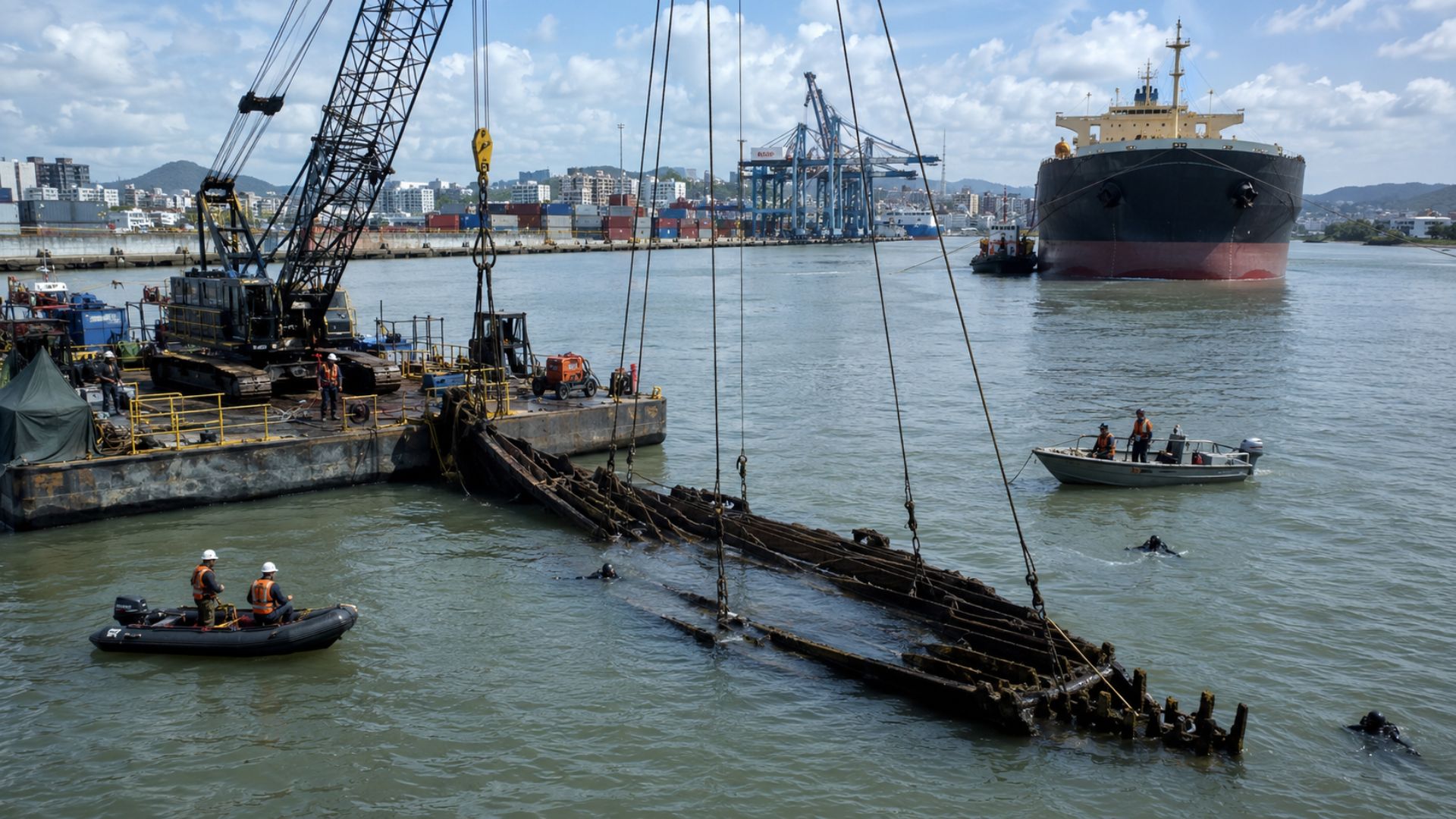


Pallas Ship, sunk in 1893 in the Itajaí river, may leave the port channel after a technical study announced by the Port of Itajaí on May 14, 2026. The removal aims to improve navigability in Santa Catarina, with no defined start or completion date for the works and to accommodate larger vessels
The Pallas ship, shipwrecked on October 25, 1893, in the Itajaí river, returned to the center of Santa Catarina’s port agenda on May 14, 2026. The superintendent of the Port of Itajaí, Artur Antunes Pereira, stated that he should soon sign the contract for a technical study to enable the removal of the wreckage from the port channel, as the structure limits the passage of larger vessels.
The measure aims at an operational change in access to the ports of Itajaí and Navegantes, where the carcass has remained for over 130 years. The removal of the ship, still without a defined start or end date in 2026, is considered by the port administration as a necessary step to expand navigability and reduce a historical obstacle within the port channel.
Why the Pallas ship became an obstacle in the port channel

The Pallas rests at the bottom of the river since 1893, in an area connected to the access of the port complex between Itajaí and Navegantes. Even with historical value, the wreckage split in half occupies a sensitive position in the port channel and hinders the maneuvering of larger vessels.
-
Brazil’s Port of Santos to Receive New $1.1 Billion Container Terminal, Tecon Santos 10, Set to Begin Operations in 2029

-
Ports without drivers and cabins already move containers like automated factories: robotic cranes, autonomous electric vehicles, and software transform giant terminals into 24-hour logistics machines.
-
About 300 American ports still breathe diesel from trucks, cranes, and locomotives, but they are now trying to electrify heavy machinery to clean the air for 31 million nearby residents.

-
A 220-meter giant powered in part by solar energy and lithium batteries has just unloaded nearly 5,000 Chinese cars at the Port of Itajaí. It is the first of ten Grimaldi super ships and the first in the world prepared to run on ammonia as fuel.


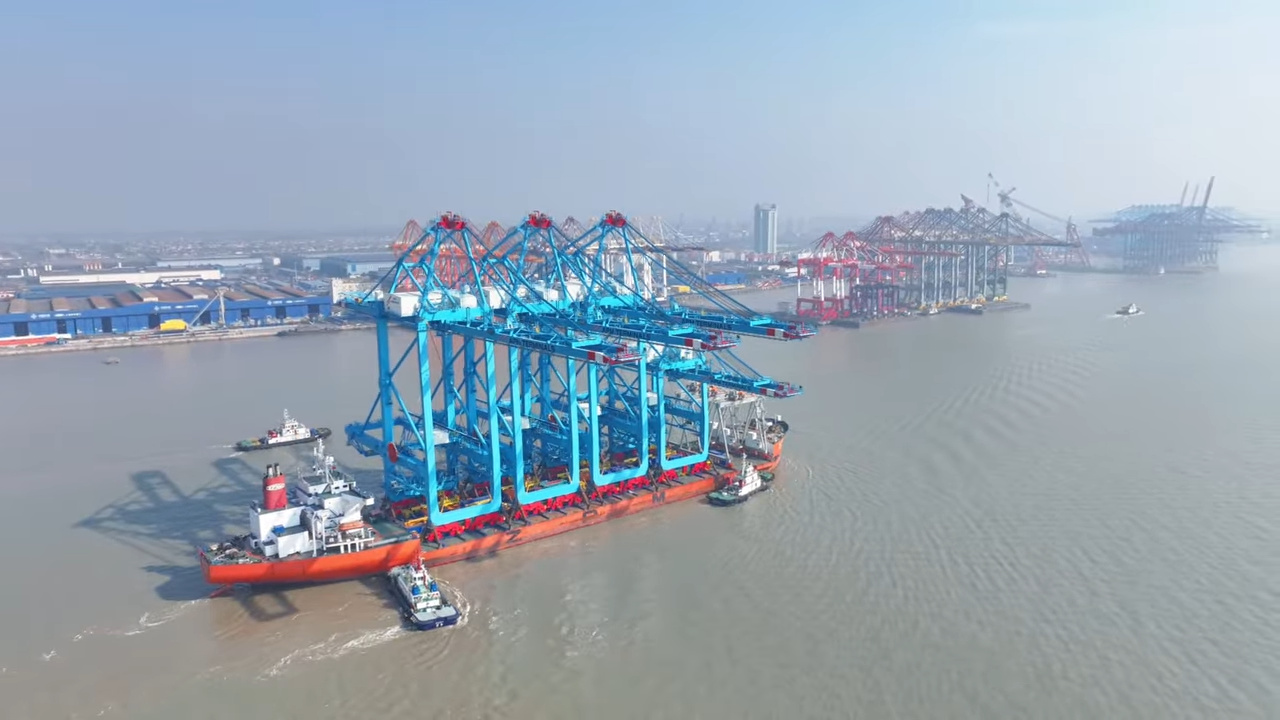


In 2026, the debate shifted from being merely historical to involving the future capacity of the Port of Itajaí. The removal of the ship could make room for larger vessels, but it depends on technical analysis before any intervention in the riverbed.
Technical contract should define how the removal will be studied

Artur Antunes Pereira reported on May 14, 2026, that the signing of the contract for the technical study should occur soon. This study is the initial step to indicate how the ship can be removed from the port channel without compromising navigation safety, the operation of the Port of Itajaí, and the environmental conditions of the river.
The port administration has not yet presented a date for the start of the removal nor a deadline for the completion of the services. The central point, for now, is to transform an operational intention into a technical plan, based on the survey of the wreckage, conditions of the port channel, and impact on the arrival of larger vessels.
“The removal will allow us to have the doors of the complex open to larger vessels,” said Artur Antunes Pereira.
The 1893 shipwreck was born in the context of the Revolta Armada


The ship Pallas was built in England in 1891 and was considered modern for the end of the 19th century. The vessel transported food and passengers between Rio de Janeiro and Buenos Aires, with stops in Itajaí likely related to supply.
The shipwreck occurred on October 25, 1893, during the Revolta Armada, a military movement that extended from 1893 to 1894. According to historical records, the commander is said to have refused to support rebels against the government of Floriano Peixoto, and the ship was also reportedly looted before disappearing at the bottom of the river.
Santa Catarina was the stage for episodes of the 1893 military crisis
The Revolta Armada brought together sectors of the Brazilian Navy that contested Floriano Peixoto after the resignation of Deodoro da Fonseca. Between 1893 and 1894, the rebellion had episodes in Rio de Janeiro and Santa Catarina, with naval confrontations and bombings amid the consolidation of the Republic.
This historical connection explains why the case of the ship Pallas is not just about a work in the port channel. In Santa Catarina, the shipwreck connects to the period when the country was still testing the authority of the republican regime, while Itajaí remained a transit point in regional and international maritime routes.
Removal could change the operational limit of the Port of Itajaí
The expectation of the port administration is that the removal of the wreckage will improve the navigability conditions of the port channel. If the study confirms the feasibility of the operation, the Port of Itajaí will be able to prepare access for larger vessels, a significant change for the logistical competitiveness of Santa Catarina.
There is, however, no public confirmation of cost, execution schedule, or removal method until May 15, 2026. The most concrete data is the contractual stage of the technical study, not the start of the work. Therefore, any projection on commercial impact depends on the outcome of this survey.
The challenge is to remove without erasing the historical value
The ship’s presence for over 130 years at the bottom of the river has created an unusual situation. The same object that represents the memory of the Naval Revolt also functions, in 2026, as a physical obstacle for larger vessels in the port channel.
This balance should guide the discussion in Santa Catarina in the coming months. The Port of Itajaí needs to deal with nautical safety, historical preservation, and the need to expand access, without treating the removal as a simple or merely symbolic work.
What still needs to be known before the removal
Until May 15, 2026, the main gap is the schedule. The technical study still needs to be contracted, executed, and converted into an operational decision before any team begins the removal of the ship from the port channel.
It is also necessary to detail the destination of the wreckage, the care for the structure split in half, and the practical effect of the intervention on the reception of larger vessels. Without these answers, the promise of gain for the Port of Itajaí remains relevant but still conditioned to the technical stage.
The case of the Pallas ship unites a precise date, October 25, 1893, with an administrative decision announced on May 14, 2026. Between these two milestones, Santa Catarina saw the old shipwreck transform from a historical record into a logistical problem for the port channel.
If the removal progresses, the Port of Itajaí may reorganize part of its access for larger vessels. The question is whether the operation will be able to preserve the memory of the shipwreck, reduce the obstacle in the river, and deliver real navigation gains. Do you think the ship should be removed even after more than 130 years? Should the priority be logistics, historical memory, or both together? How should Santa Catarina handle such wreckage in port areas? Leave your comment, share your opinion, and tag someone…