Portuguese
  Spanish


The resumption of the Sacomar mineral terminal repositions the Port of Namibe in international trade, connects Angola to the Asian market, and transforms 26,420 tons of pig iron into a symbol of a new port phase
The Sacomar mineral terminal resumed operations in Angola after more than three years of inactivity. The resumption took place on April 8, 2026, with the arrival of a cargo ship from China at the Port of Namibe.
The information was released by Porto do Namibe, the port company of Namibe. The operation is expected to handle 26,420 tons of pig iron destined for the Asian market, in a resumption that repositions Sacomar on the international trade route.
The case draws attention because it involves port, mining, cargo ship, and pig iron in a single operation. For Angola, the return of the terminal represents an attempt to regain strength in an essential area for exporting heavy cargo.
-
Brazil’s Port of Santos to Receive New $1.1 Billion Container Terminal, Tecon Santos 10, Set to Begin Operations in 2029

-
Ports without drivers and cabins already move containers like automated factories: robotic cranes, autonomous electric vehicles, and software transform giant terminals into 24-hour logistics machines.
-
About 300 American ports still breathe diesel from trucks, cranes, and locomotives, but they are now trying to electrify heavy machinery to clean the air for 31 million nearby residents.

-
A 220-meter giant powered in part by solar energy and lithium batteries has just unloaded nearly 5,000 Chinese cars at the Port of Itajaí. It is the first of ten Grimaldi super ships and the first in the world prepared to run on ammonia as fuel.


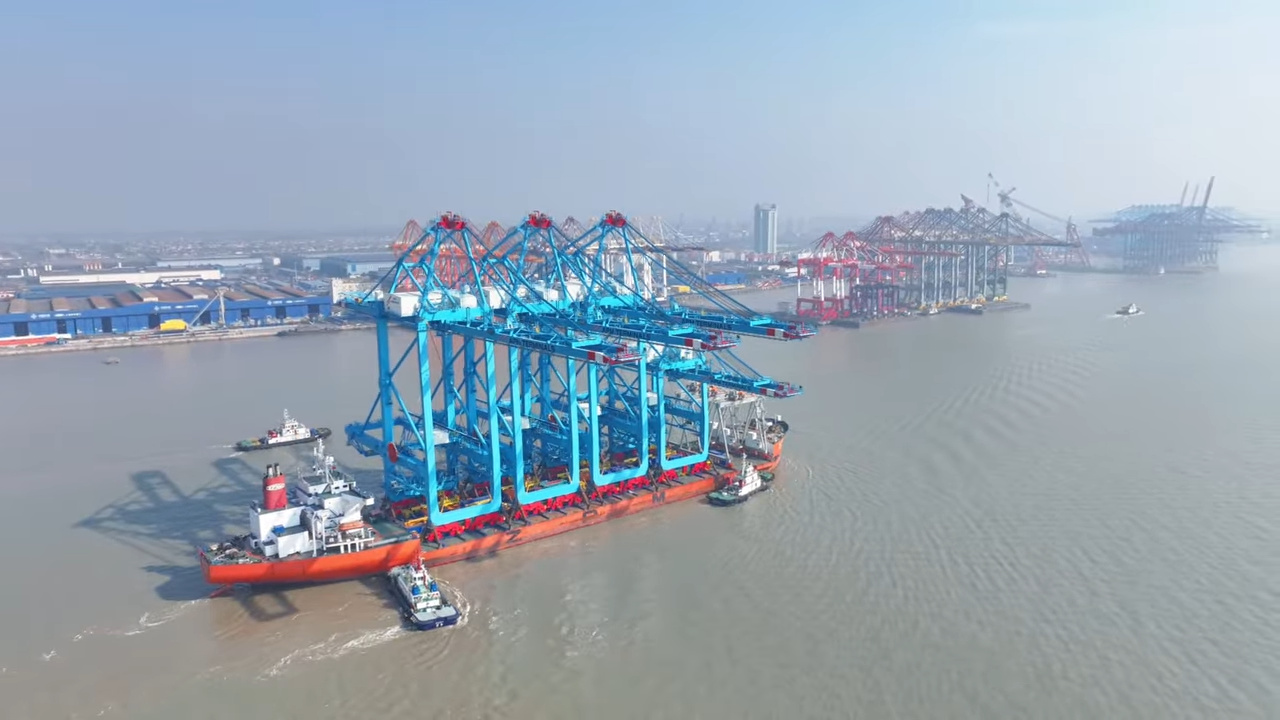


Sacomar mineral terminal returns after more than three years of inactivity
The Sacomar mineral terminal had been closed since September 2022. This period left an important structure out of the regular movement of mining and industrial-related cargo.

The resumption of operations in April 2026 changes this scenario. The terminal resumes receiving ships and once again plays a direct role in the flow of industrial products.
This resumption also shows how idle infrastructure can return to economic use. When a terminal of this size operates, it mobilizes services, logistics, transportation, and port-related activities.
Cargo ship from China places Sacomar on the Asian route
The arrival of a cargo ship from China gave international weight to the resumption. The ship appears as a symbol of the connection between Angola and the Asian market, which receives the pig iron cargo.
Pig iron is a material used by the steel industry. Simply put, it serves as a base for the production of steel and other industrial products.
With this operation, Sacomar becomes more than just a reopened terminal. The location re-enters a route that links Africa and Asia through heavy industrial cargo.
Port of Namibe highlights new phase after project inaugurated in October 2025
Port of Namibe, port company of Namibe, reported that the terminal has once again consolidated Angola in international trade after receiving a new quay bridge, inaugurated in October 2025.
The quay bridge is the structure used for the ship to dock and carry out loading operations. In practice, it is an essential part for receiving vessels and moving goods safely.
The new phase reinforces the importance of Sacomar within the Port of Namibe. The structure is now seen as support for loads related to mining and industrial export.

Pig iron to Asia reinforces the industrial weight of the recovery
The planned load of 26,420 tons of pig iron shows that the reopening is not just symbolic. It involves an industrial-use product and a large-scale operation.
The destination to the Asian market also increases the relevance of the case. Asia appears as the buyer of the load, which reinforces the commercial link between Angola and other industrial centers.
For the Port of Namibe, the movement represents a way to once again take advantage of existing investments and structures. For Sacomar, the operation marks the return to a strategic function.
Industry representatives point to good conditions for receiving larger ships
José Sequeira, representative of the Seatrade shipping agency, highlighted the good conditions of the port. Among the points mentioned is the draft, which allows receiving large vessels.
Draft is the depth needed for a ship to navigate and dock without problems. In heavy loads, such as pig iron, this condition is important for the operation to occur safely.
Luís César, coordinator of the Terminal Management Committee, considered the moment a historic milestone. The recovery was treated as a decisive step to affirm the terminal as a support platform for mining export.

Sacomar returns to the map with industrial cargo and port ambition
The reactivation of the terminal shows a concrete return to the international trade map. Sacomar was inactive for more than three years but returns with a ship coming from China and cargo destined for Asia.
This movement also reinforces the importance of the Port of Namibe for Angola. An operational mineral terminal helps the country to export industrial cargo and participate in broader trade routes.
The resumption of the Sacomar mineral terminal brings together three strengths: a structure inactive since September 2022, a cargo of 26,420 tons of pig iron, and a direct connection with the Asian market.
Now, the challenge will be to transform this operation into continuity. The return of Sacomar shows that ports can regain relevance when they start receiving ships, cargo, and international routes again.
Do you believe that the reopening of Sacomar can change Angola’s weight in exports to Asia, or does it still depend on new operations to prove its strength?