Portuguese
  Spanish


Dredging in Suape increased the depth of the external channel, reduced draft restrictions, and put the port in a new condition to receive Suezmax tankers, with a direct impact on fuel movement, volume per docking, and the efficiency of Brazilian port logistics
The dredging in Suape changed what giant ships can do when arriving at the port. With the external channel deepened to 20 meters, the complex began to operate Suezmax tankers at full load, vessels that can carry between 140,000 and 175,000 tons.
The information was released by Porto de Suape, the institutional site of the Pernambuco port complex. The authorization from the Brazilian Navy allowed the operation of ships with a 17-meter draft, a decisive point to allow the entry of larger and more loaded vessels.
In practice, the change is at the seabed. The port draft determines if a large ship enters fully loaded, needs to wait, or needs to reduce cargo. Therefore, a few more meters of depth can change the cost, time, and capacity of fuel logistics.
-
Brazil’s Port of Santos to Receive New $1.1 Billion Container Terminal, Tecon Santos 10, Set to Begin Operations in 2029

-
Ports without drivers and cabins already move containers like automated factories: robotic cranes, autonomous electric vehicles, and software transform giant terminals into 24-hour logistics machines.
-
About 300 American ports still breathe diesel from trucks, cranes, and locomotives, but they are now trying to electrify heavy machinery to clean the air for 31 million nearby residents.

-
A 220-meter giant powered in part by solar energy and lithium batteries has just unloaded nearly 5,000 Chinese cars at the Port of Itajaí. It is the first of ten Grimaldi super ships and the first in the world prepared to run on ammonia as fuel.


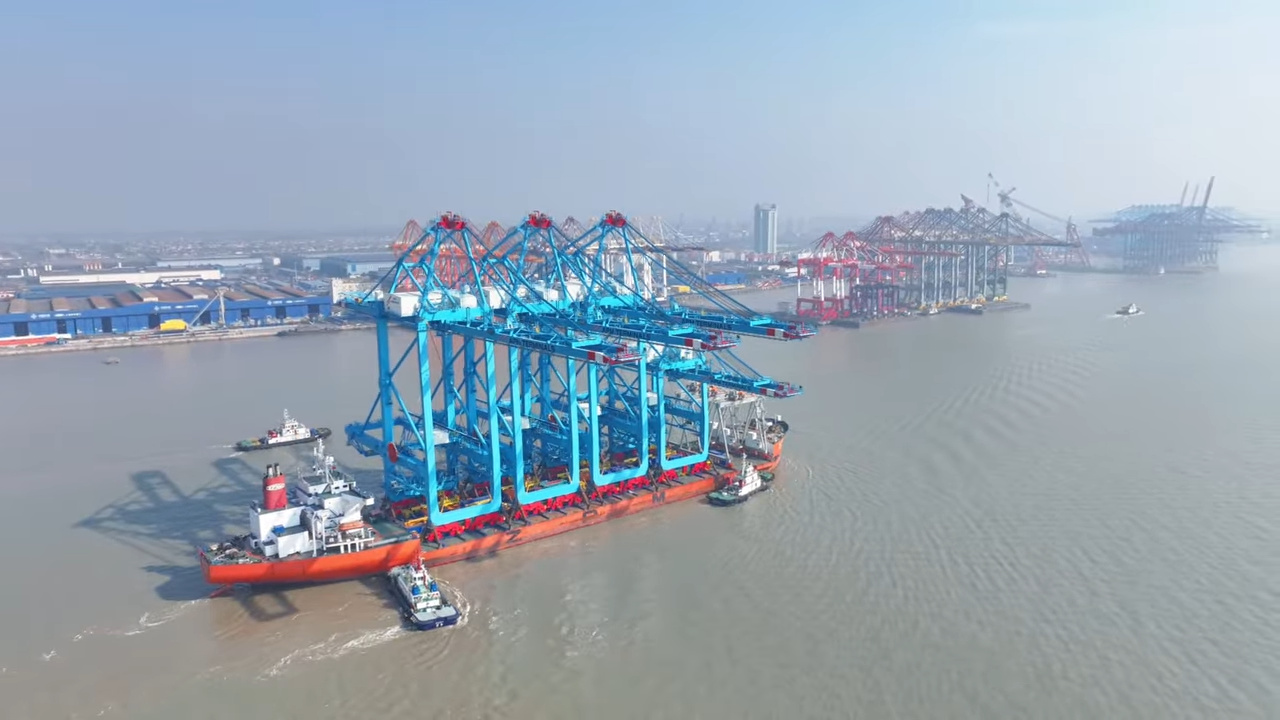


Dredging in Suape shows how a hidden work changes the strength of a port
Dredging removes sediments from the bottom of the channel. For those looking from the outside, the landscape hardly changes. But for port operations, the difference is enormous.

With more depth, the ship can navigate more safely. This allows receiving larger vessels, with more cargo and less operational limitation.
The case of Suape shows that port infrastructure does not depend only on piers, terminals, and visible equipment. Often, the most important gain is underwater.
The homologated depth in the external channel creates a new condition for the movement of liquid bulk, a group that includes fuels and derivatives.
Suezmax tankers of up to 175,000 tons change the volume per docking
Suezmax tankers are large ships. In Suape, the new condition allows receiving vessels with a 17-meter draft and capacity between 140,000 and 175,000 tons.
This detail changes the volume per docking. When a larger ship enters loaded, the port can move more product in a single stopover.
For fuel logistics, this is relevant. Less cargo restriction can improve operations planning and reduce bottlenecks in the flow of derivatives.
The gain is not just in the size of the ship. The main change is allowing the vessel to better use its capacity, without relying so much on depth limitations.
Draft is the invisible detail that decides if the ship enters full or limited
Draft is the part of the ship that is below the waterline. The more cargo the vessel carries, the greater this measure tends to be.

Therefore, a port needs to have sufficient depth to receive loaded ships. When the channel is shallow, the operation may require load reduction or specific conditions for entry.
Before the approval, ships with a draft greater than 12.8 meters depended on specific tide conditions to access the port. With the new condition, vessels with a draft greater than 15 meters can dock without draft restrictions.
This is why a few meters make such a difference. The depth determines if the ship enters with maximum load, waits, or needs to operate with limitations.
Brazilian Navy authorized operation with maximum load in the external channel
The authorization from the Brazilian Navy confirmed that Suape can operate tankers with maximum load after the approval of the external channel deepening.
Port of Suape, institutional site of the Pernambuco port complex, detailed that Ordinances nº 102/2025 and 103/2025 established the conditions for using the new channel, with progressive operation and assisted maneuvers.
This type of clearance is essential because it’s not enough to deepen the channel. The operation needs to have recognition from the responsible authority to receive larger ships safely.
With the approval, dredging ceases to be just a completed work and starts to have a direct effect on the port’s routine, on the entry of ships, and on the movement of liquid cargoes.
Work of R$ 140 million removed 1.7 million cubic meters of sediments
The last stage of the external channel dredging began on December 1, 2023 and was completed in April 2024.
The project cost R$ 140 million and removed 1.7 million cubic meters of sediments from the channel’s bottom.
The execution was carried out by the Dutch company Van Oord. The completion occurred one month ahead of schedule and without any reported incidents.
This work created space for the new depth of 20 meters in the external channel. In practice, the removal of material from the bottom is what allowed the transformation of the port’s maritime access.
Less draft restriction can attract operators, industries, and investors
The elimination of draft restrictions tends to increase the volume per docking. It also improves the use of the infrastructure already installed at the port.
The CEO of the complex, Armando Monteiro Bisneto, stated: “It is a watershed for our port, which already holds the national leadership in liquid bulk handling. Suape significantly improves navigability conditions, the waiting time for docking large ships, and adds more value to operations, with vessels able to dock safely with maximum cargo capacity.”
The statement shows the practical effect of the dredging. The port gains the capacity to operate larger ships, with more cargo and greater predictability.
For operators, industries, and investors, this condition can make Suape more competitive. A deeper port reduces limitations and improves confidence in the operation.
Internal channel also enters the plan to expand port capacity
The change in the external channel connects to another important stage within the complex. The dredging of the internal channel began on August 29 of this year.
The project is budgeted at R$ 217 million, with R$ 100 million from the Ministry of Ports and Airports, via PAC3, and R$ 117 million in state resources.
The forecast is to deepen the internal channel to 16.2 meters and remove 3.8 million cubic meters of sediments. The contract also includes the dredging of the turning basin and the Liquid Bulk Piers 3A and 3B, up to 18.5 meters deep.
This set reinforces Suape’s strategic role in the movement of fuels and derivatives. The greater the channel’s capacity, the better the flow of ships within the port area can be.
Dredging in Suape shows that a submerged project can change the economy outside the water. With 20 meters of depth in the external channel, the port increases the entry of Suezmax tankers and improves its capacity to move fuels.
The case also reveals a simple rule of port logistics: depth means access, cargo, and efficiency. What seems like just the seabed can determine the size of ships, the volume per trip, and the competitiveness of a port.
Do you think invisible works like dredging should receive more attention when Brazil discusses fuels, prices, and port infrastructure? Share your opinion.