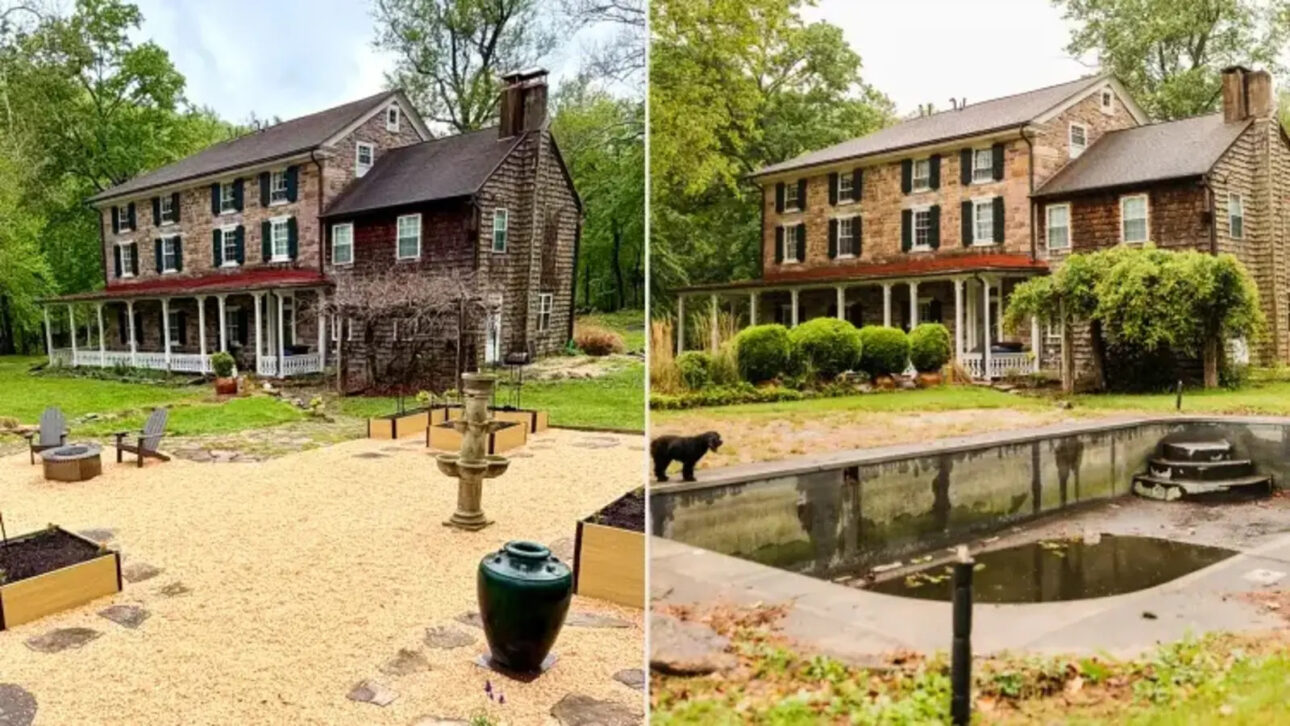
After buying a historic house from the 1830s, Tyler and Lauren Bouldin swapped the expensive recovery of an abandoned pool for a functional garden, with an initial project estimated at US$ 15.5 thousand
An abandoned pool in an old house from the 1830s in Pennsylvania turned into a garden after Tyler and Lauren Bouldin calculated that restoring the structure would cost at least US$ 50 thousand. The project, done in Pine Grove, went viral with 1.3 million views and divided opinions on the internet.
Abandoned pool became a problem since the purchase of the old house
Tyler Bouldin, 35, and his wife, Lauren, bought the property in Pine Grove at the end of 2020, at an auction. The couple had spent almost a year looking for the ideal house before taking on the historic property.
The house had charm, old elements, and a landscape that caught the family’s attention. But it also presented serious problems.
-
500 Buildings Submerged: The Rio District Being ‘Swallowed’ by the Sea Advancing 5 Meters Annually, Could Disappear According to UN Report

-
From Advertising Student to Havaianas Partner: João Boto Turns Açaí, Jambu, and Amazon River Dolphins into Sportswear with $200 Startup
-
São Paulo to Host Brazil’s Largest Military Aviation Museum, Aiming for Global Top Five by 2027 with 100 Aircraft Displayed
-
Entrepreneur Leaves Job After 20 Years, Invests Under $200 to Launch Sustainable Craft Store Inspired by Beeswax Wraps, Now Earning $7,000 Monthly


According to Tyler, the main floor had no flooring, the main staircase was falling apart, and the kitchen had completely disappeared.
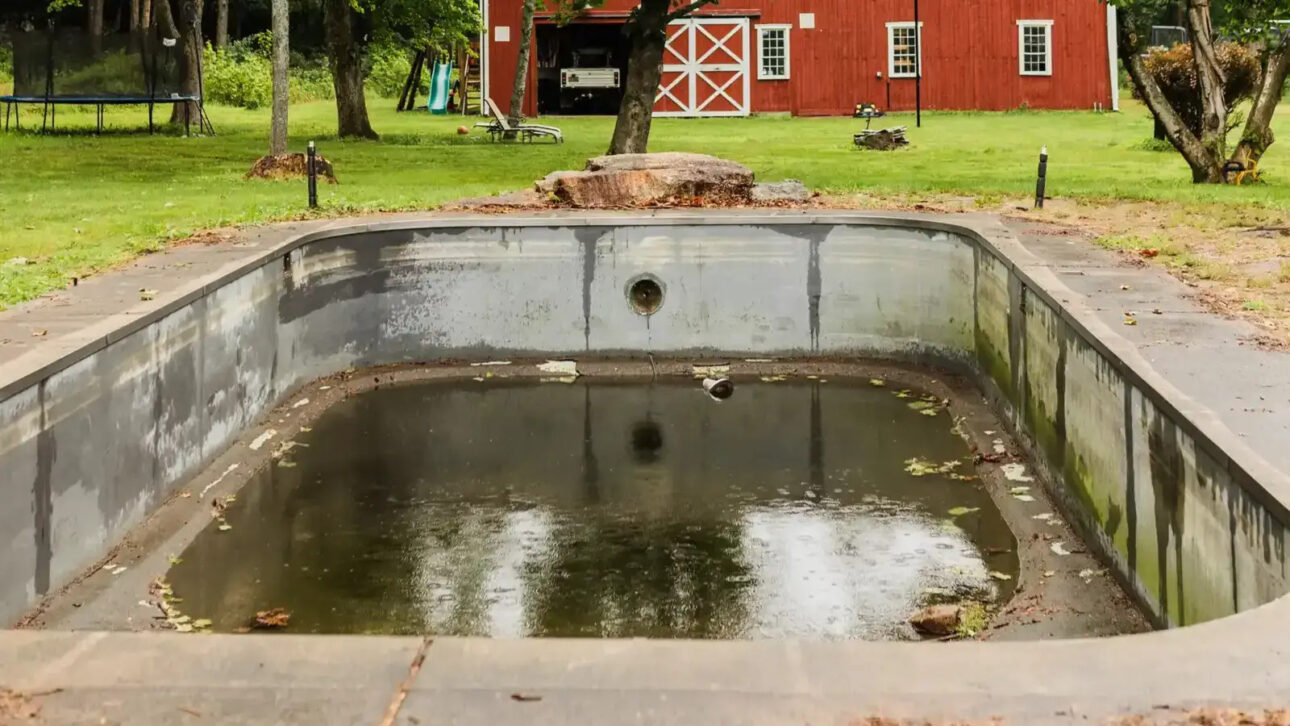
The abandoned pool was another critical point. He described the structure as an uncovered hole, without a fence, full of dark water and snakes. Since the priority was to make the house habitable, the area was fenced and covered right at the start.
What seemed like a one-year renovation ended up extending for four and a half years. Only after this period was the family able to move in and more calmly assess the fate of the pool.
Budget of US$ 50 thousand weighed in the decision
The debate between restoring the pool or creating another use for the space resurfaced when the house became habitable. On social media, many users questioned why the couple didn’t redo the leisure area.
According to Tyler, the answer involved cost, practical use, and technical difficulty. The property is located in a wooded valley in central Pennsylvania, which limits the period of pool use throughout the year.
The couple consulted various specialized companies. Some withdrew without providing an estimate. When they finally received a quote, the minimum cost to make the pool usable was approximately $50,000.
This amount did not include all necessary services. There would still be additional costs to repair the cement patio, the fence, the water piping, and the underground wiring.
Demolition revealed an even more damaged structure
The family decided to remove the abandoned pool and transform the area into a more useful space for daily life. During the demolition, however, they discovered that the state of the structure was worse than it seemed.
Tyler explained that when they removed the lining, the team found a structure so rusted that it probably would have leaked and collapsed if it were simply relined. This could lead to even more expensive repairs.
After removing the damaged concrete and steel, the trench was filled with layers of gravel and drainage materials. The solution also helped control the property’s groundwater.
The complete project, including demolition, excavation, landscaping repairs, and installation of flower beds, cost about $15,500.
Even with new additions planned, Tyler estimates that the total cost will be around 25% of the pool replacement cost.
Garden was designed to last and integrate with the property
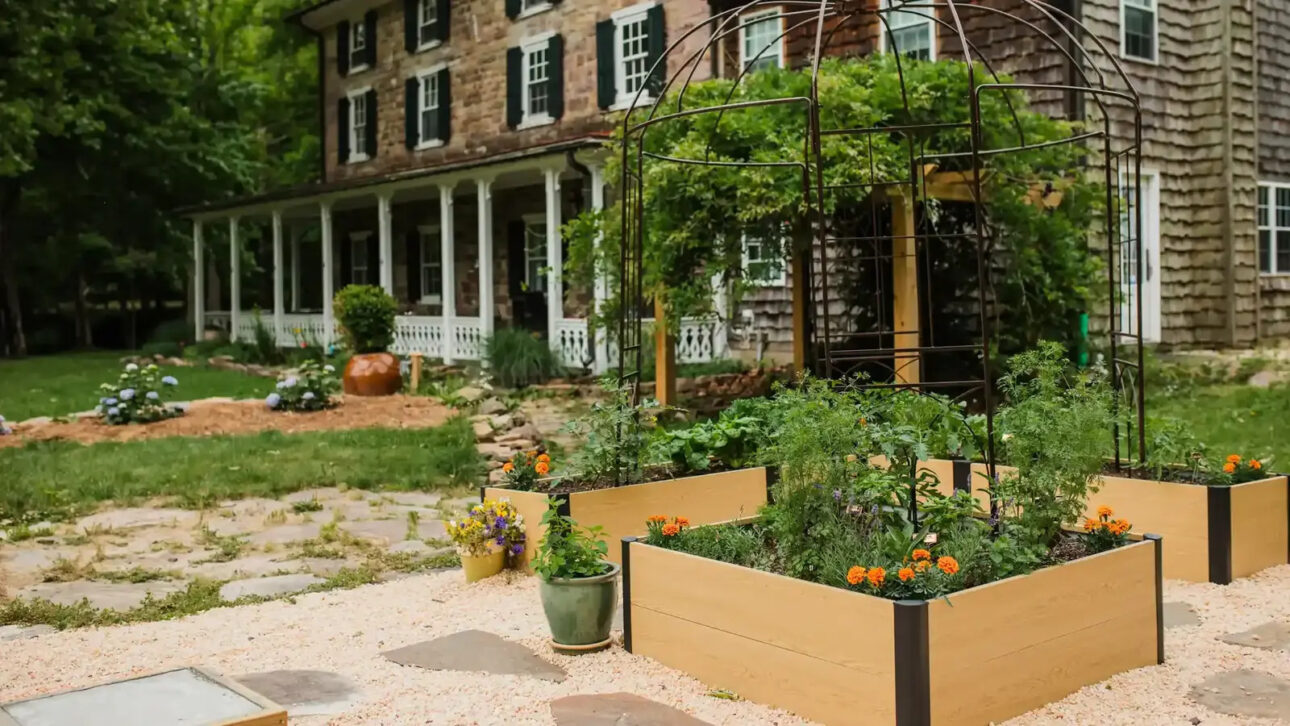
The new space was planned as a productive garden, not just as a way to fill the hole left by the pool.
The couple chose elevated steel beds with electrostatic paint, cedar beams for a future pergola, and Corten steel edges.
According to Tyler, the idea was to invest in more durable materials from the start to avoid frequent reconstructions. He stated that he prefers to spend more initially to get the project right the first time.
The choice also resonates with the property’s history. Tyler said he doesn’t know what the house’s gardens were like 200 years ago, but he believes that, given the location’s history, they would be functional and beautiful.
The property has trees over 200 years old, stone landscaping, a stream, and miles of protected forests surrounding the valley. For the couple, these elements helped justify the effort to restore the house.
Today, the garden is still evolving. The family plans to expand the space, install an outdoor kitchen, and create a dining area to host friends and relatives.
Despite criticism from people who would have preferred to see a pool instead, Tyler states that the transformation solved a real problem for the house. For him, the couple left behind a dangerous and unused area and created a functional and beautiful environment.
This article was prepared based on information from PEOPLE magazine, with data, numbers, and statements preserved as per the consulted material.