Portuguese
  Spanish


Imagine an inhabited structure that does not use concrete, has no foundation embedded in the ground, yet remains stable for decades floating on water.
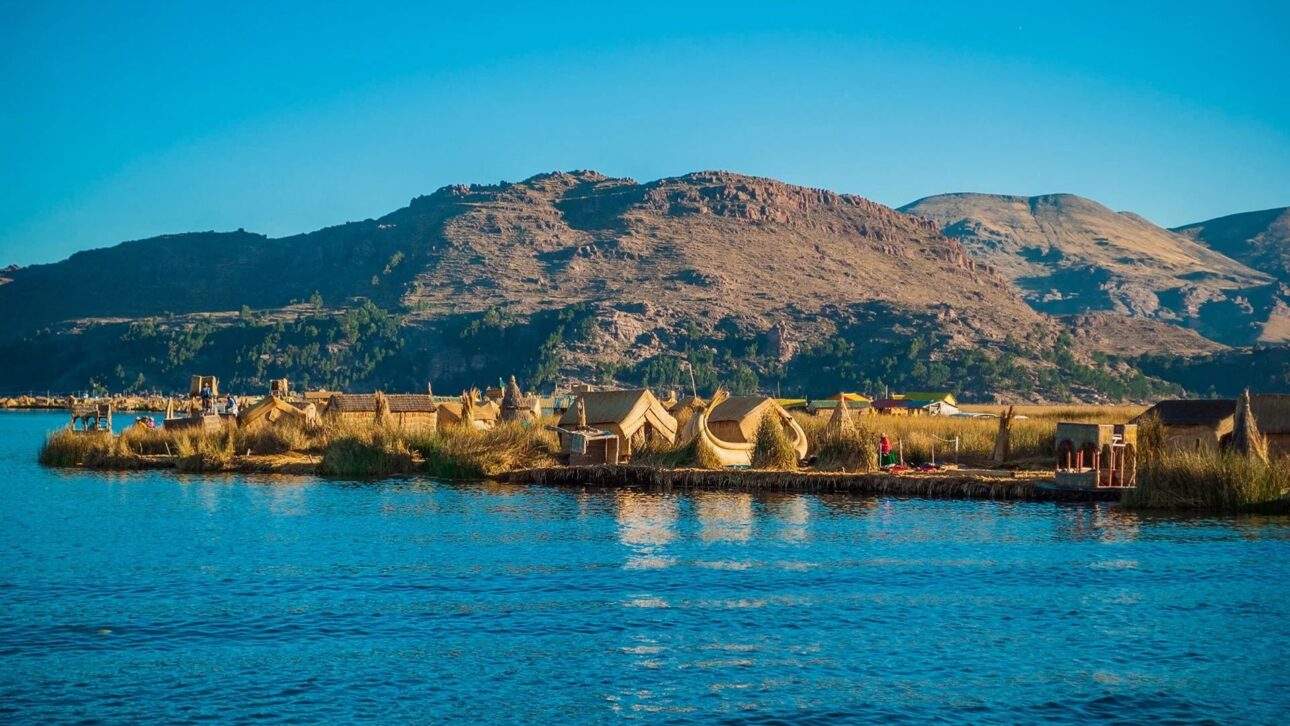
According to PromPerú, about 1,800 people live on these floating islands, distributed so that each platform houses 3 to 10 families. The material that supports everything is just one: the totora, an aquatic plant similar to reed that grows in Lake Titicaca itself. With the totora, the Uros people make the base of the floating islands, the houses, the boats, the furniture, and even part of the food. The result is an engineering that defies modern logic: without steel, without cement, and without concrete stakes, these floating islands remain firm, generation after generation.
A floating engineering without concrete and without foundation
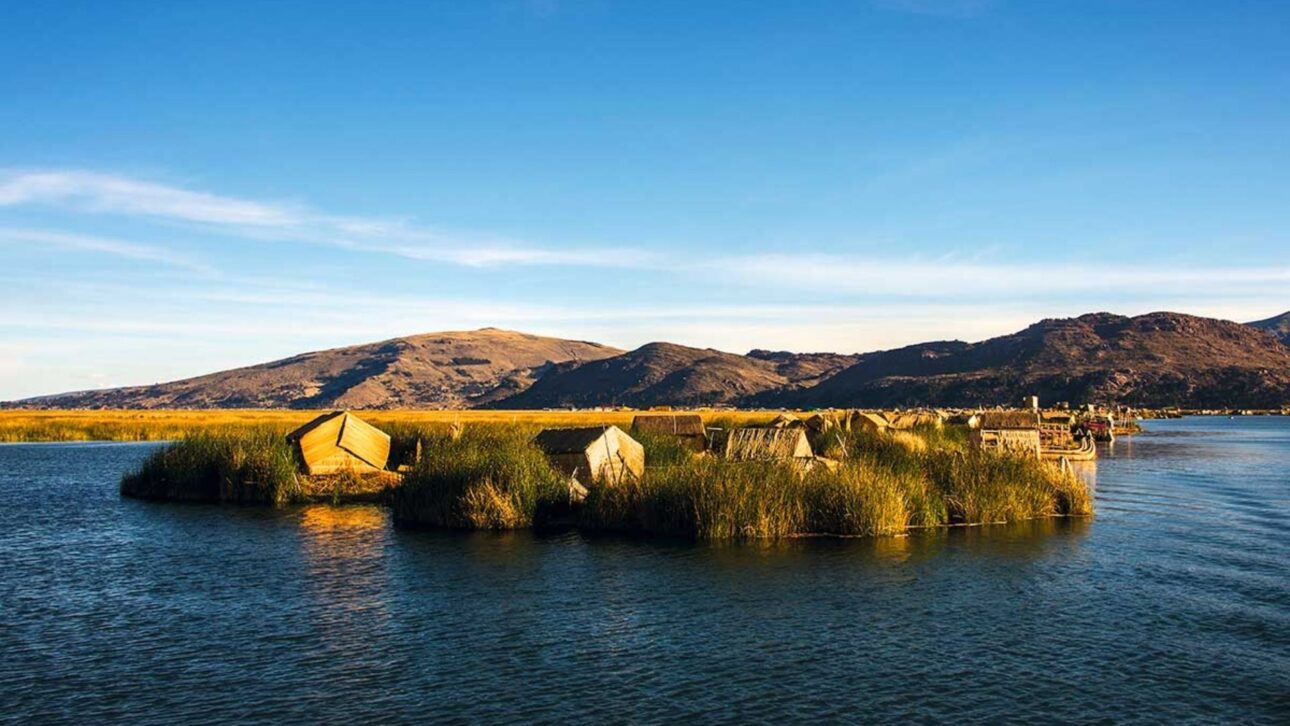
For traditional engineering, a construction begins with the foundation: something heavy and fixed that transfers the load to the solid ground. The floating islands of the Uros completely invert this logic. Here there is no solid ground underneath, but rather deep water from a lake at 3,812 meters altitude. The ancestral solution is to make the structure itself float, supported by a simple principle of buoyancy: a lightweight material, filled with air and water-resistant, supports the weight of the houses and the inhabitants.
-
Newly Completed Brazilian Highway in the Serra da Rocinha Becomes a 16.5 km Cycling Challenge and Boost for Local Tourism

-
Innovative Mortar Technique Enhances Porcelain Tile Stability, Reduces Buckling and Detachment Risks, and Provides Durable Finish Under Heavy Use

-
Giant Robots Build Entire Neighborhood of 100 3D-Printed Homes in the U.S., Showcasing Technology’s Impact on Construction Industry
-
Helsinki Residents Receive Water That Travels 120 Kilometers Through a Hidden Rock Tunnel from a Lake Before Treatment


The secret lies in the totora and the way it is organized. The plant is fibrous and retains air within the fibers, which ensures buoyancy. Piled up in large quantities and frequently replaced, it creates a floating platform thick enough to walk, cook, and sleep on. It is an ancestral construction technique that solves, by hand and with material from the water itself, a problem that modern engineering usually tackles with concrete, steel floats, and ballast tanks. Where conventional construction descends to the ground, the work of the Uros goes the opposite way and rises, letting the water carry the weight.
Totora: the “straw” that becomes a floating base, house, and boat

Totora is the heart of all this engineering. Commonly referred to as straw, it is actually an aquatic plant that grows abundantly in the shallow edges of Lake Titicaca. Its importance to the Uros people is hard to overstate: it is a construction material, fuel, home remedy, and food, as the white and soft part of the stem’s base can be consumed.
From a construction perspective, the plant combines rare qualities. It is lightweight, flexible, abundant, and renewable, and it grows right there, without needing to be transported from afar. Each floating island is born and maintained with what the lake offers at the doorstep. Therefore, the floating islands of the Uros are a textbook case of vernacular architecture: the local material defines the technique, and the technique defines the way of life. It is the same raw material that becomes the floor, wall, roof, and boat, in an almost total utilization of the resource.
How to build one of the floating islands, layer by layer
The construction of a floating island begins below the waterline, where the plant grows. The roots of the totora form natural, dense, and waterlogged blocks that already float on their own due to the air trapped between the fibers. These intertwined root blocks are the unlikely foundation of everything: instead of going down to the bottom, the base rises and floats.
On this living foundation, the Uros people stack several layers of dry totora, always crossed in alternating directions to distribute the weight and lock the set. Layer after layer, the floating platform gains body until it reaches about 2 meters in total thickness. This thickness is enough to insulate the feet from the cold water, support the weight of the houses, and absorb the movement of the waves. The entire process is manual, without machines, following an ancestral construction technique passed down from generation to generation. The result is floating islands soft to step on, which yield slightly underfoot like a firm mattress, and that need to be replenished with new material all the time.
The anchorage that prevents the floating platform from drifting
Making the structure float is only half of the engineering challenge. The other half is preventing it from drifting across Lake Titicaca, pushed by the wind and currents. A loose floating island could drift kilometers away, collide with others, or get lost in the vastness of the world’s highest navigable lake.
The Uros’ answer is a simple and efficient anchoring system: the floating islands are tied to the bottom of the lake with ropes attached to eucalyptus stakes driven into the bed. Thus, each floating platform has some freedom to rise and fall with the water level variation but remains confined to a defined area. When necessary, an island can be untied and repositioned, almost like a large vessel changing its mooring. This combination of flotation and anchorage is what gives a fixed address to structures that, technically, are always floating.
Constant maintenance: why the island lasts about 30 years
None of these floating islands would be possible without obsessive maintenance. The totora in contact with the water rots from below, so the lower layer is constantly deteriorating. To compensate, the Uros people continuously replenish fresh totora on top. In the rainy season, when rotting accelerates, replenishment can be weekly; in the dry season, it is usually monthly. There is also the custom of renewing the walking surface approximately every two months to keep the floor clean and firm.
It is a permanent balance between what rots below and what is added on top. Thanks to this routine, the same floating island can last about 30 years before needing to be rebuilt from scratch. In engineering terms, it’s a remarkable durability for a structure made only of plants, without a gram of concrete. Maintenance here is not a detail: it is a central part of the ancestral construction technique that keeps the floating islands alive and safe over the decades.
Why did the Uros people start living on floating islands?
If building and maintaining floating islands is so much work, why do it instead of living on solid ground? The answer lies in history. The Uros people have occupied the Lake Titicaca region for about 3,000 years, long before the great Andean civilizations that came later. In times of conflict and territorial disputes, living on the water was a form of defense: just release the moorings and move the floating island away from the shore to escape rival peoples.
In other words, mobility was a strategic resource. An anchored floating platform can become a mobile refuge, something impossible for a house rooted in the ground. Over time, this survival engineering transformed into cultural identity and a way of life. Today the reason has changed: the main income of the communities comes from tourism, with visitors arriving from Puno to see up close the floating islands and the ancestral construction technique that sustains them. What began as defense ended up becoming a living heritage, visited by people from all over the world.
What do the floating islands of the Uros have to do with Brazil
Brazil has its own tradition of living on water, and it directly connects with the engineering of the Uros. In the Amazon, the floating houses of the Rio Negro use the same principle of buoyancy: instead of totora roots, they rely on bases of light wooden logs that float, supporting the dwelling on the river. It is Brazilian ancestral flotation, adapted to another biome and another climate.
The most striking example was the old Floating City of Manaus, an entire neighborhood built on rafts and logs, which rose and fell with the river’s flood and ebb. The logic is akin to that of Lake Titicaca: without a foundation in the ground, the structure floats and adjusts to the water level. Comparing the floating islands of the Uros with the houses of the Rio Negro shows that the ancestral construction technique of floating is not exclusive to the Andes. It appears whenever a people need to transform water, from an obstacle, into ground. The floating islands of Titicaca and the Amazonian dwellings are parallel responses to the same engineering problem.
Can ancestral floating islands inspire modern platforms?
While the Uros have been floating on totora for millennia, contemporary engineering is racing to develop its own floating platforms: amphibious houses in the Netherlands, floating neighborhoods and airports designed to cope with rising sea levels, oil platforms, and wind farms that float offshore. All face the same trio of challenges that the Uros people solved with straw: floating, remaining stable, and not drifting away.
What changes is the toolbox. Instead of root blocks and layers of totora, the modern version uses steel floats, lightweight concrete, and anchoring systems with cables and anchors on the seabed. But the principle is the same, and the comparison is revealing: a floating island of the Uros delivers, with renewable material and almost zero cost, the stability that large projects seek with a lot of technology. Could the ancient construction technique of Lake Titicaca still have lessons to offer? The answer seems to be yes, especially in durability and the intelligent use of material that is right there, within reach.
And you, would you live on a two-meter straw structure, without concrete or foundation, floating at an altitude of 3,812 meters? The floating islands of the Uros prove that engineering is not just steel and cement: it’s about understanding the material, the climate, and the water to the point of making an entire community live on a lake for about 3,000 years. It’s ancestral construction technique in its purest sense, refined by generations of trial and error.
The next time you hear about the floating city of the future, remember that the Uros people have already solved the essential problem with a plant that grows on the shores of Lake Titicaca. Tell us in the comments: do you think ancestral floating islands can still inspire the platforms of the future? Share this article with that friend who is passionate about engineering and stories that challenge concrete.