Portuguese
  Spanish


With an initial investment of just R$ 1 thousand applied in fabric scraps, João Victor Costa, 28 years old, known as João Boto, raised in the city of Tailândia, in the interior of Pará, one of the Amazon fashion brands that most attracts attention in Brazil.
According to PEGN, Pink Boto was founded in 2019 by the hands of a then advertising student and today brings açaí, jambu, and the pink river dolphin to sports shirts sold throughout the country. This report, from July 2026, details how this case of entrepreneurship in Pará reached a partnership with the giant Havaianas.
According to the Portal Tailândia, the brand translates the identity of the North into pieces that combine retro modeling from the 1980s, indigenous graphics, and symbols of the Tapajós River. It’s important to note a geographical detail: Tailândia here is not the Asian country, but a municipality in Pará in the Eastern Amazon. What started as a family experiment, led by João Boto alongside his husband, his seamstress mother (owner of a uniform factory), and a cousin, has transformed into one of the most talked-about names in original Amazon fashion. From here, the text unravels the positioning, numbers, and brand strategy behind Pink Boto.
How Pink Boto was born with R$ 1 thousand in fabric scraps
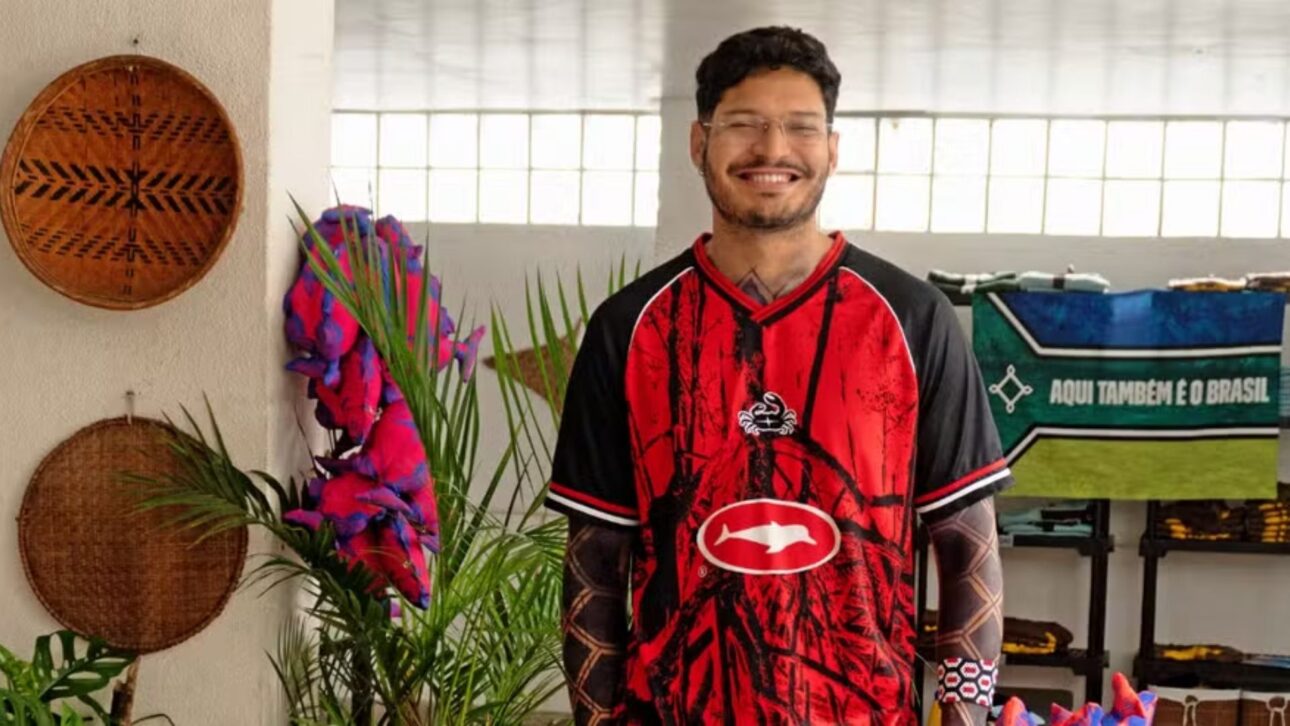
The origin of Pink Boto is lean and fits into a simple spreadsheet. The startup capital was R$ 1,000, mostly invested in fabric scraps leftover from local textile production. João Boto was still studying publicity when he decided to test the idea, and the infrastructure came from home: his mother, a seamstress, owns a uniform factory, which gave the brand immediate access to machines, skilled labor, and modeling knowledge. This family arrangement reduced the fixed entry cost and allowed entrepreneurship in Pará to take shape without external financing.
-
São Paulo to Host Brazil’s Largest Military Aviation Museum, Aiming for Global Top Five by 2027 with 100 Aircraft Displayed

-
Entrepreneur Leaves Job After 20 Years, Invests Under $200 to Launch Sustainable Craft Store Inspired by Beeswax Wraps, Now Earning $7,000 Monthly

-
Long Island Home Found with Over 155 Animals, Including Sick Cats and Dogs Without Clean Water, Amid Strong Ammonia Odor Leading to Police Investigation

-
Brazilian Army’s Survival Kit Sustains Soldier for 12 Hours Without Cooking, Includes Stove, Fuel Gel, and Matches for Remote Missions


The first collection had only 40 pieces. It was a small batch, designed to validate the concept before scaling. The logic was that of any fashion business in its early stages: produce little, measure consumer response, and reinvest the cash. From the beginning, Pink Boto positioned itself as a Pará-based brand of Amazonian fashion with a strong regional identity, not as a generic T-shirt manufacturer. This positioning choice would later become the main asset of the business, as it set the brand apart from competitors who compete solely on price.
The pink river dolphin as brand identity
The brand name is no accident. Pink Boto relies on the figure of the pink river dolphin, one of the greatest symbols of Amazonian fauna, and the folkloric rivalry between the Pink River Dolphin and the Tucuxi Dolphin, a cultural contest held in Santarém that parallels the Caprichoso and Garantido clash at the Parintins festival. By anchoring the visual identity in this dispute, João Boto turned an affectionate element of the North into a brand platform. This dolphin contest, full of music and color, gives the brand a storyline that the consumer understands without needing explanation.
For the consumer, the message is direct: wearing Pink Boto is wearing a piece of Northern culture. This type of connection between product and territory is what differentiates authentic Amazonian fashion from manufacturers that merely print generic landscapes. The regional identity stops being an ornament and becomes the core of the business, sustaining price, margin, and customer loyalty.
Açaí, jambu, and the Amazon transformed into product
If the dolphin gives the name, the Amazonian menu provides the prints. Pink Boto works with references such as the jambu flower, açaí, and other typical regional foods in its sports shirts. These are elements that any Pará native recognizes immediately and that, for outsiders, serve as an invitation to Northern culture. In this case, Amazonian fashion operates as a visual translation of an entire way of life.
João Boto’s achievement lies in treating açaí and jambu not as tourist clichés, but as fashion graphics. The pieces from Pink Boto convert these symbols into contemporary design, applicable to a sports t-shirt that one wears daily. It’s the kind of interpretation that brings entrepreneurship in Pará closer to current discussions on the creative economy, where the local cultural repertoire becomes the raw material for a high-value-added product.
How much does Pink Boto earn and produce?
The numbers help to understand the current size of the business. Production revolves around 700 pieces per month, a volume that requires an organized textile operation and explains the importance of the family factory in the background. Pink Boto’s average ticket is R$ 265, with t-shirts ranging from R$ 200 to R$ 320, a price range that positions the brand in the premium segment of regional identity sports t-shirts. In practice, an average ticket at this level indicates that the customer sees value in the proposal and is willing to pay for a piece with cultural significance, something uncommon in the t-shirt retail market.
Sales occur via e-commerce, which extends the reach far beyond Tailândia and Pará. This commercial design is what allows a brand from Pará, born in the interior of the Amazon, to fulfill orders from different regions without relying on a physical store. For a case of entrepreneurship in Pará, combining lean production, high average ticket, and digital channel is a relevant scale equation.
The Igapó sports collection and market positioning
In 2024, Pink Boto launched the Igapó sports collection, a milestone in the brand’s consolidation within the niche of sports t-shirts. The name refers to the igapó, the flooded Amazon forest, and reinforces the strategy of linking each line to a concrete element of the territory. The collection helped establish the brand’s positioning as Amazonian fashion with sports appeal, and not just casual wear.
The main audience for Pink Boto is in the North, where identification with regional symbols is immediate. But the brand also sells to markets like São Paulo and Rio de Janeiro, which shows the Southeast’s appetite for original Amazonian fashion. This dual market, a strong regional base combined with national demand, is a commercial asset that João Boto managed to build early, something rare in entrepreneurship in Pará.
The Pink Boto and Havaianas partnership and other collabs
How does a brand from the interior of Pará reach a collab with a national giant? The answer lies in the consistency of the positioning built by João Boto. Among the brand’s recent partnerships is a collaboration with Havaianas. A note of caution is warranted: the available information confirms that the partnership between Pink Boto and Havaianas exists, but does not detail the product, format, dates, or values, and this text does not speculate on that.
The partnership between Pink Boto and Havaianas is not the only one in the company’s portfolio. The list of collaborations includes the singer Gaby Amarantos, a reference of the culture of Pará, the Movimento Amazônia de Pé, and the brand Glotto. This set of collaborations reinforces the perception that the brand has become a desirable interlocutor for those who want to associate with the Amazonian agenda. For entrepreneurship in Pará, seeing a local brand sit at the table with a name as big as Havaianas is a sign of the sector’s maturity.
Retro modeling, indigenous graphics, and the Fruta Temporã collection
In terms of design, João Boto bets on retro modeling inspired by the 1980s, combined with indigenous graphics and symbols linked to the Tapajós River. This aesthetic stitching gives Pink Boto pieces an authorial air that dialogues with both nostalgia and Amazonian identity, without falling into the copy of ready-made patterns. It is a visual language care that supports the practiced price.
Another front is the Fruta Temporã collection, which follows the logic of naming lines based on regional repertoire. By chaining collections like Igapó and Fruta Temporã, the brand creates a launch calendar with its own narrative, something dear to Amazonian fashion that wants to remain relevant. Each collection becomes a chapter of the same brand story, which helps retain those who have already purchased a Pink Boto piece.
What Pink Boto has to do with Brazil
The trajectory of Pink Boto is of interest to Brazil because it materializes a larger trend: the creative economy and the authorial Amazonian fashion from the North ceasing to be a niche to become a business with national reach. When açaí, jambu, and pink river dolphin become products sold from Belém to São Paulo, what is at stake is the appreciation of local identity as an economic asset, not just a cultural one. Not surprisingly, the authorial fashion of the North has gained space in fairs, editorials, and digital retail.
This is a practical message for entrepreneurship in Pará and throughout the country. The case shows that a brand from Pará born in a municipality in the interior, with an investment of R$ 1,000, can build a solid positioning, achieve a high average ticket, and even close a Pink Boto and Havaianas partnership. For a country discussing how to diversify the economy, seeing entrepreneurship in Pará transform cultural repertoire into revenue is a concrete case of development that generates income and employment in the region.
Expansion plans: pants, shorts, and children’s line
The growth roadmap outlined by João Boto points beyond sports t-shirts. Among the brand’s plans is the expansion of the portfolio with pants, shorts, and a children’s line, a classic business move that wants to increase the ticket per customer and reach new audiences within the same family. Diversifying categories is the natural way to scale an operation that already dominates the production of t-shirts.
If executed with the same identity care that marked the initial phase, the expansion can consolidate Pink Boto as a complete Amazonian fashion house, and not just as a t-shirt brand. For entrepreneurship in Pará, it is the difference between a successful product and an enduring brand. The challenge, as in any fashion business, will be to maintain positioning consistency while the catalog grows and new categories come into play.
And you, had you noticed how the identity of the North has become a fashion asset circulating throughout Brazil? The story of Pink Boto shows that açaí, jambu, and pink dolphin fit into a brand strategy just as well as in a bowl. If this content about Amazonian fashion and entrepreneurship in Pará made sense to you, leave your comment, share it with those who support the creative economy of the Amazon, and tell us which regional brand you would like to see in the next report.