Portuguese
  Spanish


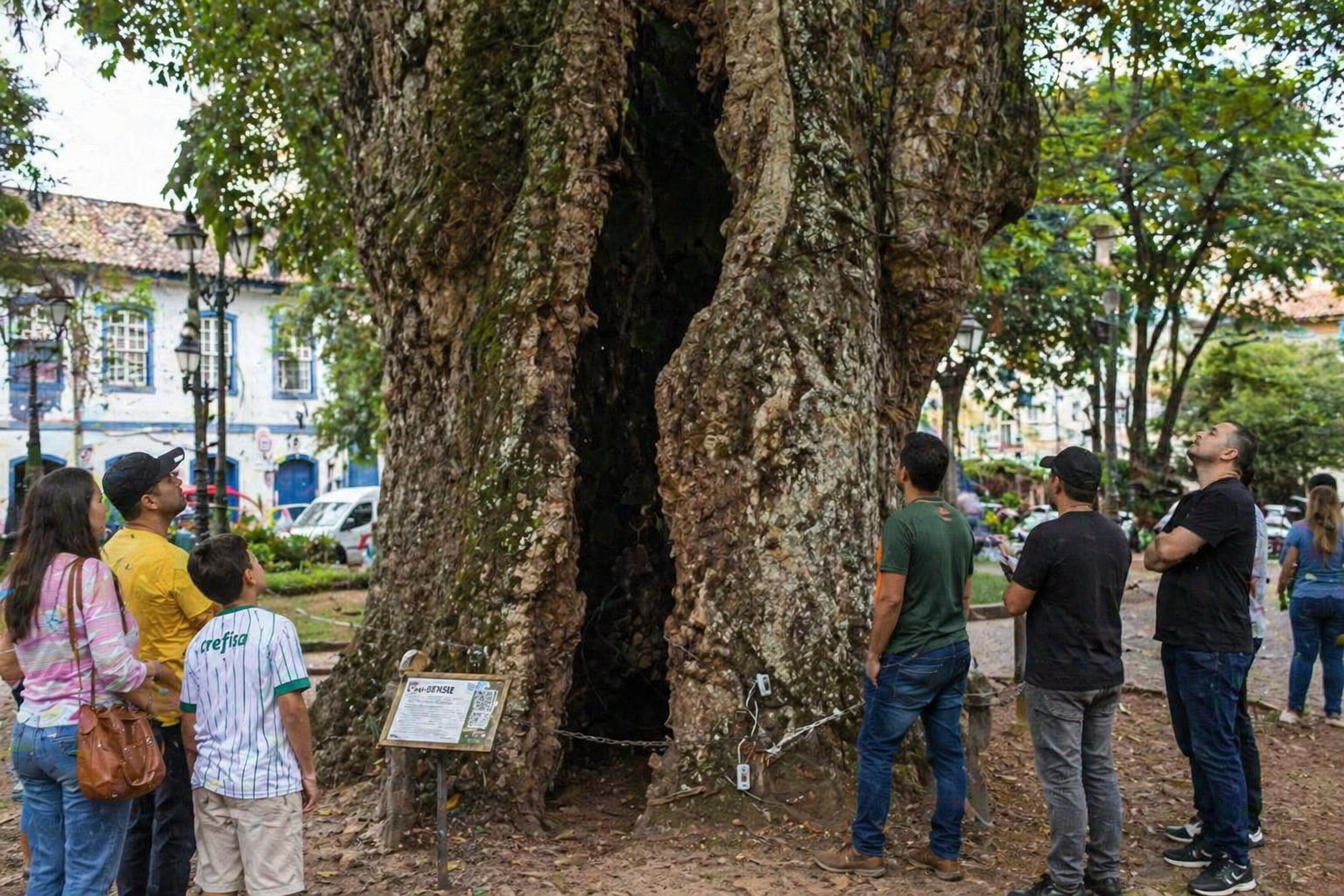

Technical evaluation of historical trees in the Center of Blumenau mobilizes specialists and reveals invisible challenges that impact the health and stability of these urban specimens
An unusual situation caught the attention of residents and specialists in the Historical Center of Blumenau, in Santa Catarina. The information was disclosed by “ND Mais”, based on local records, highlighting that century-old trees in Hercílio Luz Square underwent a detailed technical evaluation on Tuesday morning (28). The reason was the appearance of a crater in one of the trunks, which raised doubts about the safety and structural health of these historical trees.
In light of this scenario, two plane trees were subjected to analyses to understand their real condition. As a consequence of the initial concern, one of the trees received a more in-depth examination, using a technology considered rare in this type of evaluation: sonic tomography.
Sonic tomography reveals internal structure and reduces uncertainties about risk


The sonic tomography used in the study allows for precise analysis of the integrity of the wood and even the roots. This type of examination functions like a kind of “x-ray” of the tree, revealing what cannot be seen externally.
-
App Drivers Unite in Major Solidarity Effort to Aid Venezuela Earthquake Victims, Mobilizing the Brazilian Amazon with Donation Campaign

-
Green Roofs on Homes Gain Popularity for Reducing Heat, Noise, and Rain Impact in Brazil
-
Brazilian promises his children to save a river, creates an eco-barrier in his backyard, has already removed more than 40 tons of trash from the water, and even inspires the idea in other states of the country.

-
How a Brazilian company created a system that transforms broken pallets of any brand into new assets, recycles 80 tons of plastic per month, and found a profitable solution to a problem that challenges industries across the country.



In the specific case of one of the plane trees, the presence of a large crater in the trunk required a more detailed analysis. Initially, the damage may have been caused by a falling branch or even by an improper cut. However, despite the concerning visual aspect, this does not automatically mean a high structural risk.
According to the arborist Flávio Mendes, old trees often have internal hollows. Still, these cavities do not necessarily indicate immediate danger. This is because, over the years, these trees have developed natural structural reinforcements at strategic points in the trunk, which helps maintain their stability.
Therefore, even with the presence of the crater, the specialists classified the risk as controlled. This evaluation was made in partnership with the Environmental Department of Blumenau, which followed the entire process.
Compacted soil and human interference worsen the situation of the trees
Despite the initial conclusion indicating risk control, the analysis does not end there. The sonic tomography will still undergo more detailed evaluation in the laboratory, which will allow for more precise confirmation of the internal state of the tree.
Furthermore, the technical team identified other factors that contribute to the wear of the century-old trees. One of the main problems observed was the extreme compaction of the soil in the square’s region.
According to Flávio Mendes, the large flow of people passing through the area daily prevents the natural exchange of nutrients in the soil. As a result, the trees suffer from a lack of ideal conditions for their development and health maintenance.
Consequently, this constant pressure on the environment can accelerate degradation processes, even in trees that have an apparently resistant structure.
Management measures can ensure the preservation of historical trees
In light of this scenario, the specialists suggested practical measures to ensure the preservation of the trees. Among them is the installation of dynamic cable systems between the branches, which help to better distribute the weight and reduce the risk of breaking.
Additionally, the removal of birds in certain areas was also recommended, as excessive presence can impact the structure and balance of the trees.
These actions are part of a set of management strategies aimed at veteran trees, which require specific care due to their advanced age and historical importance.
Therefore, although the initial alert caused concern, the technical analysis showed that, with proper management, it is possible to preserve these centenary trees for many years.
Do you think cities should invest more in preserving historic trees or prioritize safety with preventive removals?