






 Portuguese
  Spanish


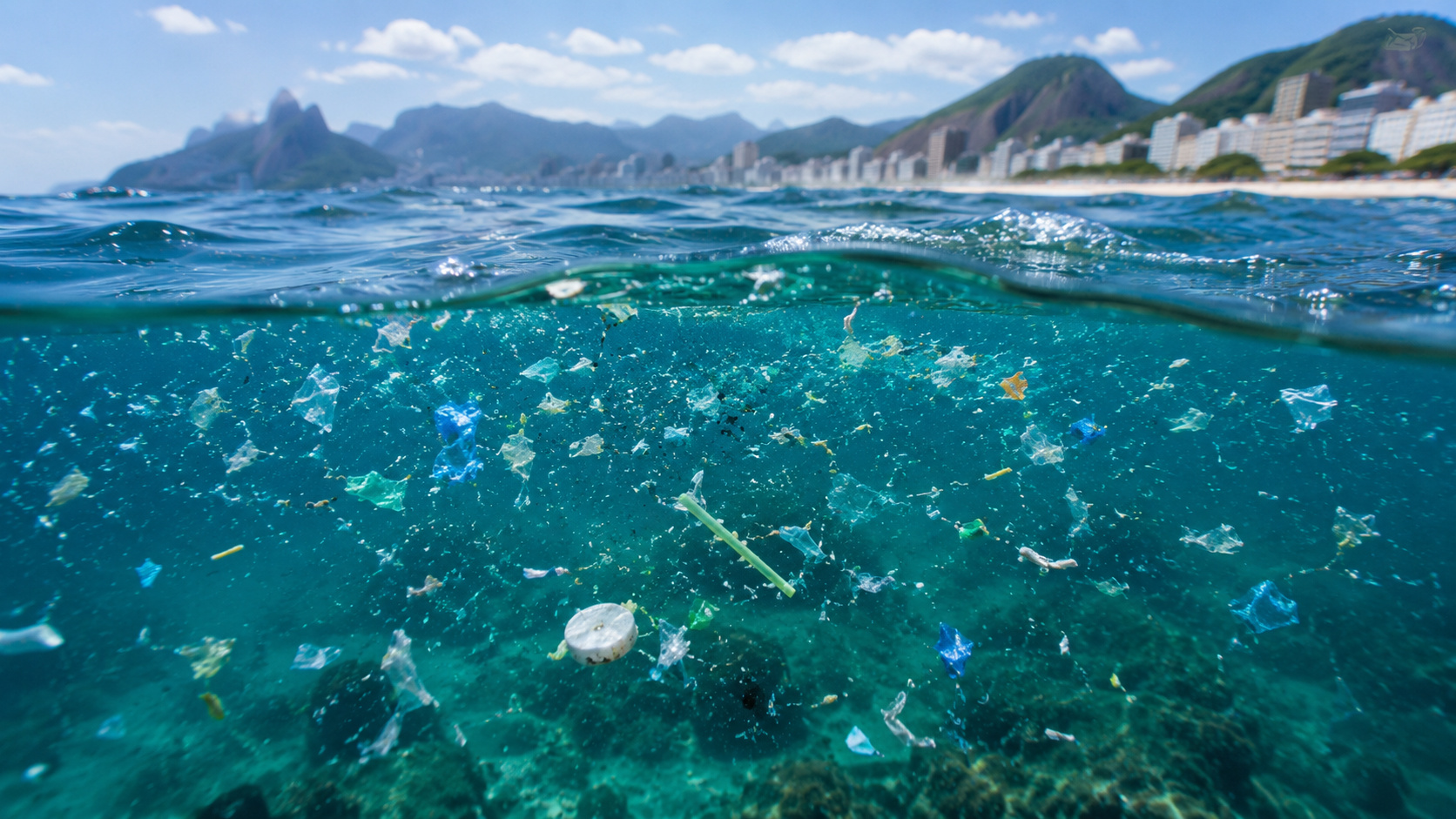

Brazilian scientists detect microplastics in Brazil in deep waters, revealing the advance of ocean pollution in the South Atlantic.
The presence of microplastics in Brazil gained a new chapter after researchers identified plastic debris and chemical pollutants in organisms and sediments collected between 400 and 1,500 meters deep in the Santos Basin, located about 140 kilometers off the Brazilian coast. According to data published by IPEN on May 20, 2026, the study reinforces the advance of ocean pollution in areas previously considered to be little impacted by human activity.
The research was published in the scientific journal Marine Pollution Bulletin and conducted by Brazilian scientists from the Oceanographic Institute of the University of São Paulo (IO-USP) and the Nuclear and Energy Research Institute (Ipen). The work increases concern about the effects of invisible contaminants in the deep waters of the South Atlantic.
Microplastics in Brazil reach the bottom of the Atlantic Ocean
The researchers analyzed sediments, fish, and invertebrates collected during two scientific cruises conducted in September and November 2019 by the oceanographic vessel Alpha Crucis, from USP.
-
2,000-Year-Old Gold Rings Found with Human Bones in Thailand Reveal Rare Burial and Feature Ancient Indian Inscription

-
Lenovo Unveils Legion Y700 Tablet with RGB Backlighting, 5G, and SIM Card Support

-
World’s First Nuclear Hydrogen Unit Begins Operation: Copper-Chlorine Technology with Initial Capacity of 150 Liters per Hour, Aiming for 3,000 Liters per Hour
-
Mechanics Retrofit Old Fiat Uno with BYD Electric Motor for Silent, Low-Voltage Operation Reaching Nearly 60 km/h in Home Test



The survey found microplastics in Brazil in marine species living in deep waters, as well as substances classified as persistent organic pollutants, known internationally as POPs.
Among the compounds identified were:
- PCBs, historically used as electrical insulators;
- PBDEs, used as flame retardants;
- plastic fibers linked to the textile industry;
- resistant polymers applied in industrial structures.
Researcher Gabriel Stefanelli-Silva, the first author of the study, participated in the investigation during his doctorate at IO-USP with support from FAPESP. The scientific coordination was led by Paulo Sumida, responsible for the Deep Sea Ecology and Evolution Laboratory at the institute.


Ocean pollution advances to regions between 400 and 1,500 meters
The results show that ocean pollution has already reached extremely deep regions of the marine environment. The deep sea begins at 200 meters below the surface, but the analyses went further, reaching areas between 400 and 1,500 meters.
In marine sediments, Brazilian scientists found PCBs. In the fish analyzed, both PCBs and PBDEs appeared, indicating the continuous presence of chemical contaminants in the oceanic ecosystem.
Among the species studied were:
- Parasudis truculenta;
- Hoplostethus occidentalis;
- Coelorinchus marinii;
- Neoscopelus macrolepidotus.
According to researchers, these pollutants can travel long distances through the atmosphere and ocean currents before reaching deep waters.
Brazilian scientists investigate the relationship between waste and the offshore industry
The study also raises hypotheses about possible sources of contamination found in the Santos Basin.
Among the materials detected were polyamide and polyacrylonitrile, mainly used by the textile industry. Researchers also identified polystyrene, polyaryletherketone, and polysulfide, materials used in resistant industrial applications.
Brazilian scientists point out that part of this waste may be related to offshore activities in the region. Currently, five platforms operate in the area, and another six are expected to start operating by 2027.
Although the study does not establish a definitive direct relationship, the data reinforce the need to expand environmental monitoring in maritime exploration areas.

Microplastics in Brazil affect organisms living in deep waters
The research revealed that detritivores and filter feeders are among the most vulnerable to ingesting plastic waste.
Among the nine species of invertebrates analyzed, the sea cucumber Deima validum showed the highest concentration of microplastics in its digestive system.
This type of organism lives directly on marine sediments and feeds on particles deposited on the ocean floor. Therefore, it serves as an important indicator of ocean pollution in deep waters.
Researchers warn that the impacts may include:
- physiological changes;
- reproductive impairments;
- accumulation of toxic substances;
- imbalances in the marine food chain.
The concern increases because many persistent pollutants remain active in the environment for decades.
Strict control prevented contamination of the analyzed samples
To ensure the accuracy of the results, Brazilian scientists followed strict protocols during all stages of the study.
The teams used non-synthetic fiber clothing, as well as specific instruments to avoid external interferences. Constant controls of the air and laboratory surfaces were also conducted.
This care was considered essential because microscopic plastic particles can easily contaminate samples, compromising scientific analyses in research on microplastics in Brazil.
The study is also part of the project “Diversity and Evolution of Deep Ocean Fish (DEEP-OCEAN)”, coordinated by Professor Marcelo Roberto Souto de Melo within the Biota Program, funded by FAPESP.
Ocean pollution had already been identified even in Antarctica
The research team also participated in previous analyses involving organisms collected in Antarctica between 1984 and 2016.
In one of the studies, researchers found the oldest known record of microplastics in the Antarctic region. The material identified was a fiber just over 2 millimeters located in the viscera of a small crustacean collected in 1986.
The discovery shows how ocean pollution has spread globally over the last decades, reaching environments considered extremely remote.
For specialists, the advancement of these invisible residues demonstrates that human activities have much broader impacts than imagined years ago.
Deep waters require complex research and constant monitoring
Studying deep waters remains one of the greatest challenges in marine science. Expeditions require specialized ships, advanced equipment, and significant investments.
Even so, Brazilian scientists emphasize that continuous monitoring of these areas is essential to understand the environmental effects caused by microplastics in Brazil and persistent pollutants.
According to Paulo Sumida, the deep sea is still little known, but it has enormous ecological importance for the balance of the oceans.
The researchers emphasize that understanding the origin of contaminants and their impacts on biodiversity will be essential for the development of future environmental preservation strategies.
Invisible contamination amplifies global alert about the future of the oceans
The discovery of plastic waste and toxic compounds in Brazilian deep waters reinforces the international alert about the silent advance of ocean pollution.
The study shows that microplastics in Brazil have already reached regions extremely distant from the coast, affecting marine species and strategic ecosystems of the South Atlantic.
In addition to expanding scientific knowledge on the subject, the research conducted by Brazilian scientists highlights the need to strengthen environmental policies, expand monitoring programs, and reduce the emission of waste that remains active in the environment for decades.
As new studies advance, there is also a growing perception that human impacts on the oceans are much deeper and more lasting than imagined just a few years ago.
With information from the Institute of Energy and Nuclear Research (IPEN)


