Portuguese
  Spanish


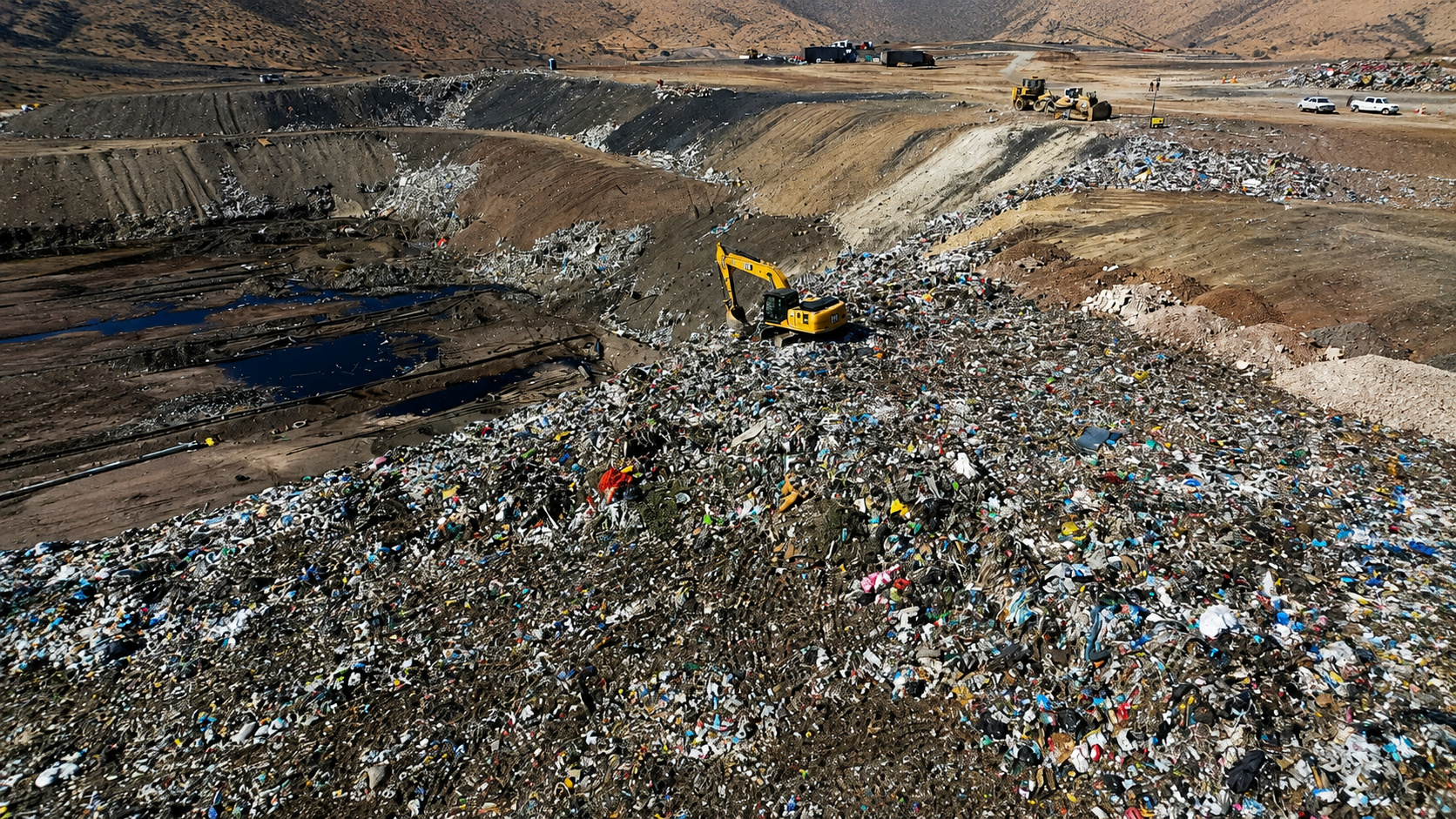


The case of Tiltil exposes how waste decomposition, the increase in methane emissions, and the proximity between landfills and communities amplify environmental and health concerns in Chile
An international environmental concern has recently gained prominence in Chile, attracting the attention of residents, experts, and global organizations. The Lomas Los Colorados landfill, located near the town of Tiltil, was identified by the United Nations Environment Programme as the largest human source of methane emissions in the world and, thus, has come to symbolize a crisis linked to urban waste. The disclosure, made in 2026, increased the pressure on the site, which receives waste from the metropolitan region of Santiago. This scenario demonstrates how a landfill seen from afar as an arid mountain has become a daily concern for those living nearby.
International report places Tiltil at the center of the climate debate
The identification of the Chilean landfill results from international satellite monitoring and, therefore, placed Tiltil at the center of discussions on atmospheric emissions. After all, the methane released by the decomposition of waste is associated with global warming and increases the environmental impact of large waste deposits. According to information released by Reuters in May 2026, the Lomas Los Colorados landfill emits about 102.6 thousand tons of methane per year, a volume that put it ahead of other significant industrial sources. The United Nations Environment Programme pointed to the site as a human megasource of methane and, with that, reinforced the need for greater attention to urban waste management. However, the responsible company claims to maintain, since 2007, a biogas capture system to reduce part of the emissions.
Residents report impacts on daily life near the dump
Currently, residents near the landfill live with a routine marked by strong odor, flies, and concern for their own health. Many report that the presence of the dump is not just an environmental nuisance but also a constant source of strain. The frequent traffic of trucks bringing waste to the site reinforces the feeling of daily exposure to the problem. This scenario highlights how the proximity between large landfills and communities can transform a disposal structure into a permanent factor of social tension.
-
Warm water hidden deep in the ocean has been moving towards Antarctica for 20 years, potentially accelerating glacier melting from below.

-
U.S. Offers Nearly $200,000 to Combat Invasive Mussels Threatening Waterways and Hydroelectric Plants
-
Cigarette Butts Pollute Brazilian Beaches, Sparking Debate on Coastal Environmental Protection Measures
-
App Drivers Unite in Major Solidarity Effort to Aid Venezuela Earthquake Victims, Mobilizing the Brazilian Amazon with Donation Campaign


Methane emissions increase pressure on waste management
Although the landfill plays an important role in receiving the waste produced by the Santiago region, the scale of emissions has expanded the debate about its environmental effects. Many experts advocate for the separation of organic waste as a measure capable of reducing odors and decreasing methane release. This point gains relevance because organic waste, when decomposing, intensifies the formation of the gas. At the same time, the case of Tiltil shows that waste management has ceased to be just an urban issue and has become part of the international climate debate.
Tiltil becomes a symbol of environmental alert in Chile
With international repercussion, Tiltil has come to represent a warning about the limits of expanding large landfills near communities. The situation shows that the impacts are not limited to environmental indicators, as they also directly affect the residents’ daily routine. Thus, the Chilean landfill brings together in one problem the disposal of waste, methane emissions, sanitary discomfort, and public health concerns. This dynamic demonstrates how urban growth requires more efficient solutions to prevent vulnerable areas from concentrating the negative effects of waste.

The future of coexistence between landfills and communities
Experts, residents, and environmental authorities assess that the case of Tiltil could broaden discussions on inspection, emission control, and organic waste treatment. The daily coexistence with strong odors, flies, and truck traffic generates continuous concern, although the landfill continues to operate as part of the disposal structure of the Santiago metropolitan area. Meanwhile, the identification of the site as the largest human emitter of methane in the world reinforces the urgency of rethinking the urban waste management model.
What should be a priority: expanding environmental control mechanisms in large landfills or accelerating new forms of waste treatment before nearby communities suffer even greater impacts?