Portuguese
  Spanish


Structure installed in Curitiba treats a daily volume difficult to visualize, operates with large-scale biological technology, and integrates sanitation, environmental control, and energy recovery from waste before returning treated effluent to the Iguaçu River.
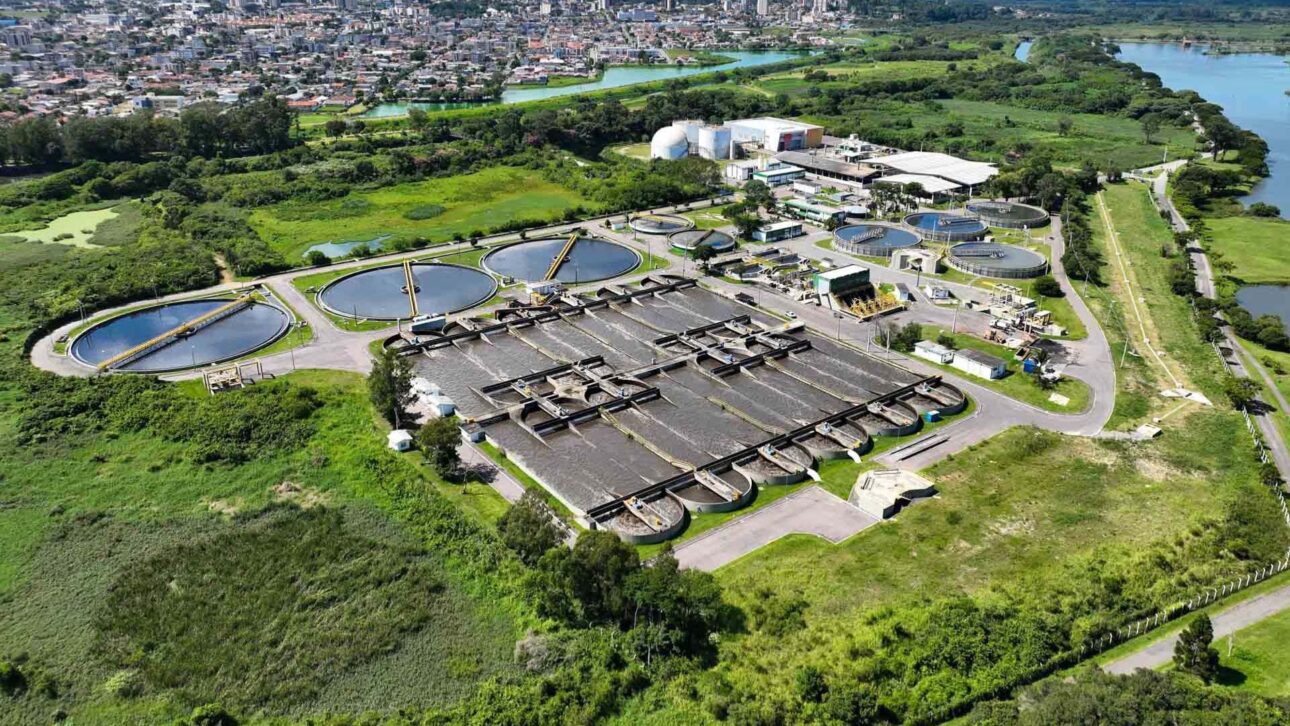
The Belém Sewage Treatment Plant in Curitiba operates with a capacity of 2,520 liters of sewage per second, equivalent to about 217.7 million liters per day, and serves approximately 820,000 residents of Curitiba and São José dos Pinhais, according to Sanepar.
Installed in the capital of Paraná, the unit receives part of the sewage generated in residences, businesses, and services before this material goes through physical, chemical, and biological treatment stages, in a process aimed at reducing the pollutant load.
The station is identified by the company as one of the largest in the world to use the activated sludge with extended aeration process, a technology known as the “carousel” system, applied to keep the sewage circulating during the biological stage.
-
400 km² of Greenhouses in Almería, Spain, Astonish American Visitor by Producing Millions of Tons of Produce for Cold-Weather Markets

-
Antarctic Volcano Emits Microscopic Gold Particles That Travel Up to 1,000 Kilometers Across the Continent
-
Little-known Japanese factory is the world’s largest zipper manufacturer, producing 7 billion pieces annually and closing half the world’s pants.

-
Brazilian Factory Recycles One-Third of the Country’s Styrofoam Waste, Matching European Levels with 51,000 Tons Reused Since 2007


In this model, specific structures maintain the activity of microorganisms responsible for consuming part of the organic matter present in the received material, while operational control monitors the treatment efficiency before returning the effluent to the environment.
How sewage treatment works at ETE Belém
Before reaching the biological stage, the sewage goes through preparation phases that remove materials capable of damaging pumps, pipes, and tanks, such as solid waste, sand, grease, and improperly discarded objects in the network.
This first barrier meets the operational needs of the system, designed to treat domestic sewage, not trash thrown in toilets, sinks, or drains, as improper items can interfere with equipment operation.
When materials outside the expected standard enter the network, the station has to deal with an additional load that can compromise initial stages of the process and increase the demand for separation, maintenance, and control in a high-flow operation.
After the initial removal, the flow proceeds to activated sludge treatment, a stage where biological action plays a central role and depends on adequate conditions of oxygenation, circulation, and contact with organic matter.
Through aeration, the system provides oxygen to keep the microorganisms active, while the continuous movement of the sewage favors contact between the organic matter and the biomass responsible for the purification of the effluent.
The name “carousel” is linked to the circulation configuration of the material inside the tanks, which keeps the flow moving during the process and allows the application of extended aeration technology on a large scale.
Unlike a purely visual filtration, this stage aims to reduce dissolved pollutants and improve effluent quality parameters before returning it to the water body, according to the company’s informed operation.
Iguaçu River receives treated effluent from the station
The effluent treated at ETE Belém flows to the Iguaçu River, one of the main watercourses in Paraná, according to Sanepar, which attributes to the station the function of reducing the impact of urban sewage on the water system.
The water that leaves the unit is not intended for human consumption but returns to the environment after undergoing operational control and pollutant removal stages, according to the sewage treatment logic adopted at the station.
In a metropolitan region, the operation occurs outside the visible routine of most of the population, although it is linked to the destination of the sewage collected in properties served by the network and the discharge of treated effluent into the river.
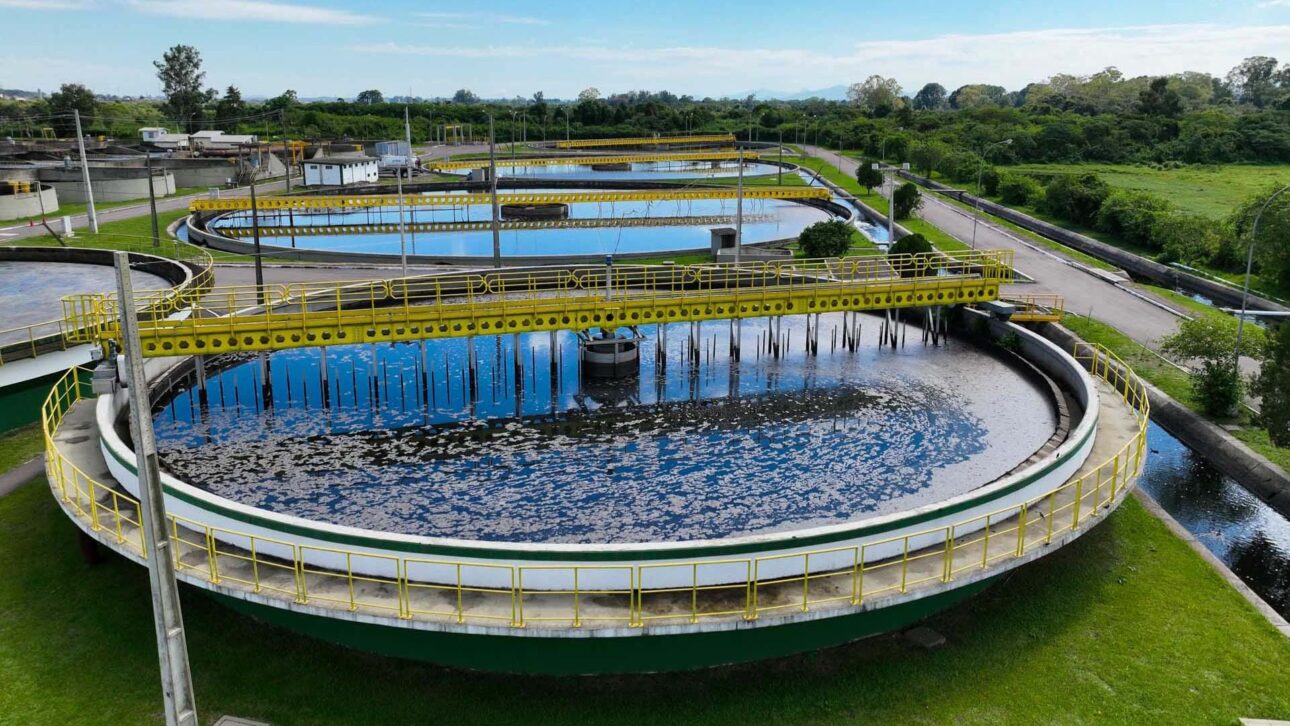
Between January and October 2025, Sanepar reported that ETE Belém treated 40 million cubic meters of sewage, a volume compared by the company to 16 thousand Olympic swimming pools, in a report on the unit’s operation.
The data measures the scale of a structure that operates continuously to receive the sewage collected in the served area, subject it to treatment, and prevent the direct discharge of this material into the water body.
The urban demand absorbed by the station also results from the sum of hundreds of thousands of connections, as an isolated property generates a limited volume, but the combined load requires machines, tanks, operators, laboratory, and permanent monitoring.
Sludge from ETE Belém becomes biogas and energy
In addition to the treated effluent, the operation of the ETE Belém generates sludge, a concentrated material resulting from sewage treatment that needs to be properly disposed of, according to rules and procedures applied to the management of this type of waste.
Part of this material is sent to the Sanepar Bioenergy Plant, where it can be transformed into biogas and converted into electricity by utilizing the organic matter present in the sludge.
The plant is located in São José dos Pinhais and processes sewage sludge with organic waste from large generators, according to information released by the Government of Paraná and Sanepar about the unit.
In this process, the controlled decomposition of organic matter generates biogas, which can be used in electricity production after passing through appropriate systems for capture, treatment, and energy generation.
In February 2025, the Government of Paraná reported that the unit was transforming daily 900 tons of sludge from ETE Belém and about 50 tons of organic materials into biogas, which was then converted into electricity.
The operation inserts sanitation waste into a technical utilization chain, aimed at biogas generation, without dispensing with the necessary environmental control for processing the sludge and other organic materials.
In the case of ETE Belém, the connection between sewage treatment and bioenergy integrates the station’s routine into a waste management strategy that includes proper disposal and energy generation from biogas.
Laboratory monitors the quality of treated sewage
The structure of ETE Belém also houses the Regional Sewage Laboratory, responsible for serving treatment stations in Curitiba and the Metropolitan Region, according to Sanepar, with analyses aimed at operational monitoring.


In units of this size, parameter control is used to monitor the efficiency of the process and the quality of the treated effluent, through sample collection, technical evaluation, and adjustments when necessary.
Since the composition of sewage can vary throughout the day, the monitoring routine helps guide the station’s operation and verify if the treatment stages meet the parameters defined for the system.
The laboratory’s work shows that treatment does not depend solely on tanks and equipment, but also on technical analyses carried out during operation, especially in a unit with high flow and metropolitan service.
The expansion completed in 2022 increased the capacity of the ETE Belém from 1,500 liters per second to 2,520 liters per second, a 70% increase, according to information from the Paraná State News Agency.
With the project, the unit has been treated by the Government of Paraná and Sanepar as the largest sewage treatment plant in the State, due to the operational capacity installed after the expansion.
Correct use of the network influences sanitation in Curitiba
Even with technology and scale, the efficiency of a station like ETE Belém begins before the sewage reaches the tanks, as improper disposal can alter the expected flow through the collection network.
The disposal of trash, oil, grease, and other materials into the network can complicate the initial stages and increase the need for maintenance, because these residues need to be removed before the treatment can proceed.
The collection network was designed to transport sanitary sewage, not solid waste that should be directed to common collection, recycling, or specific disposal, according to the nature of each material discarded by properties.
When this separation fails within homes and other establishments, the problem reappears in the station’s operation, where improper materials need to be removed to reduce risks to the system’s functioning.
In Curitiba, the volume treated by ETE Belém indicates the collective dimension of daily actions, as flushes, showers, sinks, and drains form a continuous flow that crosses the city until it reaches the station.
The unit combines a daily flow in the range of hundreds of millions of liters, biological treatment by activated sludge, and the use of residues for biogas generation, according to information released by Sanepar and the Government of Paraná.