






 Portuguese
  Spanish


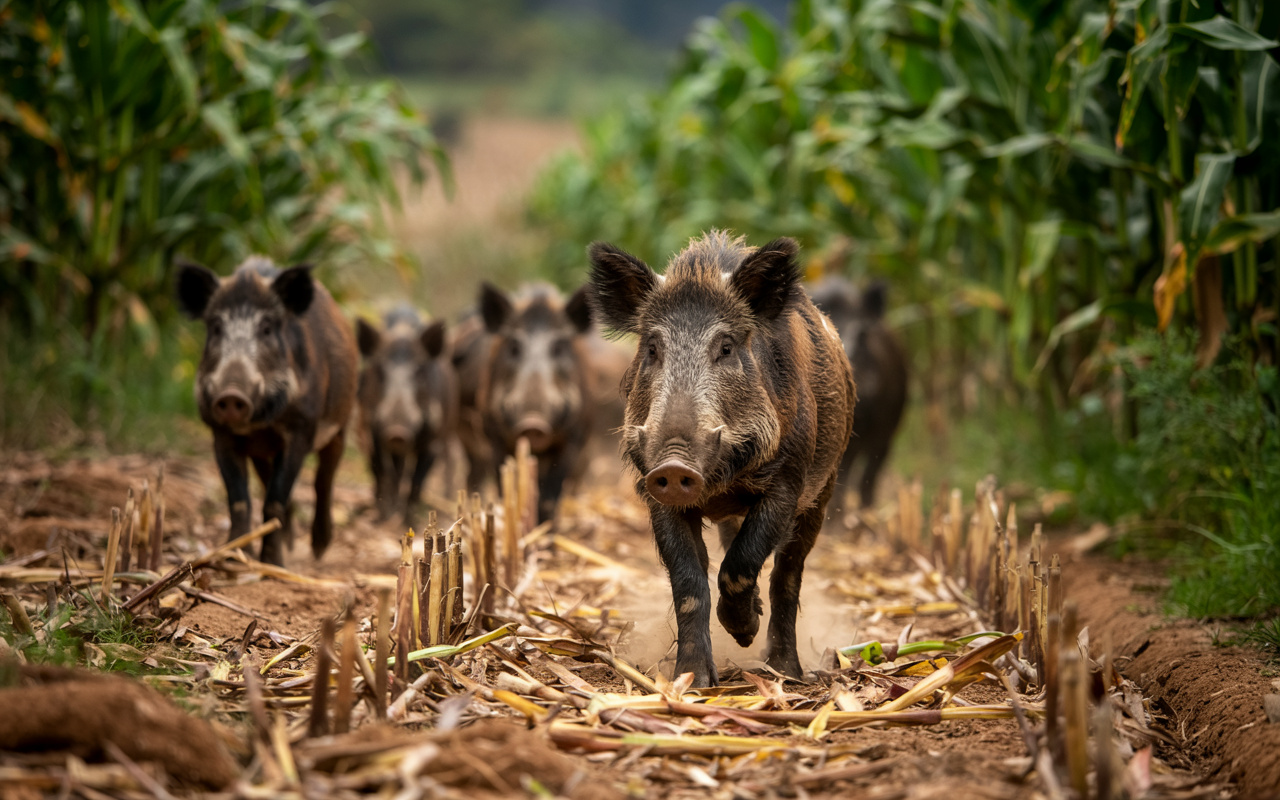


Javaporco Now Dominates Areas in Five States and Threatens Crops, Health, and Biodiversity. Authorities Warn: It Could Be Brazil’s Biggest Environmental Challenge.
The javaporco, a hybrid born from the crossing of the European wild boar and domestic pigs released in rural areas, has ceased to be merely a genetic curiosity and has become an unprecedented environmental threat in Brazil. Capable of reproducing rapidly, destroying entire crops, and even attacking livestock, this animal already occupies vast areas in at least five states, from the South to the Midwest, presenting authorities with a challenge that combines food security, public health, and preservation of biodiversity.
From European Invader to National Pest
The problem began in the 1980s when the wild boar was introduced to Brazil as an alternative for exotic meat production.
The market did not thrive, many animals escaped, and they adapted to the Brazilian environment with surprising speed. Crossed with free-range domestic pigs, they gave rise to the javaporco — an even more resilient, fertile, and destructive hybrid.
-
Brazilian Farmers with Basic Education Create Backyard Machines That Win National Invention Contest, Beating 242 Projects

-
Brazilian Farm Innovates with Cage-Free Chickens, Producing 3,300 Odorless Eggs Daily

-
From Selling Unsold Saplings to Creating Brazil’s Most Awarded Olive Oil Brand with 330 Accolades and a $12 Million Goal by 2026
-
China Builds 400-Hectare Irrigation System in Tanzania to Aid 1,000 Families Dependent on Rainfall




Today, the javaporco is considered one of the worst invasive species on the planet, according to the International Union for Conservation of Nature (IUCN). In Brazil, studies from IBAMA indicate that the population of these animals could double in less than a year, given their high reproduction rate: a female can give birth to up to two litters annually, with 6 to 12 piglets each.
The Threat to Crops and Rural Economy
The damages are visible. Soy, corn, cassava, and pastures are among the crops most devastated by the passage of javaporcos.
It is estimated that annual losses to the Brazilian agriculture exceed R$ 60 million just from the impact of this invasive species. Additionally, the animals attack calves, destroy springs, and compete with native species for food, causing an ecological imbalance that is difficult to reverse.
Producers in Mato Grosso do Sul and Paraná report sleepless nights to ward off groups that can reach dozens of individuals. In some properties, the destruction from a single invasion is enough to ruin months of work.
Sanitary Risk and Threat to Public Health
More than just economic loss, the javaporco poses health risks. The species is a vector for diseases such as classical swine fever and foot-and-mouth disease, which, if reintroduced, could cause a billion-dollar disaster in Brazilian livestock. There are also reports of parasite transmission and attacks on domestic animals in rural areas.
Health authorities treat the issue as a priority but acknowledge the difficulty of monitoring expanding populations in forest, savannah, and even urban fringe areas.
The Stalemate of Controlled Hunting
To contain the advance, IBAMA has authorized since 2013 controlled hunting of wild boars and javaporcos, under official registration. Control groups proliferated, and the number of kills increased. However, the measure has not brought the expected solution. Experts state that, without coordinated actions, management may even accelerate dispersion, as hunted groups tend to spread out and colonize new areas.
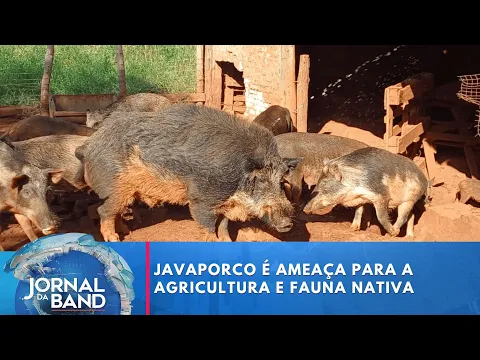
Environmentalists advocate for a broader strategy, including population mapping, encouragement of scientific management, and awareness campaigns. Farmers are calling for more freedom to hunt, arguing that current control measures are bureaucratic and ineffective.
Five States on High Alert
Rio Grande do Sul, Santa Catarina, Paraná, Mato Grosso do Sul, and Minas Gerais are among the most affected states, according to recent surveys. In some regions, the javaporco has already appeared in images from cameras installed in urban areas, revealing an increasingly close proximity to populated centers.
The concern is that the phenomenon will follow the same pattern as in the USA and Mexico, where uncontrolled populations of wild boars and hybrids are already causing billion-dollar annual losses and challenging containment policies.
Environmental authorities and experts are unanimous: the javaporco could become the biggest environmental control challenge for Brazil in the coming decades. The country is facing a dilemma: expand hunting authorization and risk additional imbalances, or invest in a national control program that requires resources, technology, and cooperation among state governments, producers, and civil society.
As the debate continues, the expansion goes on. Each new litter increases the size of the problem, and each destroyed plantation reinforces the economic weight of this invasive species. If a coordinated response is not forthcoming, Brazil may witness an irreversible advance — and pay dearly for the absence of a firm strategy at the right time.






Apesar dessas ameaças todas o meio ambiente e o ibama criam tantas regras que o javaporco só aumenta sem controle. É uma pena e quem sofre são os produtores que tem percas enormes de suas lavouras, e não são remunerados.
Ambientalista só fala em maneia, monitoramento, mas a situação é urgente. É praga que destrói as lavouras. Tem que liberar a caça e o abate mesmo.
Armadilhas de telas alambrados em formato caracol capturar vacinar e matar a fome de milhares de brasileiros entre outros países necessitados !