Portuguese
  Spanish


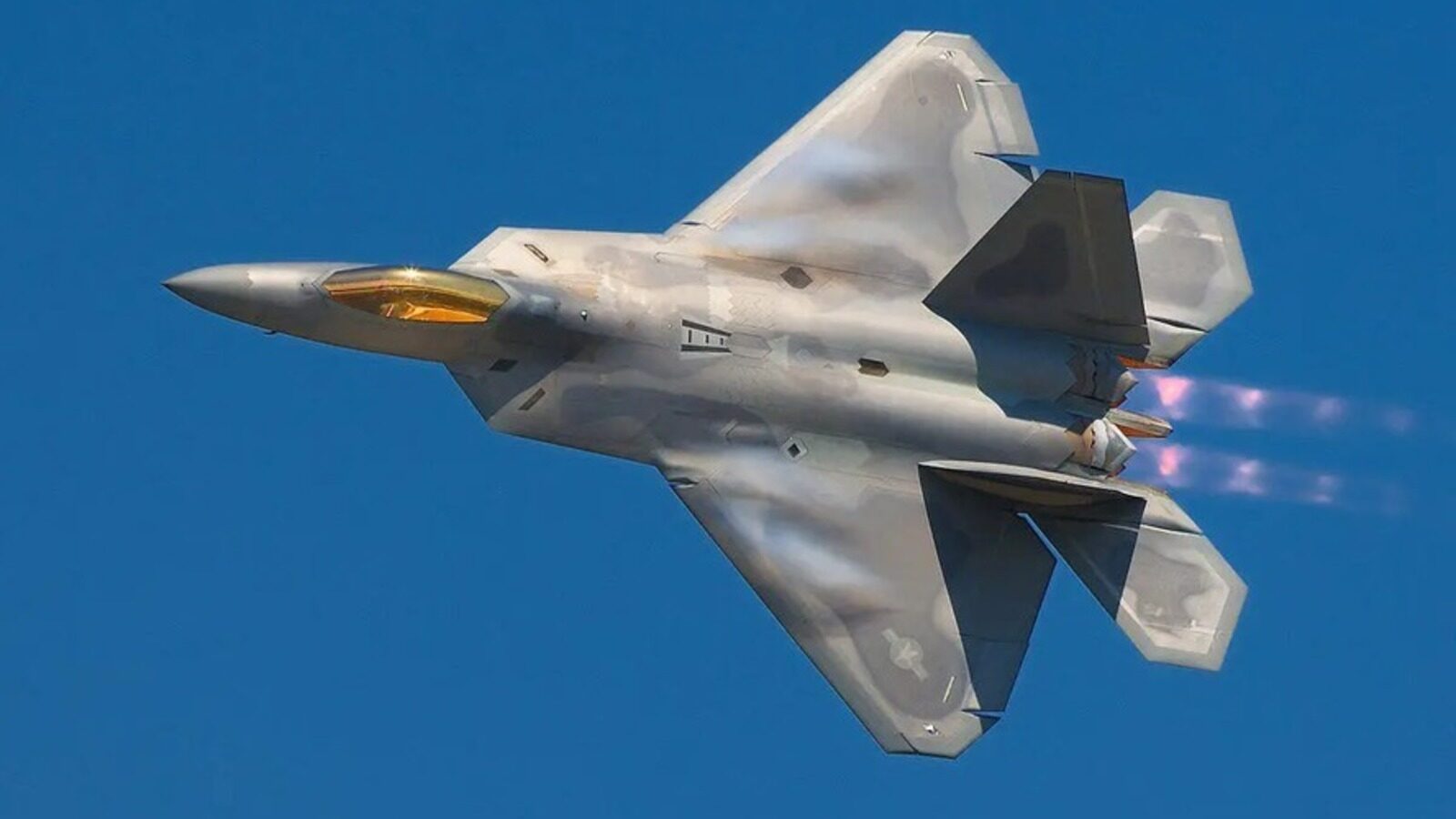


F-22 Raptor Combines Titanium, Advanced Composites, Aluminum, and Stealth Coatings to Create a Lightweight, Durable, and Practically Invisible Fighter Jet
The F-22 Raptor is globally recognized as one of the most advanced fighter jets ever built. Its fame is not only due to flight performance, but also to the materials engineering that comprises the aircraft. Each part is designed to combine strength, lightness, and stealth.
Titanium as a Structural Base
The most important thing is that titanium dominates the Raptor’s structure. It accounts for between 39% and 42% of the total weight of the fighter.
Its application focuses on the fuselage, in critical areas close to the engines and at points of greater stress.
-
Brazilian Researcher Develops Protein Supplement from Tilapia Waste, Combining Innovation and Sustainability with Economic Potential

-
Women in São Paulo Unknowingly Tracked by Coin-Sized Tags Hidden in Cars and Belongings, Raising Stalking Concerns
-
Near a $750 million AI data center in Brazil, a resident’s well runs dry, leaving her unable to afford the $25,000 needed for repairs.

-
16-Year-Old from Brazil’s Sertão Wins Young Scientist Award for AI Predicting Rainfall with 94.5% Accuracy to Aid Farmers


The metal withstands extreme aerodynamic forces and heat generated at speeds above Mach 2.
This combination of durability and lightness ensures that the F-22 can handle conditions where aluminum or composites, used alone, would not be effective.
Therefore, titanium acts as a robust skeleton that keeps the aircraft stable in intense combat scenarios.
Composites on the Outer Surface
Additionally, composites play a central role in the innovation of the Raptor. Although they account for about 24% of the total weight, they cover approximately 70% of the outer surface.
The structure of these carbon fiber-reinforced and bismaleimide polymers forms a honeycomb design, uniting lightness and rigidity.
This choice not only reduces weight but also enhances stealth. Composites decrease radar reflections, making the aircraft less visible.
In practice, the F-22’s signature is equivalent to that of a small sphere, a remarkable feat for a fighter of its size.
Aluminum and Steel in Strategic Points of the F-22 Raptor
Although less prevalent, aluminum and steel also fulfill specific functions. Aluminum, being lighter and cheaper, is used in areas where structural demands are not as severe.
Meanwhile, steel, which is highly resistant, is applied in parts such as the landing gear, which needs to withstand impact and additional weight.
This balance ensures cost reduction and maintenance of reliability without compromising the aircraft’s performance.
Radar-Absorbing Coatings
The Raptor’s stealth is enhanced by special coatings that cover its structure. They account for about 21% of the total weight of the fighter.
This layer absorbs electromagnetic energy, preventing signals from being reflected back to enemy radars.
This feature creates a second barrier against detection, working in conjunction with the aircraft’s design and the composites.
Standard for Modern Aviation
The massive use of composites marked a turning point in military aviation. Before the F-22, fighter jets like the F-16 used only 2% of composites in their structure.
Even recent models, such as the Russian Su-57 or the F-35 Lightning II, show lower proportions compared to the Raptor.
Thus, the design established a new standard for stealth aircraft by combining innovative design with state-of-the-art materials.
F-22: Result of the Combination
The sum of these elements explains the singular performance of the F-22. Titanium provides strength, composites ensure lightness and stealth, coatings absorb radar, while aluminum and steel balance cost and durability.
In the end, the Raptor becomes more than just a fighter: it is a demonstration of how the choice of materials defines supremacy in the skies.
With information from O Globo.